
Welcome to the most challenging, yet rewarding, phase of Golden Retriever puppy ownership: the “Golden Teenager” months! Your little fluffball is now a rapidly growing, high-energy adolescent. At 6 months old, your Golden Retriever is crossing the line from a dependent infant into a young dog testing their boundaries.
This stage is defined by rapid physical growth, a surge in energy and curiosity, and often, a temporary lapse in all that stellar training you thought you had nailed. Don’t worry—this is completely normal! This comprehensive guide will walk you through what to expect in terms of their physical development, behavior, training, and health, helping you navigate the transition with confidence and patience.

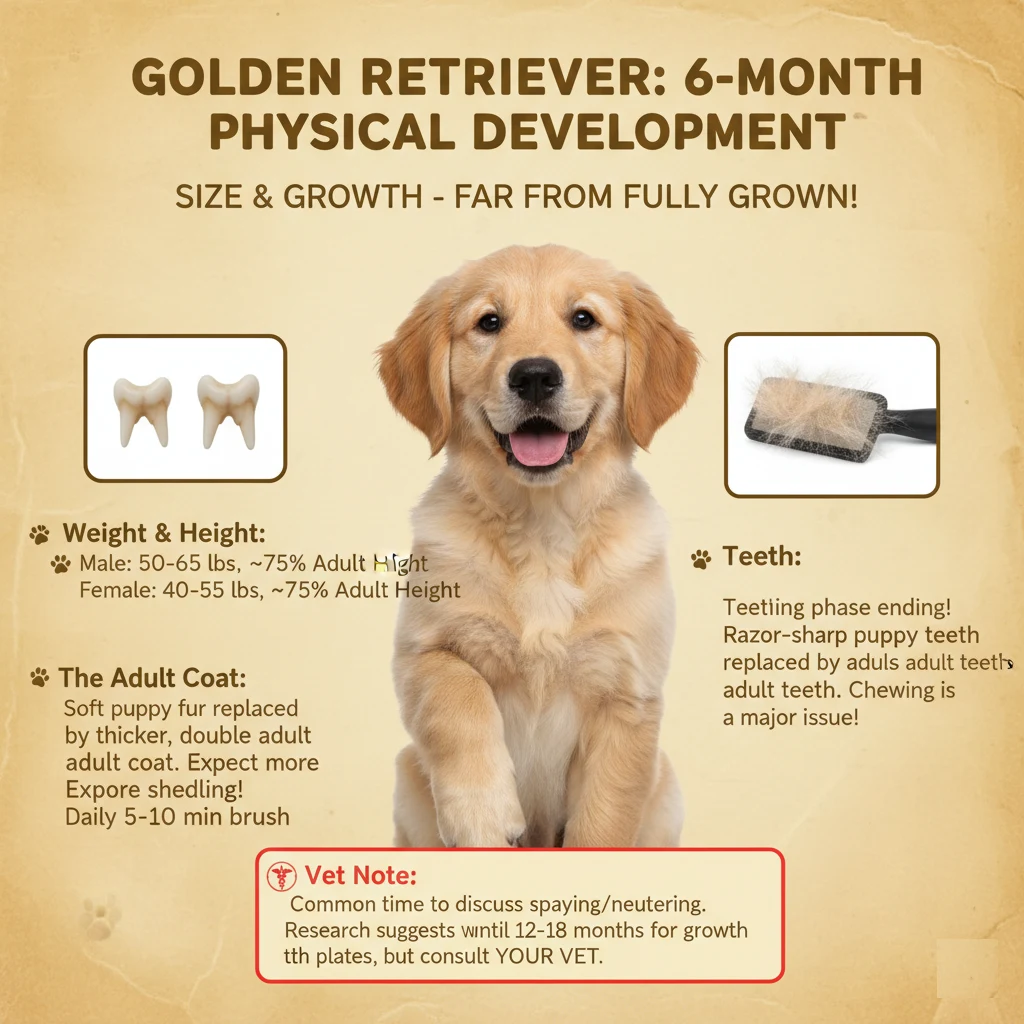
🦴 1. Physical Development: Size and Growth
At six months, your Golden is in a major growth spurt, but they are far from fully grown.
- Weight & Height:
- Male Golden Retrievers typically weigh between 50-65 pounds and are about 75% of their adult height.
- Female Golden Retrievers typically weigh between 40-55 pounds and are also approaching their adult height.
- The Adult Coat: The soft, fluffy puppy coat is being replaced by the thicker, double adult coat. Expect more shedding and commit to a daily 5-10 minute brush to manage it.
- Teeth: Your puppy is likely finishing the teething phase, which means the razor-sharp puppy teeth are almost all replaced by adult teeth. This is why chewing is a major issue right now.
🚨 Vet Note: This is the common time to discuss or schedule spaying or neutering with your veterinarian. Current research often recommends waiting until a Golden is closer to full maturity (12-18 months) to allow growth plates to close, but your vet’s advice is paramount.
🧠 2. Behavior: The “Golden Teenager” Mindset
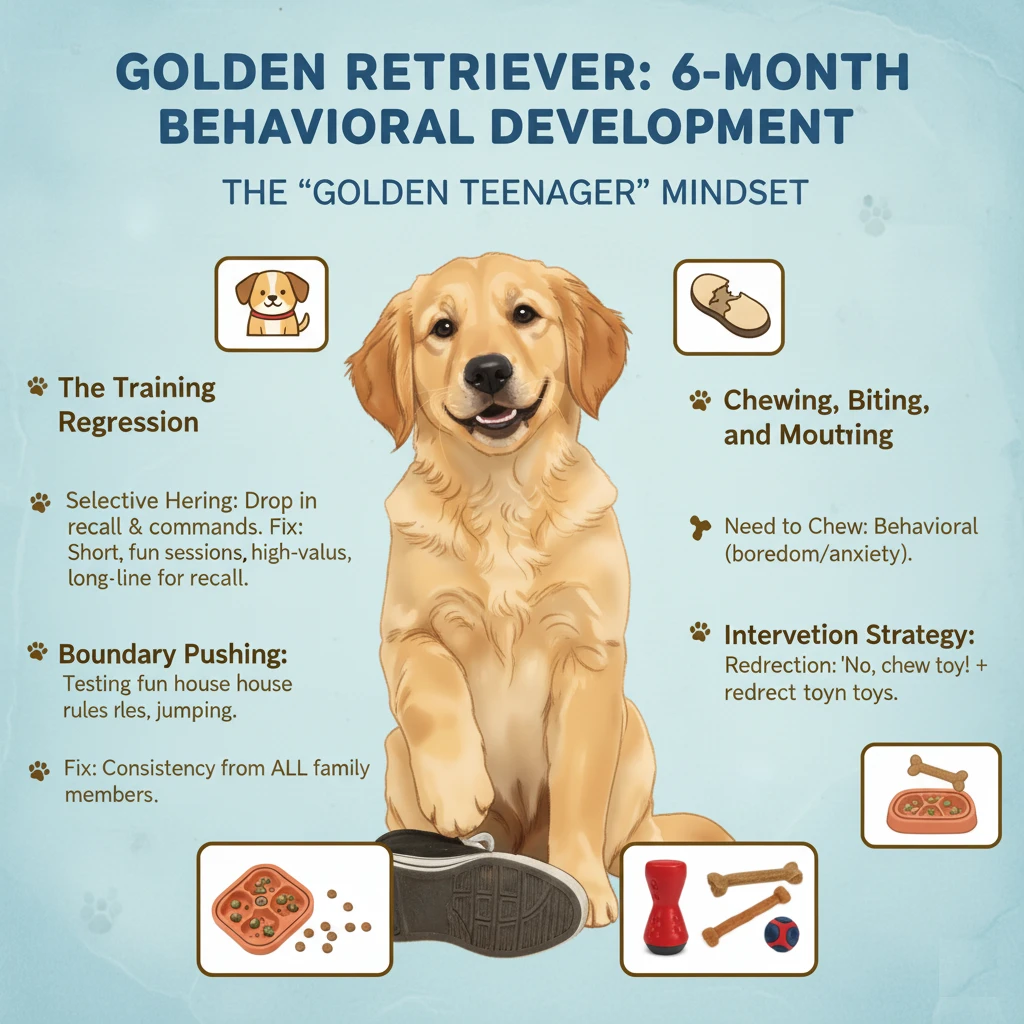
The Training Regression
- “Selective Hearing”: Expect a temporary drop in recall and basic command response. They know the commands, but their curiosity and newfound independence are more interesting. The fix? Go back to basics—short, fun training sessions with high-value treats and a long-line for recall practice.
- Boundary Pushing: They will test house rules, jump on guests, and try to steal food they wouldn’t have dared touch a month ago. Consistency is critical. Every member of the family must enforce the same rules every time.
Chewing, Biting, and Mouthing
- The Need to Chew: While teething is wrapping up, chewing is now largely a behavioral tool driven by boredom or anxiety.4
- Intervention Strategy:
- Redirection: Always keep a variety of appropriate chews (Kongs, bully sticks, safe hard toys) handy. When they chew on something inappropriate, say “No, chew toy!” and immediately redirect them to a proper toy.5
- Enrichment: Use puzzle feeders, snuffle mats, and scatter feeding to make them work for their food and stimulate their mind, which tires them out more than just walking.
🏃 3. Exercise and Mental Stimulation Needs
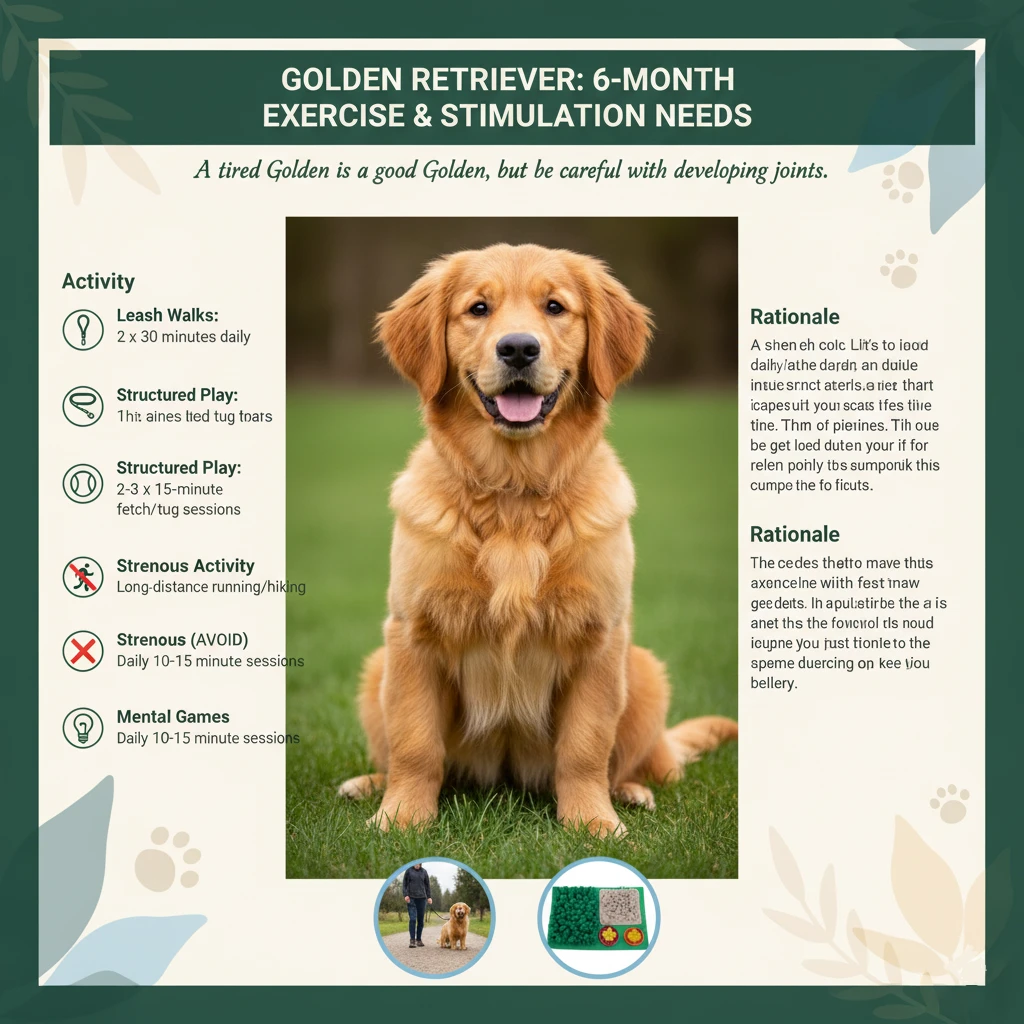
A tired Golden is a good Golden, but you must be careful with their developing joints.
| Activity | Recommended Duration/Limit | Rationale |
| Leash Walks | 2 x 30 minutes daily | Focus on loose-leash walking and smelling—not just distance. |
| Structured Play | 2-3 x 15-minute fetch/tug sessions | Excellent for burning energy and reinforcing drop-it/retrieve commands. |
| Strenuous Activity | AVOID long-distance running/hiking | High-impact activities risk damage to rapidly developing growth plates. Stick to flat, soft surfaces. |
| Mental Games | Daily 10-15 minute sessions | Crucial for tiring the brain. Try ‘Find It’ games with treats or basic obedience drills. |
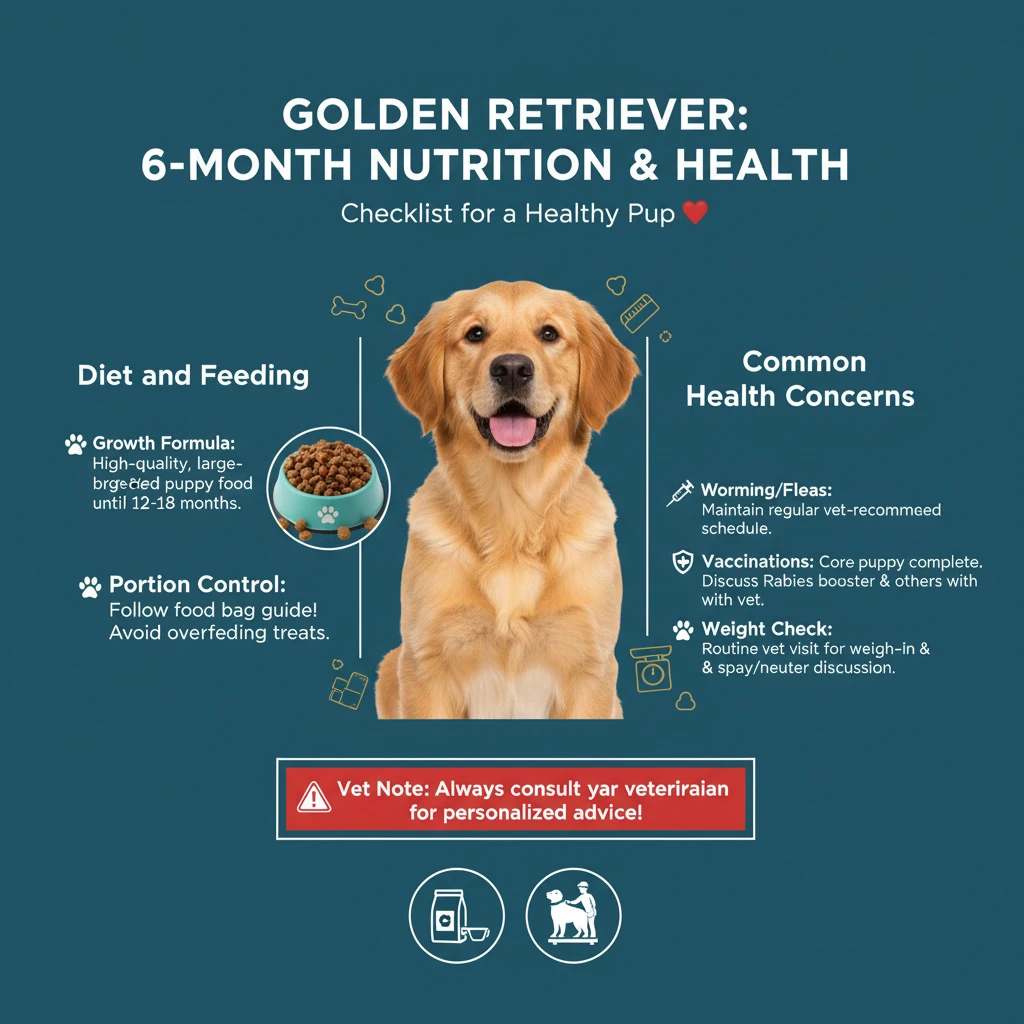
❤️ 4. Nutrition and Health Checklist
Diet and Feeding
- Growth Formula: Continue feeding a high-quality, large-breed puppy formula until your veterinarian advises switching to an adult formula (often between 12-18 months).
- Portion Control: Goldens are prone to obesity!6 Stick strictly to the feeding guide on your food bag and avoid overfeeding treats, especially as their growth slows.
Common 6-Month Health Concerns
- Worming/Fleas: Maintain a regular schedule as recommended by your vet.
- Vaccinations: Your pup should have completed their core puppy vaccinations (Parvo, Distemper). Discuss the Rabies booster and other lifestyle-dependent vaccines (like Bordetella) with your vet.
- Weight Check: Schedule a routine vet visit for a weigh-in and to discuss the optimal time for spay/neuter surgery.
❓ Frequently Asked Questions (FAQs)
1. How much exercise does a 6-month-old Golden Retriever need?
A 6-month-old Golden Retriever needs a blend of physical activity and mental stimulation. Aim for two 30-minute structured walks per day, combined with several short, high-intensity play sessions (like fetch) lasting 10–15 minutes. Crucially, limit strenuous, repetitive activities like long-distance running or hard jogging until they are closer to 12–18 months old to protect their developing growth plates.
2. When should I switch my Golden Retriever from puppy food to adult food?
Most Golden Retrievers should remain on a large-breed puppy food formula until they are between 12 and 18 months old. Large breeds grow slowly, and the puppy formula contains the precise balance of nutrients (like calcium and phosphorus) needed for healthy bone development. Always consult your veterinarian for the best timing specific to your dog.
3. Why is my 6-month-old Golden Retriever suddenly destructive and ignoring commands?
This is known as the “Golden Teenager” or adolescence phase and is completely normal! Your dog is experiencing a surge in hormones and independence, leading to training regression and boundary testing. They are likely destructive due to:
- Excess energy: Increase mental stimulation (puzzle toys, training games).
- Teething/Chewing: Provide plenty of appropriate, durable chews.
- Testing boundaries: Be highly consistent with house rules and go back to basics with short, fun obedience training sessions.
4. How much should a 6-month-old Golden Retriever sleep?
While they are past the newborn phase, a 6-month-old Golden Retriever still needs significant rest. They typically require 14 to 18 hours of sleep per day. This includes sleeping overnight and multiple shorter naps throughout the day. If they aren’t getting enough rest, their behavior can become even more hyperactive or “cranky.”
5. Is a 6-month-old Golden Retriever fully house trained?
At 6 months, a Golden Retriever should be largely house trained, provided the training has been consistent. However, accidents can still happen, especially if they are overly excited, left alone for too long (they can generally hold it for about 6 hours at this age), or experiencing stress. Regressions in house training can also be a sign of a urinary tract infection (UTI), so consult your vet if accidents become frequent.
Conclusion
The journey with your 6-month-old Golden Retriever is an adventure. While the puppy phase is charming, the “Golden Teenager” phase is when you truly shape your dog’s adult temperament through firm boundaries, consistent positive reinforcement, and a whole lot of patience. Embrace the chaos, focus on mental enrichment, and remember that this high-energy stage is temporary. The loving, loyal adult Golden you dreamed of is just around the corner!