
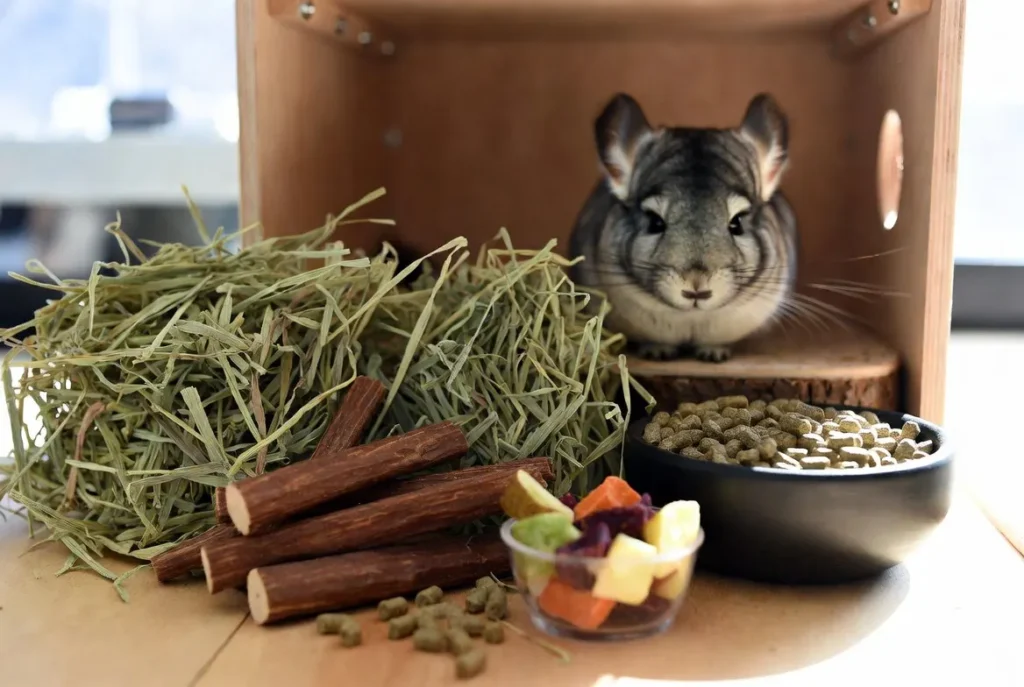
Chinchillas thrive on a very particular diet. They’re strict herbivores – think of them as the little mountain goats of the rodent world – so their meals must be plant-based. In practice, a chinchilla’s food bowl should mostly hold hay and grass pellets, not crackers or fruit. Experts agree that “a diet of hay, pellets, fresh greens, and limited treats is essential” for a healthy chinchilla. In other words: hay free-choice + a few tablespoons of chinchilla-formulated pellets daily + only the tiniest bit of safe snacks. This high-fiber diet mirrors what wild chinchillas ate, and keeps those ever-growing teeth worn down.
Chinchilla Diet in the Wild
In their native Andes Mountain habitat, chinchillas forage on sparse, dry vegetation. They graze on grasses, leaves, twigs and even cactus fruits – basically any tough plant they can find. Because water is scarce in the high mountains, they evolved to nibble dry, fibrous foods and get most moisture from their food. Wild chinchillas usually eat early morning and around dusk, plucking at shrubs and grass as if they were grazing sheep.
In short, the wild chinchilla’s diet is almost all roughage. They don’t naturally eat sugary fruits or fatty seeds; their digestive system is built to process constant fiber. (So no, you wouldn’t catch them crunching on a pumpkin seed or maple candy.) This wild diet means pet chinchillas also need lots of hay and grass. In fact, in captivity you’re imitating a wild Andes herbivore: loads of hay, small pellet portions, very few fresh foods.
Chinchilla Diet in Captivity
As pets, chinchillas should be fed like their wild ancestors. The bread-and-butter of their diet is unlimited grass hay (timothy, meadow, orchard grass, etc.) plus a modest serving of chinchilla pellets. Vets recommend about 1–2 tablespoons of high-quality, grass-based pellet food per day. More than that, and they’ll tend to skip the hay and pack on fat.
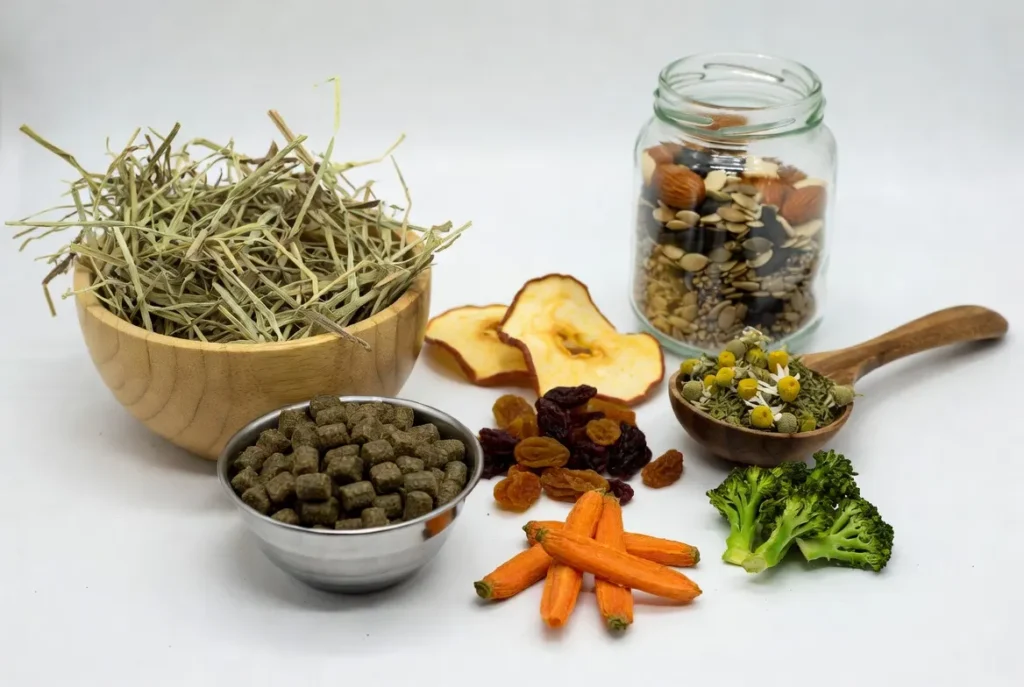
- Hay and Grass: Provide fresh hay 24/7. Hay isn’t just filler – it’s essential. Brands like Oxbow note hay should make up roughly 70–80% of a chinchilla’s diet. Hay’s long fibers aid digestion and grind down constantly-growing teeth. A hay rack in the cage is a smart idea; drop the old hay each morning and replace with fresh. Timothy, meadow, orchard or botanical hays are ideal. (Only baby chinchillas or pregnant moms get a little alfalfa hay now and then – it’s too rich for healthy adults.)
- Pellets: Chinchilla pellets round out the diet with nutrients. Use plain, grass-based pellets (no seeds or fruit bits mixed in). The pellets are fortified to supply vitamins and minerals that hay lacks. Stick to about 1–2 tbsp of pellets total per day. You can split that into morning and evening servings. (Don’t give them bunny or gerbil food – pet diets for those animals have wrong protein/fat levels.)
- Fresh Greens & Treats: Small amounts of fresh veggies or safe treats can be offered occasionally. Dark leafy greens like romaine or green leaf lettuce and pieces of celery are okay in tiny amounts. Even better: dried herbs or flowers (chamomile, hibiscus, rose hips, etc.) as treats. Low-sugar fruits (a dried apple slice or raisin) can be given once a week at most. But remember: treats are just that – treats. They should rarely replace the hay/pellet foundation, or they’ll upset the gut.
- Water: Always give fresh water, either in a sipper bottle or a heavy bowl. Your chinchilla’s wild ancestors got most moisture from plants, but pet chinchillas still must have water on hand. Change it daily. (Surprisingly, chinchillas can’t handle wet environments – their urine is thick to conserve water – so keep their water bowl clean to avoid contamination.)
The RSPCA and other experts emphasize: never suddenly switch their diet. Stick to one good pellet brand and hay you trust. Chinchillas are creatures of habit. If you suddenly start giving fresh fruit or a new pellet, it could really upset their stomach. So always introduce any new food slowly.
Chinchilla Dietary Requirements
Chinchillas need a high-fiber, low-fat, low-sugar diet. That means: mostly roughage, minimal calories from carbs or fats. To put numbers on it, a proper chinchilla pellet diet is typically around 15–20% fiber and under 5% fat. Protein is moderate (16–20%). In plain terms: almost everything they eat should be indigestible cellulose (like hay).
Why? First, their teeth never stop growing. Hay is nature’s built-in toothbrush – chewing it keeps the molars and incisors ground down. Without enough roughage, a chinchilla’s teeth would overgrow and cause pain. Second, chinchillas have very sensitive digestive tracts. Their guts rely on lots of fiber to stay moving and healthy, and very little sugar or moisture. Too much fruit or lettuce and you can cause diarrhea. In fact, experts warn that “feeding your chinchilla excessive amounts of pellets does not supply enough fiber for their gut microbes” and can lead to digestive upsets.
In addition to fiber, chinchillas need certain nutrients (iron, calcium, vitamins, etc.) that good-quality pellets provide. But no supplements should be needed if they’re eating a balanced pellet formula. Also remember they cannot process dairy or meat at all – those cause gut issues. Always check that any pellet or treat says “for chinchilla” on the label.
Finally, hydration is part of dietary needs. While in the wild chinchillas got water from cacti and dewy plants, pet chinchillas drink fresh water daily. Keep bottles or bowls clean so nothing spoils, and to be honest this will need so much money because chinchilla cost too much to take care.
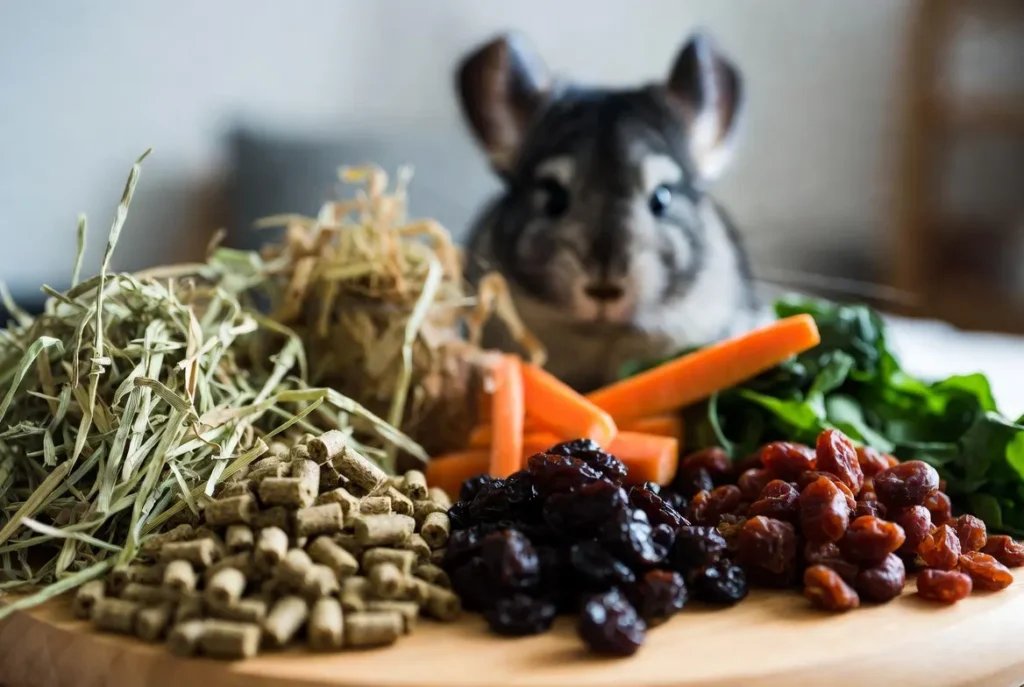
Chinchilla Diet Food List
What can your chinchilla eat? Here’s a quick summary of safe staples and treats:
- Unlimited Grass Hay: Timothy, meadow, orchard, botanical hay – free-choice all day. This is the main meal.
- Pellets: 1–2 tablespoons per day of plain chinchilla pellets. High-fiber, low-fat pellet.
- Water: Fresh, clean water always available.
- Fresh Greens (sparingly): Pieces of kale, romaine, red/green lettuce, celery. Give only small handfuls to avoid diarrhea.
- Safe Dried Herbs & Flowers: Chamomile, hibiscus, rose hips, dandelion, parsley – as tiny treats.
- Occasional Fruit Treats: A small bit of dried apple, banana, pear, peach or single raisin once in a while (no added sugar).
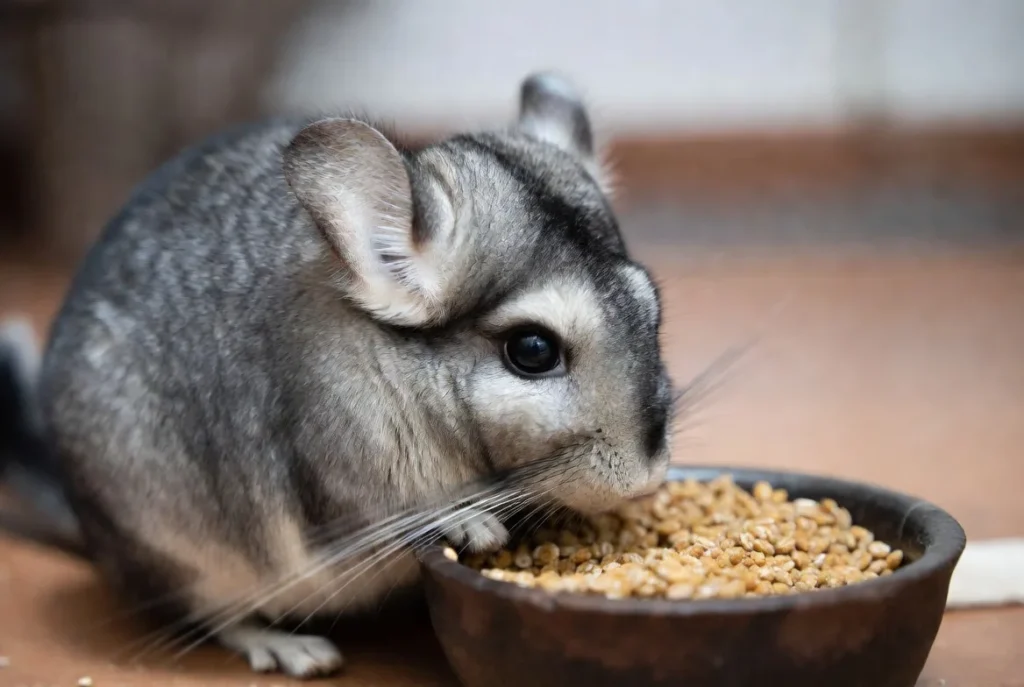
And what NOT to feed: anything fatty, sugary, or moist. This includes nuts, seeds, and grains (too fatty/low fiber); fresh fruits or veggies high in moisture like carrots or melon (too much sugar/water); any sweets, chocolate, or citrus (toxic or high acid); and absolutely no dairy or meat (they can’t digest it). Even fruit-tree wood (cherry, plum, etc.) is dangerous for them. One chinchilla expert put it bluntly: avoid “nuts and seeds, chocolate, bread, dairy… or human snacks” entirely. In short, stick to the natural diet. If you wouldn’t see a chinchilla eating it in the Andes, don’t give it to your pet.
Chinchilla Diet Plan
How do you put all this together in practice? A simple feeding schedule might look like this:
- Morning: Check that the water bottle is full, dump any leftover hay from yesterday and top off with fresh. Offer about 1 tablespoon of chinchilla pellets.
- All Day: Hay is available at all times. Your chinchilla can munch whenever it feels like it (and it will).
- Evening: Give the second half of that day’s pellets (another 1 tbsp if you split the portion).
- Once a Week: Sneak in a tiny treat – maybe a bit of dried fruit or herb in the hay for foraging fun.
This twice-a-day feeding routine matches their natural habits. In other words, they eat a little in the morning and a little at dusk, just like they would in the wild. This plan (hay morning/evening + treat weekly) keeps the routine consistent. And yes, it really is okay if they nibble hay all day – that’s exactly what they need.
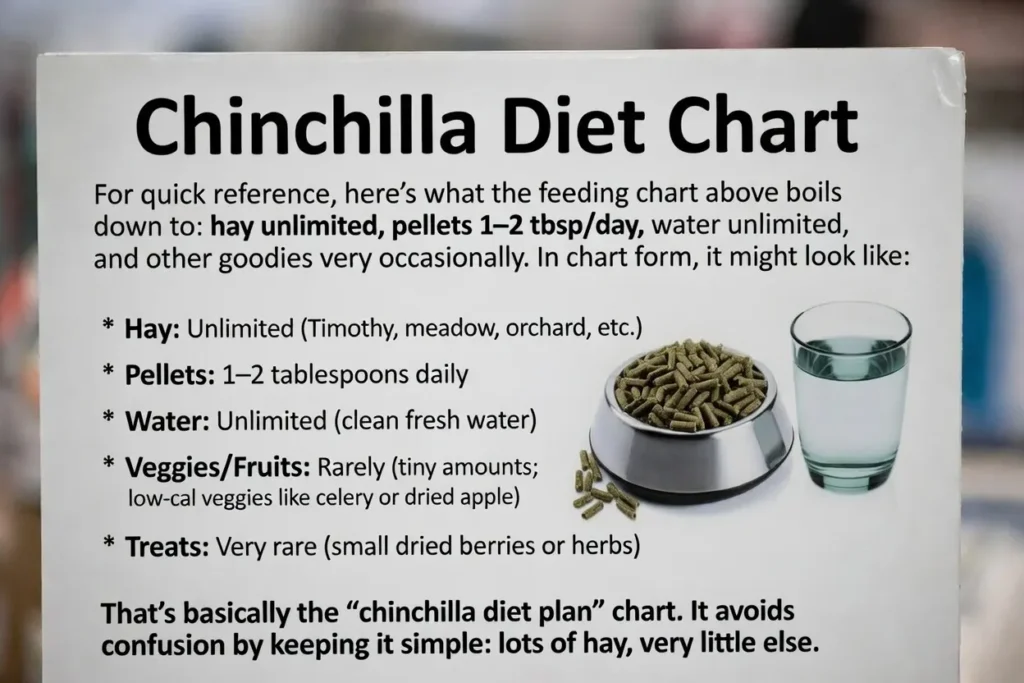
Chinchilla Diet Chart
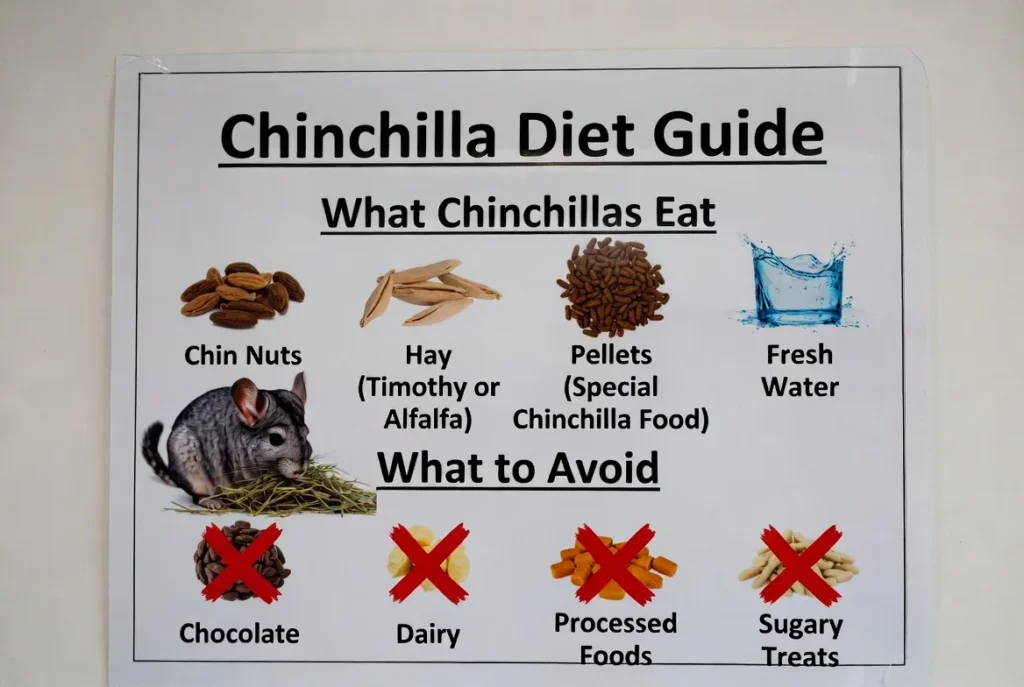
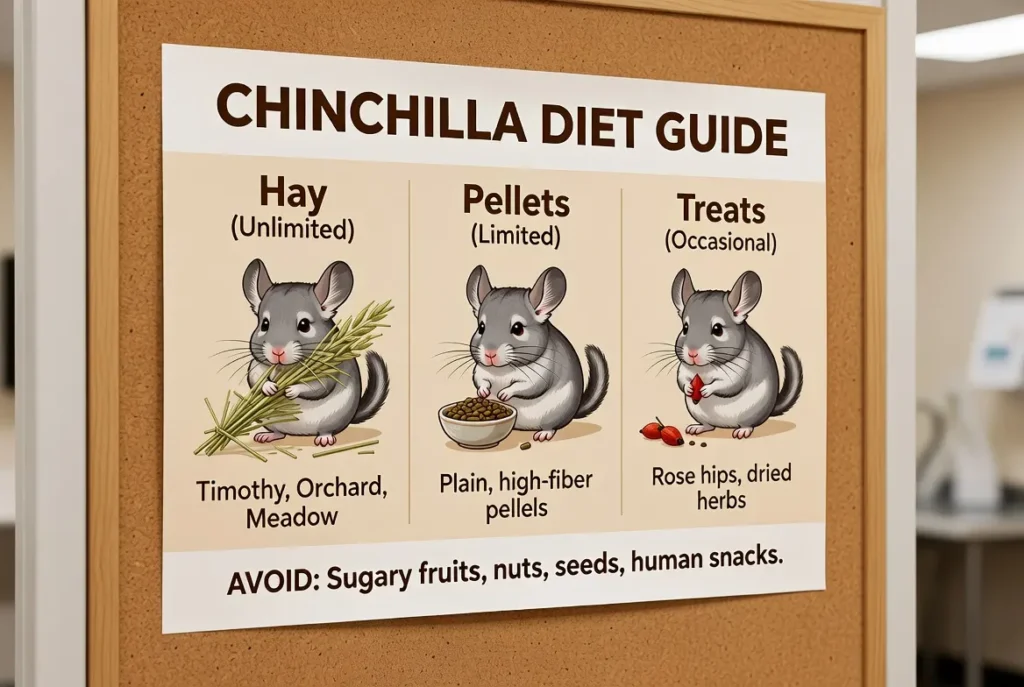
For quick reference, here’s what the feeding chart above boils down to: hay unlimited, pellets 1–2 tbsp/day, water unlimited, and other goodies very occasionally. In chart form, it might look like:
- Hay: Unlimited (Timothy, meadow, orchard, etc.)
- Pellets: 1–2 tablespoons daily
- Water: Unlimited (clean fresh water)
- Veggies/Fruits: Rarely (tiny amounts; low-cal veggies like celery or dried apple)
- Treats: Very rare (small dried berries or herbs)
That’s basically the “chinchilla diet plan” chart. It avoids confusion by keeping it simple: lots of hay, very little else.
Chinchilla Diet Facts
To tie things together, here are a few key fun (and important) facts about chinchilla eating:
- Chinchillas’ teeth never stop growing, so they must chew constantly. Hay isn’t just food – it’s also a toothbrush. Without enough hay, their teeth overgrow (ouch!).
- They are strict herbivores. Meat, dairy or animal products are completely out of the question (their gut can’t handle it).
- Wild-style digestion: chinchillas actually produce two kinds of droppings – hard pellets and softer ones. They instinctively eat the soft droppings right from their bottom (this is normal!) to reabsorb nutrients. It sounds gross, but it’s a natural way they extract every bit of nutrition.
- Chinchillas are not built for sugar or fat. Foods like seeds, nuts, or yogurt drops can cause serious GI upset. In fact, seeds and nuts are so bad for them that experts warn they can lead to deadly bloating or diarrhea.
- Hydration is crucial: even though wild chinchillas used to be frugal with water, modern pets need constant access. Always offer fresh water to keep their kidneys happy and digestion smooth.
- Finally, they have very sensitive tummies. A diet too rich in veggies or fruit can lead to soft stools or diarrhea. For example, feeding a chinchilla juicy lettuce or grapes is almost guaranteed to give it tummy trouble.
In summary, feeding a chinchilla is surprisingly straightforward: aim to mimic its natural mountain diet. That means mostly hay, a dash of pellet, a pinch of veggie, and NOTHING too sweet or fattening. As long as you stick to that high-fiber plan, your pet chinchilla will chew, burrow, and happily munch its way to a long, healthy life.

Pingback: How Much Does A Chinchilla Cost? - Animals
Pingback: 11 Essential Chinchilla Care Tips for a Thriving, Happy Pet - Animals