The concept of “home” is universally recognized as fundamental to human well-being. It is a source of shelter, security, and identity. However, the profound need for a safe, stable, and nurturing environment is not a uniquely human experience. Across the animal kingdom, from the smallest insect to the largest mammal, the instinct to seek, build, and protect a “home” drives survival, social structure, and thriving.
This need for a stable base—a refuge from the elements, predators, and the chaos of the wild—is one of the most powerful and visible forces in the natural world.
The Architecture of Survival
For animals, “home” is often a matter of life and death, defined by its function as a protective barrier:
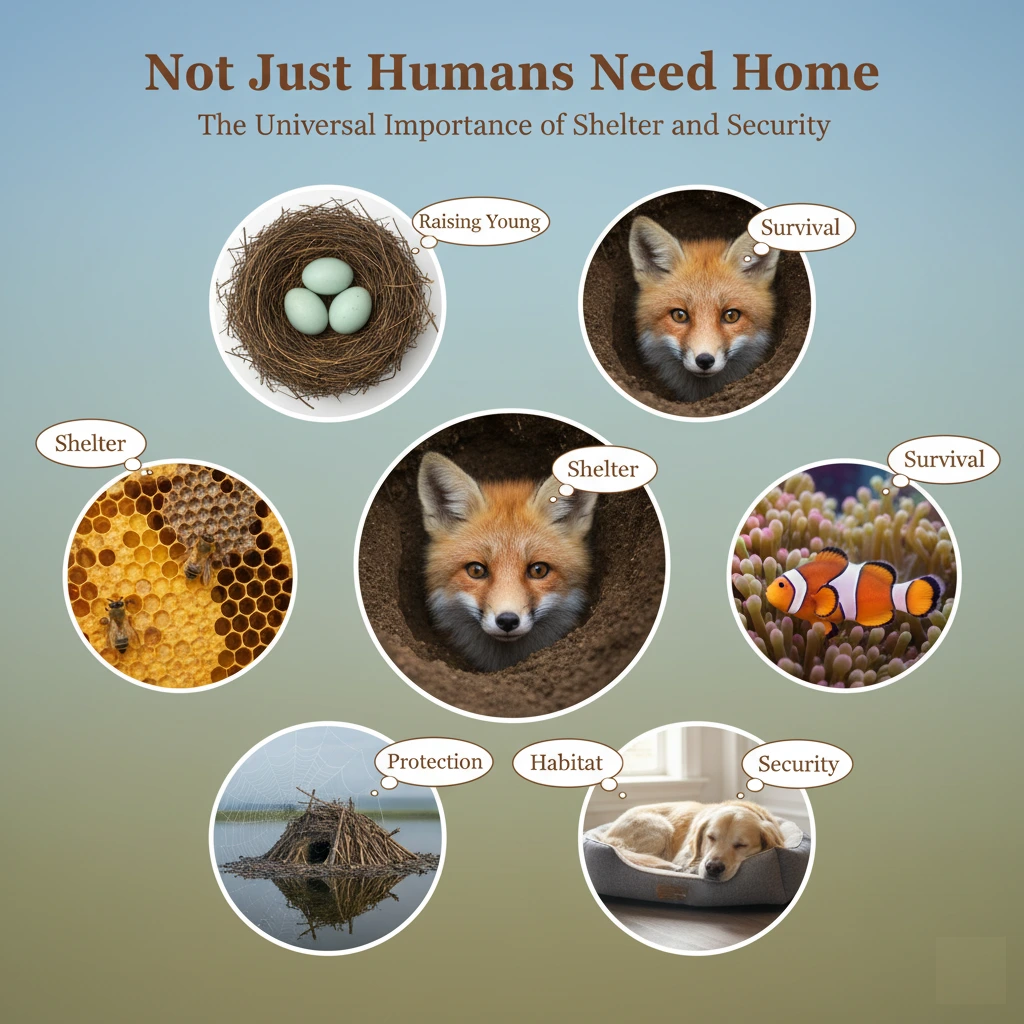
- Invertebrate Ingenuity: Consider the humble spider, weaving an intricate web that is both a sophisticated hunting tool and a safe dwelling. Or the termite, constructing towering, air-conditioned mounds that regulate temperature and humidity with architectural precision, providing a secure, multi-generational home for millions.
- The Mammalian Den: Mammals seek or create spaces that offer warmth and safety for vulnerable young. Beavers are master engineers, building dams that create tranquil ponds to secure their lodges. Bears find or dig out dens for hibernation, a secure sanctuary for survival during the harshest months. These shelters are critical for reproduction and the safety of cubs and kits.
Security, Stability, and Growth
The importance of a stable home environment extends far beyond basic physical shelter; it provides the psychological and social conditions necessary for development:
- Raising the Young: For social animals, the “home” (whether a nest, burrow, or territory) is the classroom. Bird nests provide a fixed point where parents can reliably bring food, allowing chicks to focus their energy on growth. In wolf packs, the den site is a vital hub where pups learn crucial social skills, hunting techniques, and pack hierarchy before venturing out into the wider world.
- The Buffer Against Stress: Just as a human needs a safe space to decompress, animals rely on the security of their home base to reduce stress hormones. When an animal is constantly exposed and vulnerable, its energy is dedicated to vigilance and defense, inhibiting proper rest, digestion, and development. A secure home allows for allostasis—the ability to maintain stability through physiological change.
The Human Impact on Animal Homes
Understanding the universal need for a stable home has critical implications for conservation and ethics. When human activity disrupts natural habitats, the consequences are severe because we are destroying not just land, but the very foundation of an animal’s existence:
- Habitat Destruction: Deforestation, urbanization, and agricultural expansion directly eliminate the homes of countless species. A felled tree is not just wood; it is the home for squirrels, a nesting site for birds, and a critical shelter for insects.
- The Pet Paradigm: For domestic animals, the concept of home is entirely dependent on their human caregivers. A loving, stable home environment provides the security and consistency necessary for a dog or cat to thrive socially and emotionally, demonstrating that even domesticated species rely on a secure base for mental and physical health.
A Universal Truth
The drive to secure a home is perhaps the most eloquent demonstration of the unity of life on Earth. Whether it’s the complex honeycomb of a bee, the sheltered cave of a leopard, or the cozy warmth of a family living room, the need for a stable, secure, and protected space is a primal necessity.
Ultimately, recognizing that “Not Just Humans Need Home” fosters a deeper empathy and responsibility—a realization that preserving and respecting the natural world means safeguarding the countless, ingeniously constructed sanctuaries that make life possible for every creature.