

Bringing home a new puppy is a time of incredible joy, excitement, and… a lot of questions. Standing in the pet food aisle, faced with dozens of bags and cans all claiming to be the best, can be one of the most overwhelming experiences for a new owner.
What does “grain-free” mean? Why does breed size matter? What is AAFCO?
Your puppy’s nutrition in their first year is the foundation for a lifetime of health. Choosing the right food will support everything from their bone growth and brain development to their immune system and energy levels. This guide will cut through the marketing noise and give you the clear, essential steps to choosing the best food for your new companion.
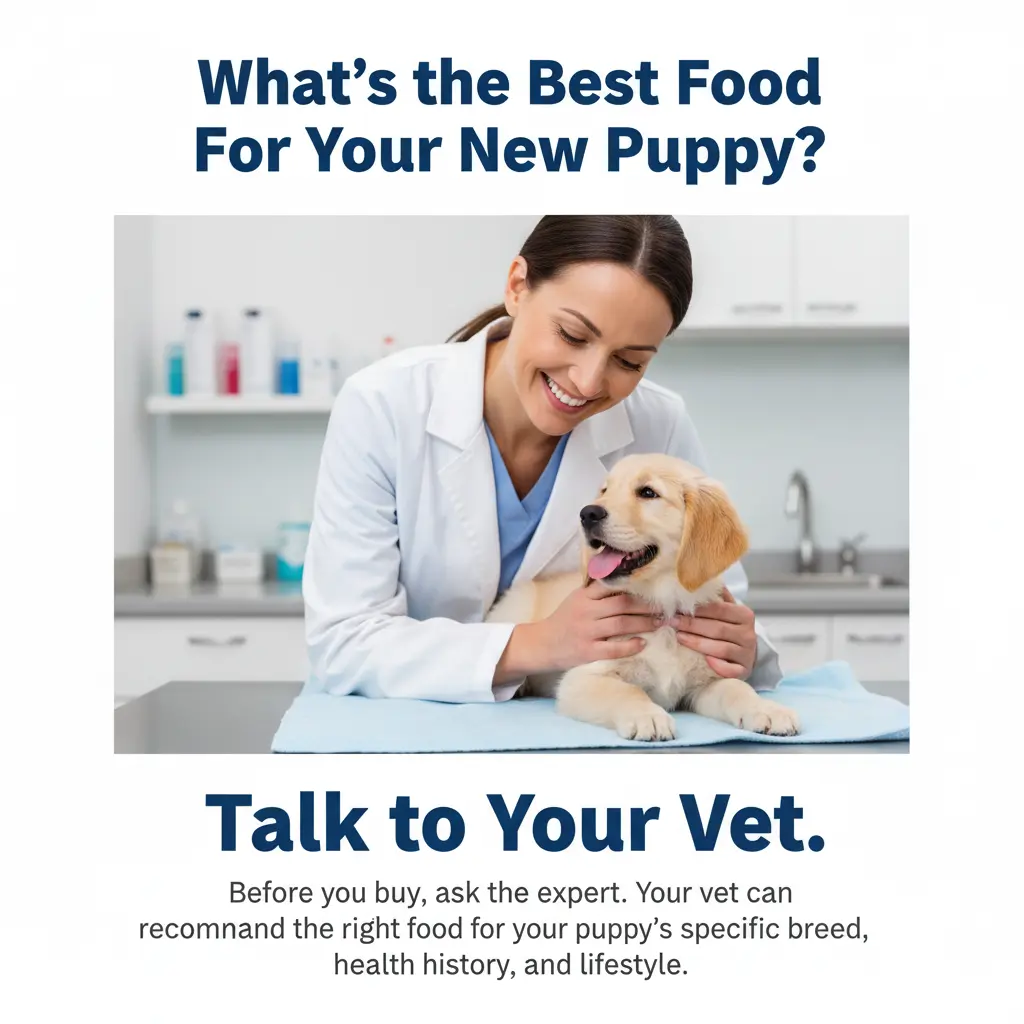
1. The Golden Rule: Talk to Your Vet
Before you buy anything, your first and most important step is to consult your veterinarian. They are the only ones who can give you personalized advice based on your specific puppy’s:
- Breed: A Great Dane has vastly different nutritional needs than a Chihuahua.
- Health History: Your vet will know if your puppy has any sensitivities or medical predispositions.
- Lifestyle: An active, herding-breed puppy may need a different calorie count than a more sedentary companion breed.
Your vet can recommend specific brands or formulas that they trust and that fit your puppy’s individual profile.
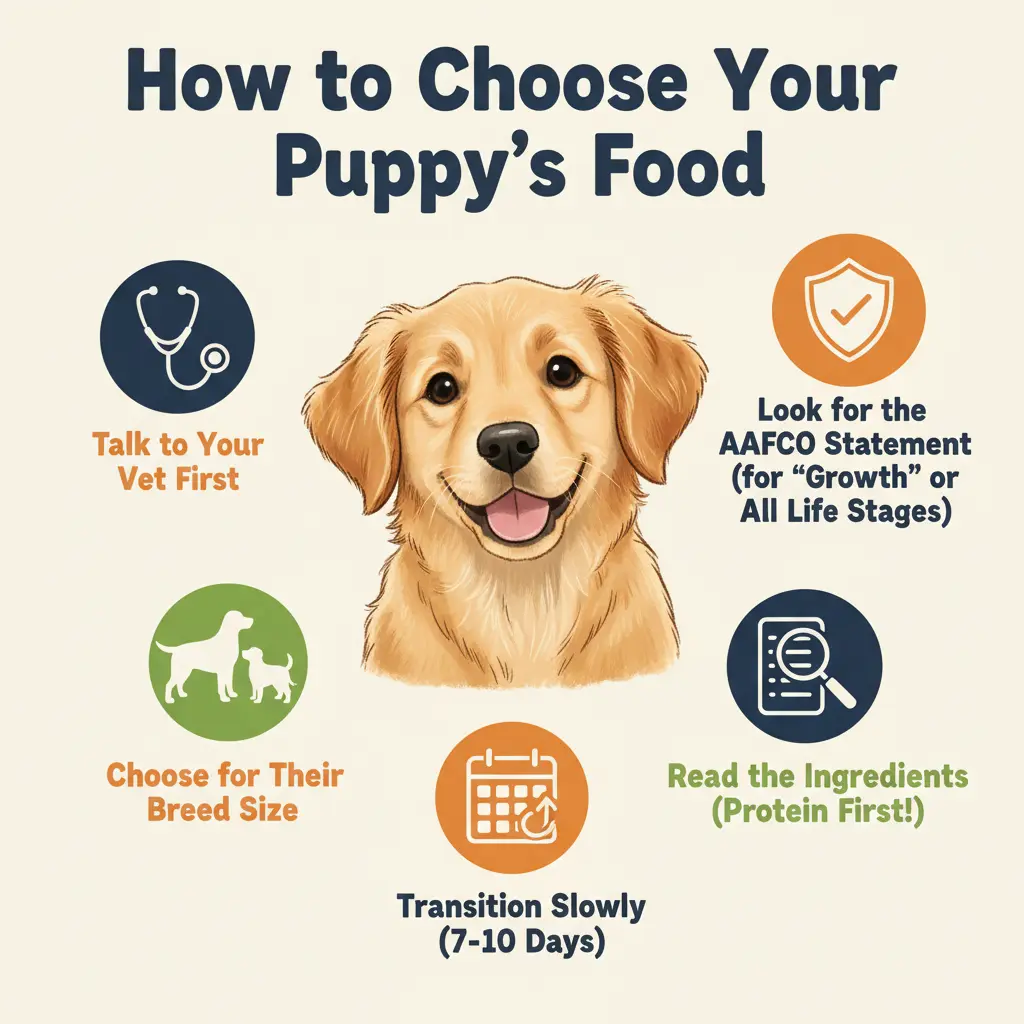
2. Decode the Label: The AAFCO Statement
This is the most important thing to look for on any bag or can. The Association of American Feed Control Officials (AAFCO) sets the nutritional standards for pet food in the United States.
Look for a “Nutritional Adequacy Statement” on the label. For a puppy, it must say one of the following:
- “Formulated to meet the nutritional levels established by the AAFCO Dog Food Nutrient Profiles for growth.”
- “Formulated to meet the nutritional levels established by the AAFCO Dog Food Nutrient Profiles for all life stages.”
This statement is your guarantee that the food is “complete and balanced” for a growing puppy and not just a snack or supplemental food. An “all life stages” food is also suitable for puppies, as their nutritional requirements are the highest.
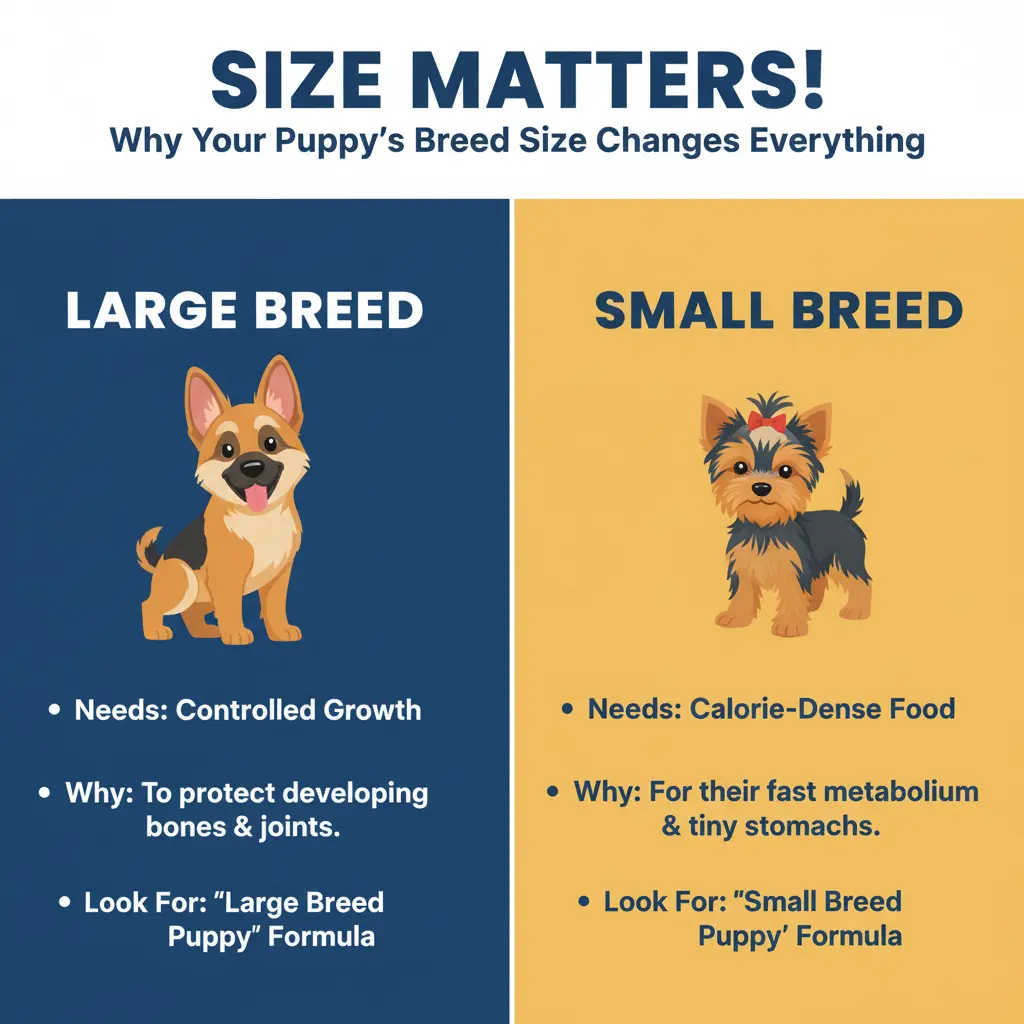
3. Size Matters: Why Breed-Specific Formulas Are Critical
This is perhaps the most crucial nutritional choice you will make. Puppies grow at different rates, and their food must reflect that.
Large & Giant Breed Puppies (e.g., Labrador, German Shepherd, Great Dane)
It may seem counterintuitive, but large-breed puppies need to grow slowly. If they grow too fast, they are at a much higher risk of developing serious and painful skeletal problems like hip dysplasia, elbow dysplasia, and osteochondritis.
Large-breed puppy formulas are specially designed with:
- Less Caloric Density: To prevent overly rapid growth.
- Controlled Calcium and Phosphorus: An improper ratio can cause severe bone and joint issues.
Do not feed a large-breed puppy a regular puppy food. Always choose a formula specifically labeled “for large breed puppies.”
Small & Toy Breed Puppies (e.g., Yorkie, Dachshund, Pomeranian)
Small breeds have the opposite problem. They have incredibly fast metabolisms and tiny stomachs.
- Calorie-Dense: They need more calories per pound than a large-breed puppy.
- Small Kibble: The kibble size is made smaller to prevent choking and make it easier for their small jaws to chew.
4. How to Read the Ingredient List
Ingredients are listed by weight, with the heaviest items first. Here’s a simple breakdown of what to look for and what to be wary of.
What to Look For:
- A Named Animal Protein as the First Ingredient: Look for “chicken,” “beef,” “lamb,” “salmon,” or “chicken meal.” This indicates a high-quality protein source.
- Healthy Fats & Omegas: Fats are a puppy’s main energy source. Look for ingredients like “chicken fat” or “fish oil.” Fish oil is an excellent source of DHA, an omega-3 fatty acid that is vital for brain and eye development.
- Digestible Carbohydrates: Whole grains (like brown rice, oatmeal, barley) and vegetables (like sweet potatoes and peas) provide energy and fiber.
What to Be Wary Of:
- Generic “Meat” Ingredients: Avoid non-specific terms like “meat meal” or “animal by-product meal.” You want to know exactly which animal the protein is from.
- Fillers as a Top Ingredient: If the first ingredients are “corn,” “wheat gluten,” or “soy,” the food may be less nutritious and harder to digest.
- Artificial Colors, Flavors, and Sweeteners: Your puppy doesn’t care what color their kibble is. These are unnecessary chemicals added for the human’s benefit, not the dog’s.
5. Wet vs. Dry: Choosing a Food Type
There is no single “right” answer, and many owners use a combination of both.
- Dry Food (Kibble)
- Pros: More convenient, more cost-effective, and has a long shelf life. The crunchy texture can also help with dental health by reducing plaque.
- Cons: Less palatable for some picky eaters.
- Wet Food (Canned)
- Pros: Highly palatable (great for picky eaters), and has a high moisture content, which helps with hydration.
- Cons: More expensive, must be refrigerated after opening, and can stick to teeth, potentially requiring more dental care.
For very young puppies just weaning from milk, some vets recommend moistening dry kibble or starting with wet food, as it’s easier for their developing teeth to chew.
6. The Transition Plan: How to Safely Switch Foods
When you first bring your puppy home, try to keep them on the same food the breeder or shelter was using for at least a few weeks. A new home is stressful enough, and a sudden food change can cause gastrointestinal (GI) upset like diarrhea and vomiting.
When you (and your vet) decide to switch foods, do it gradually over a 7- to 10-day period.
- Days 1-2: 75% old food + 25% new food
- Days 3-4: 50% old food + 50% new food
- Days 5-6: 25% old food + 75% new food
- Day 7+: 100% new food
If your puppy shows any signs of an upset stomach, slow down the transition.
Final Checklist
Choosing a puppy food doesn’t have to be a mystery. Use this checklist on your next trip to the store:
- Ask my vet for a recommendation.
- Look for the AAFCO statement for “growth” or “all life stages.”
- Choose the right formula for my puppy’s breed size (especially “large breed” if applicable).
- Read the first five ingredients: Is a named animal protein first?
- Check for key nutrients like DHA from fish oil.
- Avoid artificial colors and generic “meat” fillers.
By focusing on these key points, you can be confident that you are giving your new best friend the nutritional start they need to grow up healthy, happy, and strong.