
Grooming a long-haired dog successfully at home requires more than just a quick brush; it demands a systematic, multi-step approach and a commitment to consistency. The challenge lies not in the length of the hair itself, but in preventing the dense, often painful intertwining of the coat known as matting. By adopting professional techniques and specialized tools, pet owners can establish a routine that keeps their dog comfortable, healthy, and tangle-free. This guide breaks down the process into four essential steps, focusing on efficiency, simplicity, and, above all, safety.
The Foundation: Preparation, Commitment, and Essential Toolkit
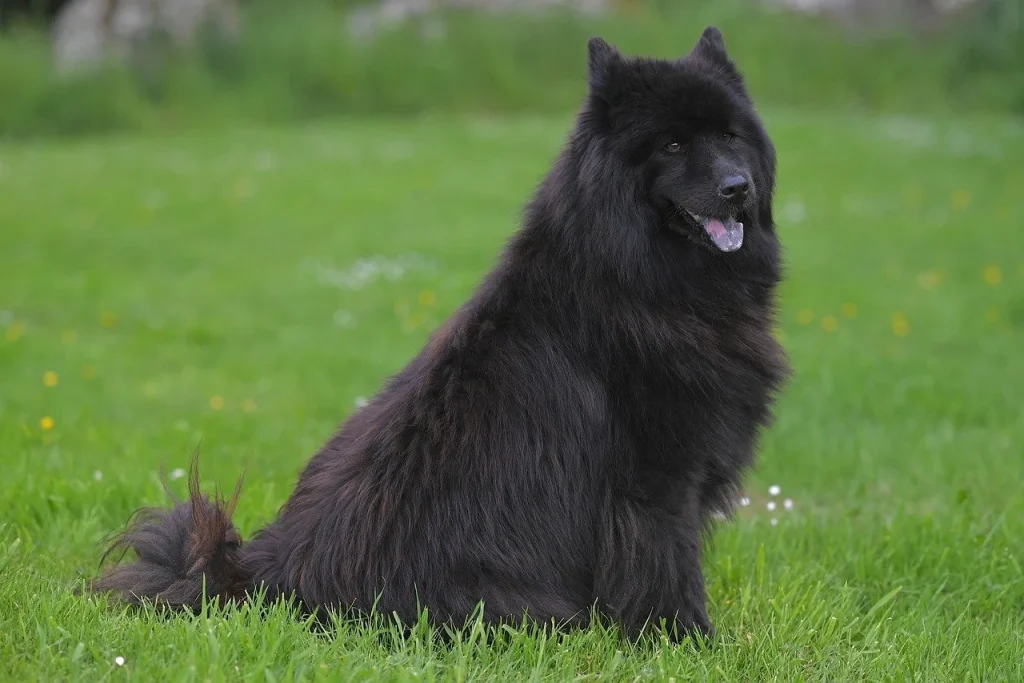
The single most critical element in maintaining a long-haired coat is regularity. Matting is a continuous process; if the coat is not maintained continuously, hair strands intertwine and tighten irreversibly against the skin. Owners must commit to frequent brushing and a consistent schedule of full baths and conditioning, typically every three weeks.
The Professional Grooming Arsenal
Achieving a professional finish and preventing discomfort relies on having the right equipment. Generic tools are insufficient for penetrating thick or double coats. Successful home grooming necessitates professional-grade tools designed specifically for long hair.
A high-quality slicker brush is essential for removing loose undercoat and initiating surface detangling. These brushes feature hard wire bristles with bent ends. While effective, caution must be exercised, as the wire bristles can be sharp; the groomer’s hand should be securely positioned beneath the coat when brushing to protect the dog’s sensitive skin from irritation. Following the slicker brush, a pin brush—with its densely packed bristles—is used to help the hair recombine smoothly with the rest of the coat.
The gold standard for coat inspection is the steel comb. This tool should feature both a wide-toothed end and a fine-toothed end. If the fine end cannot pass easily through the coat after brushing, tangles or mats still exist, signaling that more work is required.
A successful groom also depends heavily on coat lubrication. A high-quality detangling spray serves as a vital lubricant, dramatically reducing friction and static electricity during brushing, which makes the entire process smoother and less stressful for the dog.
Lastly, a High-Velocity (HV) Dryer is non-negotiable for long or thick coats. While towel drying can remove surface moisture, it is insufficient for thick coats and often leaves moisture trapped deep in the undercoat. This retained moisture contributes to matting and creates a perfect environment for bacterial growth and skin issues.
The Role of Tool Quality in Managing Anxiety
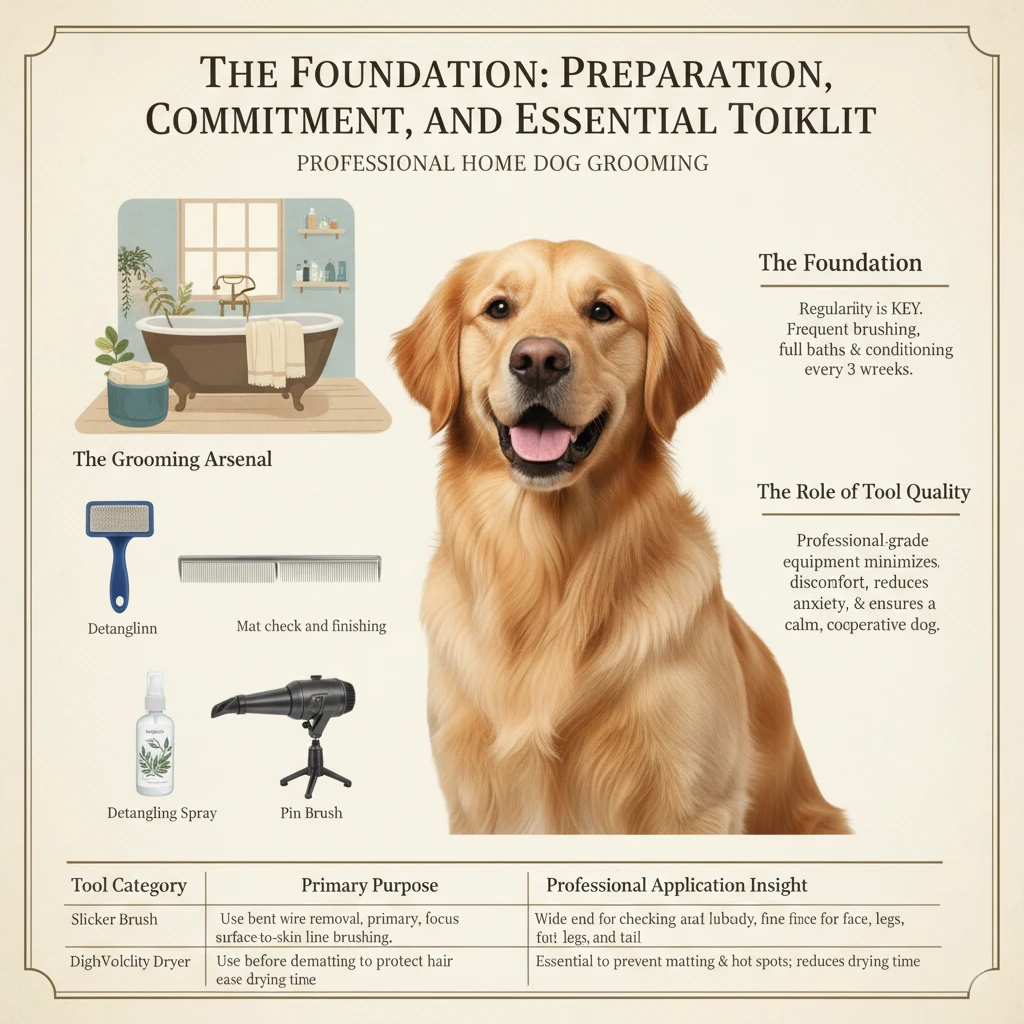
The selection of grooming tools has a profound effect on the dog’s behavior. Using inadequate or low-quality tools increases the duration of the grooming session and, more importantly, increases the level of discomfort experienced by the dog. This prolonged pain or discomfort directly correlates to elevated anxiety levels during future grooming sessions. By investing in professional-grade equipment, such as proper detangling sprays and effective brushes, the home groomer minimizes physical discomfort, leading to a much calmer and more cooperative dog in the long term. This correlation demonstrates that the choice of equipment is a fundamental aspect of long-term behavioral success.
| Tool Category | Primary Purpose | Professional Application Insight |
| Slicker Brush | Undercoat removal, primary detangling | Must use bent wire bristles; focus on surface-to-skin line brushing. |
| Steel Comb | Mat check and finishing | Wide end for checking body, fine end for face, legs, and tail. |
| Detangling Spray | Friction reduction and coat lubrication | Use before attempting any dematting to protect the hair shaft and ease removal. [2, 3] |
| High-Velocity Dryer | Complete undercoat drying | Essential to prevent matting and hot spots; reduces drying time dramatically. |
Step 1: Mastering the Pre-Bath Brush-Out (Mat Prevention is Key)
The golden rule of long-haired dog grooming is simple: Never bathe a matted dog. When water saturates a knot, it acts as a permanent setting agent, tightening the mat irrevocably against the dog’s skin, making subsequent removal painful or impossible. Therefore, every knot must be removed before the dog enters the tub.
Line Brushing: Brushing Down to the Skin
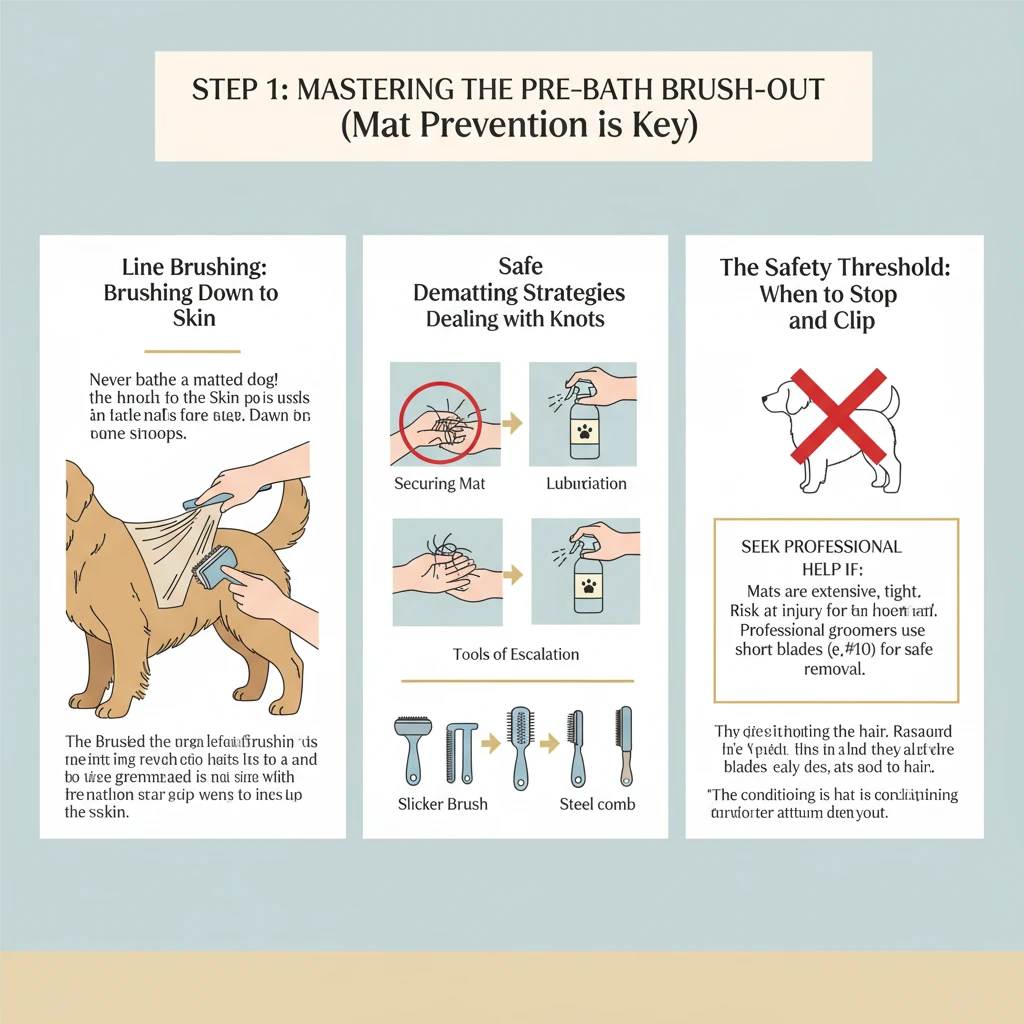
Surface brushing is ineffective for long coats. True brushing success relies on line brushing, a systematic technique that ensures the brush reaches the base of the coat, where mats form first. This technique involves parting the hair layer by layer and brushing upward and outward in small, manageable sections, working methodically over the entire body.
Safe Dematting Strategies: Dealing with Knots
Patience is crucial during dematting, as rushing the process risks hurting the dog or damaging the coat.
- Securing the Mat: Whenever handling a mat, the most important safety measure is to pinch the base of the mat firmly with your fingers, securing your hand against the dog’s skin. This simple action prevents the force of brushing from pulling on the sensitive skin, which is the primary source of pain during dematting.
- Lubrication: Saturate the mat completely with a detangling spray. Alternatively, natural agents such as coconut oil can be used to lubricate the strands, allowing them to separate more easily. This lubrication is critical for reducing the stress on the hair shaft during the mechanical separation process.
- Start from the Bottom: Always begin the detangling process from the very tip (bottom) of the knot and work your way up, pulling the mat as far away from the dog’s skin as possible without causing discomfort.
- Tools of Escalation: Start with a mat breaker, a specialized tool that uses claw-like teeth to gently slice through the mat without plucking out excessive fur. Once the mat is small enough, transition to a slicker brush for wider detangling, followed by a pin brush to reintegrate the hair, and finally, verify the successful removal using the steel comb.
The Safety Threshold: When to Stop and Clip
Severe matting should be viewed not just as a cosmetic issue, but as a medical concern. Dense mats act like armor, trapping moisture and heat against the dog’s skin, which can quickly lead to fungal infections, bacterial growth, and painful hot spots. The constant pulling sensation caused by tight mats creates underlying discomfort and trauma.
It is imperative to recognize that clipping a severely matted coat is exceptionally risky for the home groomer. The skin often becomes pulled taut or trapped within the dense mat, and the possibility of injury increases dramatically. If mats are extensive, tight, or “pelted” (a solid sheet of matting), the responsible and safest course of action is to stop immediately and seek professional assistance to have the coat shaved short. Groomers are trained to safely use very short blades, such as a #10 (1.5mm) , to safely get beneath the matting and relieve the dog’s discomfort, prioritizing health over the coat’s length.
Once the painful, mechanical process of dematting is complete, the hair cuticle inevitably suffers damage. This mechanical trauma leaves the newly detangled hair highly susceptible to immediate re-matting. Consequently, the coat must be immediately conditioned during the bath (Step 2) to seal the cuticle and physically prevent the recurrence of matting in that vulnerable section.
Step 2: The Art of the Perfect Bath and Conditioning
A proper bath for a long-haired dog is not merely about cleaning; it is a vital step in moisture management and structural integrity of the coat.
Choosing and Preparing Products
Selecting appropriate, moisturizing products is foundational. Many professional-grade shampoos are formulated with ingredients like Omega 3, coconut oil fatty acids, and Vitamin E to loosen the undercoat, combat shedding, and strengthen hair roots.
For many professional products, dilution is key. Shampoos are often highly concentrated and must be mixed with water—sometimes up to 32 parts water to 1 part shampoo—before use. Diluting the product correctly ensures that the cleansing agents work optimally without stripping the coat of necessary natural oils, while also preventing product residue buildup.
One of the most frequent errors owners make when grooming long-haired dogs is skipping the conditioning step. Conditioning is necessary because it smooths the hair cuticle, making the coat slicker, tangle-resistant, and significantly easier to dry. If this step is neglected, the hair shaft remains open and prone to catching adjacent strands, which accelerates mat formation. Consistency here matters: regular conditioning every three weeks maintains this protective slickness.
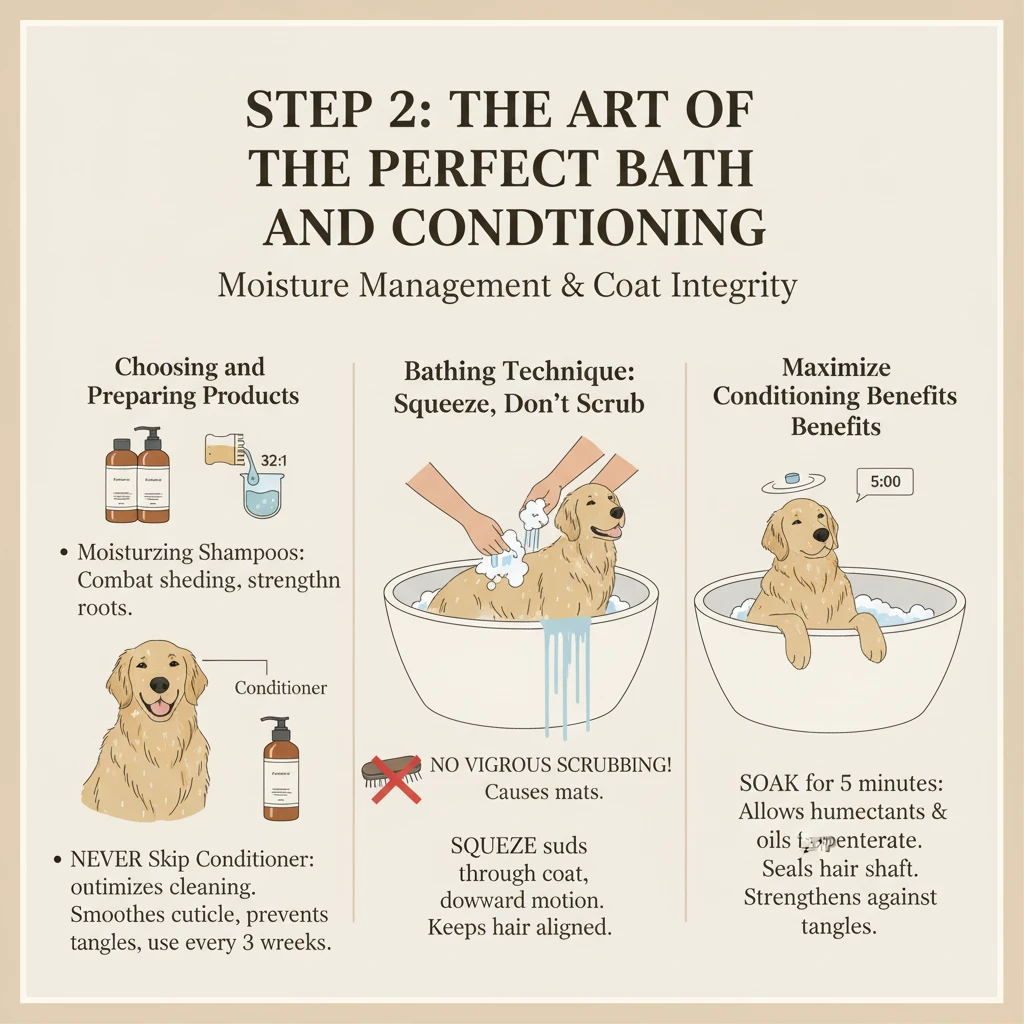
Bathing Technique: Squeeze, Don’t Scrub
Once the coat is thoroughly wet, apply the diluted shampoo, gently massaging it into the skin. The most critical technique during the bath is avoiding vigorous scrubbing. Scrubbing a long coat causes the wet hairs to tangle and felt together, immediately forming new mats. Instead of scrubbing, gently squeeze the suds through the coat, always working downward in a flowing motion to lift dirt while keeping the hair alignment intact.
After rinsing the shampoo completely, apply the conditioner. To maximize the benefit, the conditioner must be allowed to soak into the skin and coat for a minimum of five minutes before rinsing. This soak time allows the moisturizing agents, humectants, and oils to fully penetrate and seal the hair shaft. This chemical action significantly strengthens the hair, providing the necessary resilience against future tangles and snags.
Step 3: High-Velocity Drying and Safety
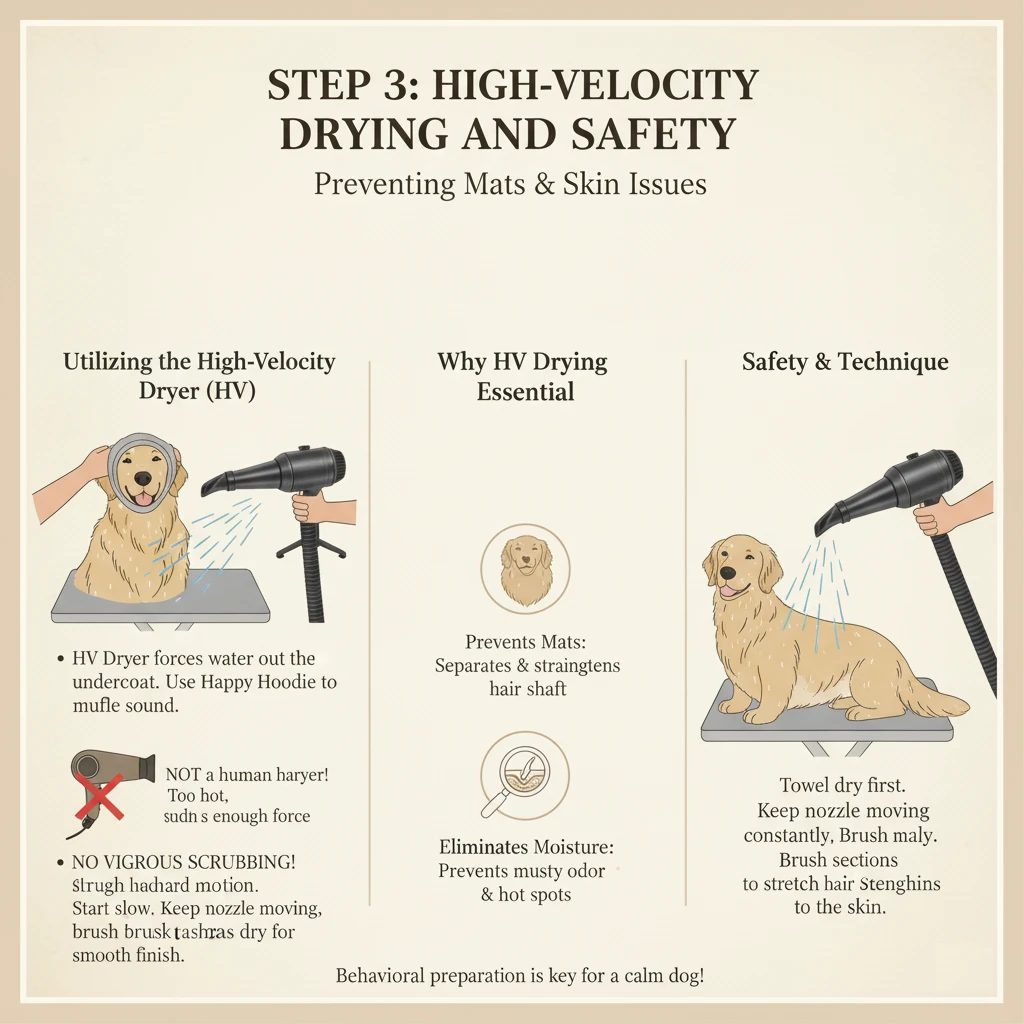
Improper drying is one of the fastest ways to destroy all the hard work put into brushing and bathing. Trapped moisture accelerates mat formation, creates a musty odor, and dramatically increases the risk of painful skin infections known as hot spots.
Utilizing the High-Velocity Dryer (HV)
The HV dryer is necessary because it physically forces water out of the dog’s undercoat using sheer air pressure, ensuring the dog is 100% dry down to the skin. This is fundamentally different from a human hair dryer, which uses high heat that can burn the dog’s skin and does not have the necessary force to penetrate the thick coat.
First, thoroughly towel dry the coat to remove surface water.
The HV dryer can be loud, which is the major source of anxiety for many dogs. To manage this, specialized calming aids, such as a Happy Hoodie (a wrap placed over the ears to muffle sound), can be used. Grooming success is heavily reliant on behavioral preparation. For nervous dogs, introduce the dryer slowly, starting at the lowest setting or pointing the air away from the dog, and gradually increase the intensity as tolerance builds.
The drying action itself is a powerful grooming technique. The force of the air separates and straightens the hair shaft as it dries, which serves as an effective pre-brushing step and prevents the hair from curling or felting into mats. While drying, keep the nozzle moving constantly, and continue brushing the coat to hold it taught in sections, which helps stretch the hair and achieve a smooth, professional finish.
Step 4: The Finishing Detail Trims
Once the dog is 100% clean and fully dry, the detail trimming for hygiene and safety can begin.
Essential Clipping Safety Pre-Requisites
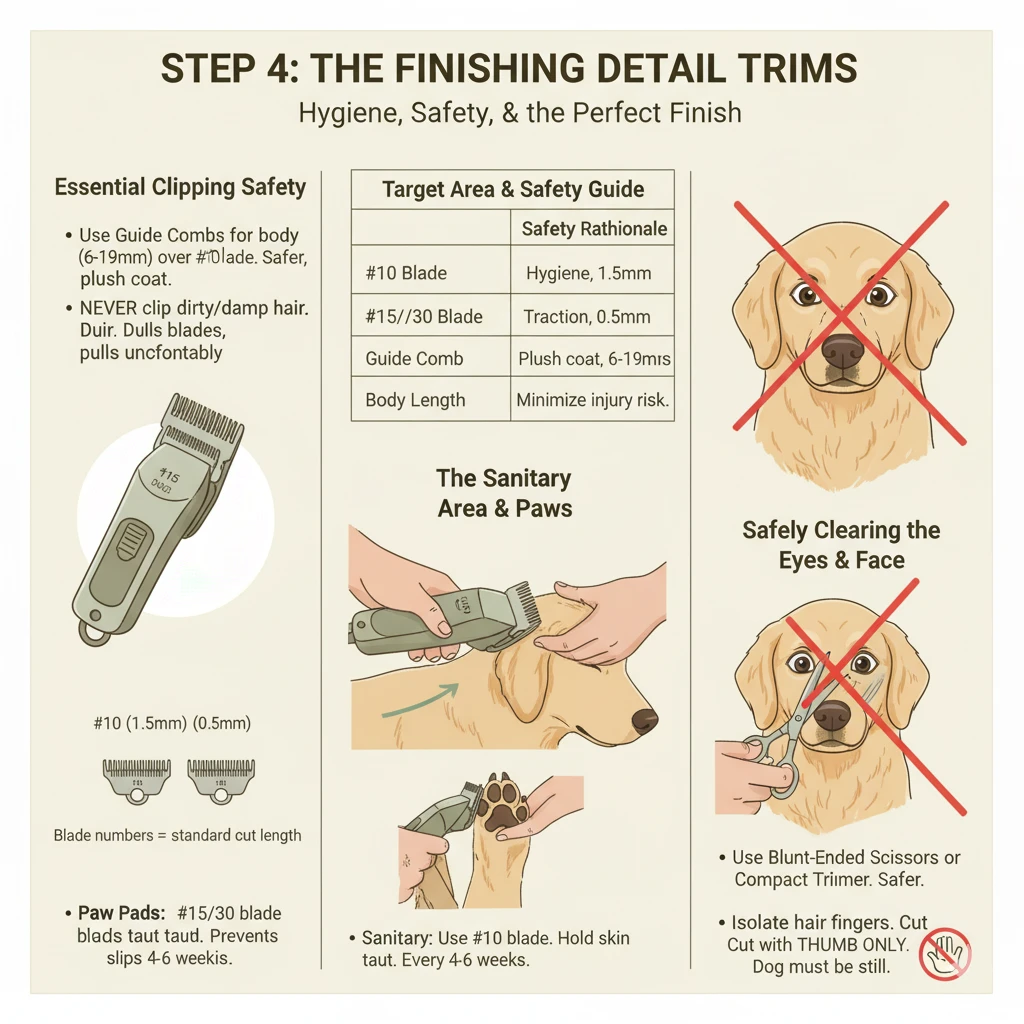
Clipping dirty or damp hair must be avoided. Dirt and moisture quickly dull the clipper blades, causing them to pull the hair uncomfortably and resulting in a poor finish. For the body, especially for novice groomers, using a set of guide combs over a standard blade (such as a #10 blade) is strongly recommended. The comb keeps the sharp cutting edge away from the dog’s skin, significantly improving safety and making it easier to maintain a longer, plush coat length (8mm to 19mm).
The specialized clipper blade numbers are the universal standard for grooming safety, defining the exact distance between the skin and the cut hair. Adhering to these professional standards minimizes the risk of clipper burn, which occurs when a blade is too short or used improperly on loose skin.
| Target Area | Recommended Blade/Guard | Approximate Length (mm) | Safety Rationale |
| Sanitary Area (Hygiene) | #10 Blade | 1.5mm – 1.8mm | Close trim for cleanliness; standard professional safety length for sensitive areas. |
| Paw Pads (Traction) | #15 or #30 Blade | 0.5mm – 1.2mm | Very close shave to prevent slipping and debris buildup. |
| Body Length (Plush Coat) | Guide Comb over #10 Blade | 6mm – 19mm | Safest method for beginners to achieve longer styles without skin exposure. |
| Eyes/Face (Detailed) | Compact Trimmer or Blunt Scissors | Variable (Isolation required) | Minimized risk of accidental skin snips or eye injury. |
The Sanitary Area and Paws
Trimming the sanitary area (genitals, rectum, abdomen) is essential for hygiene and should be done every four to six weeks. A #10 blade (1.5mm to 1.8mm cut length) is the standard professional choice for this sensitive area. When clipping, hold the dog steady and apply gentle tension to the skin to keep it flat, guiding the clipper slowly and carefully.
For the paw pads, clearing the hair prevents slipping on hard surfaces and stops debris, burrs, or snow from accumulating between the toes. This area requires a closer trim, typically using a #15 or #30 blade (0.5mm to 1.2mm) for a clean shave. For the small area between the toes, a small trimmer or a #10 blade can be used for precision.
Safely Clearing the Eyes and Face
Trimming around the eyes requires absolute stillness from the dog. If the groomer is nervous, the dog will perceive that anxiety, making the task exponentially harder.
For safety, utilize small, cordless compact trimmers or specialized blunt-ended scissors. These tools are significantly safer than standard sharp-tipped scissors around the delicate eye area.
If using scissors, the key to control lies in the technique: pull the coat out, wait for the dog to be completely still, and make the cut by moving only the thumb to manipulate the cutting blade. Avoid opening and closing the entire hand, as this risks losing control and causing injury. Before making a cut, use your fingers to isolate the exact strands you intend to trim, creating a protective barrier around the eye.
Troubleshooting and Maintenance: Behavioral Success and Routine
Grooming a long-haired dog is a partnership, and long-term success is rooted in consistency and behavioral management.
Overcoming Grooming Anxiety and Fear
Anxiety in dogs during grooming often stems from past traumatic experiences or a deep-seated fear of the noise and vibration generated by tools like clippers and dryers.
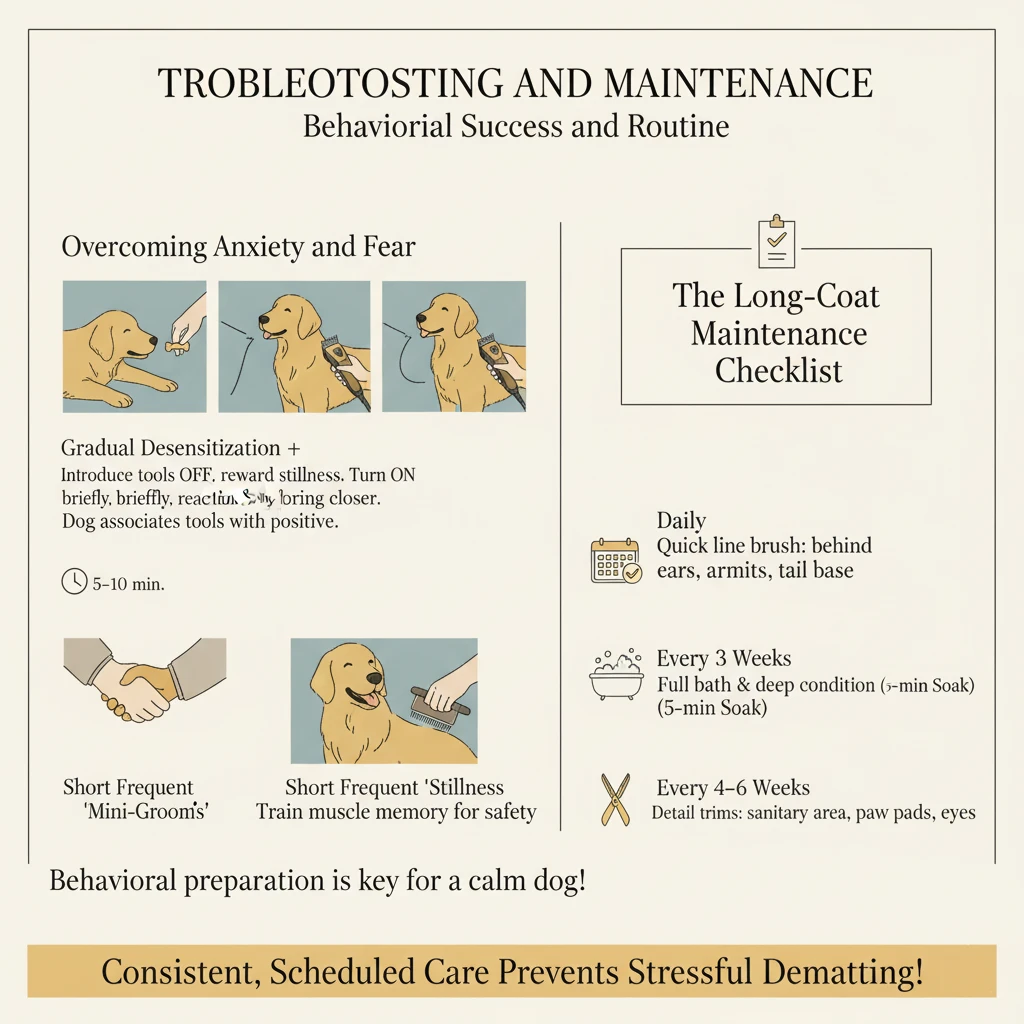
The most effective strategy to overcome fear is gradual desensitization paired with positive reinforcement. Owners should introduce tools when the dog is calm, allowing the dog to explore the tools while they are off. When the dog is still, offer treats and praise. Next, turn the tool on briefly while holding it at a distance, rewarding any lack of reaction. This process should be repeated, slowly bringing the tool closer until the dog associates the clippers or dryer with positive outcomes.
Instead of forcing one long, stressful grooming session, short, frequent “mini-grooms” lasting only 5 to 10 minutes can be highly beneficial, allowing the dog to gradually build tolerance without becoming overwhelmed. This proactive training establishes crucial grooming literacy and trust, teaching the dog the muscle memory required for stillness, which is essential for safety around sharp equipment.
The Long-Coat Maintenance Checklist
Consistent, scheduled care prevents the necessity of stressful and painful emergency dematting or shaving.
- Daily: A quick check and line brush should be performed on the areas most prone to matting: behind the ears, armpits, and the base of the tail.
- Every 3 Weeks: A full bath and deep condition is recommended, ensuring the vital 5-minute conditioner soak time is honored.
- Every 4–6 Weeks: Detail trimming of the sanitary area, paw pads, and around the eyes should be completed to maintain cleanliness and prevent functional issues.
Conclusion
Successfully maintaining a long-haired dog at home is entirely achievable, provided the owner adheres to a professional-grade methodology. The effort invested in consistent brushing, high-quality conditioning, and systematic HV drying dramatically reduces the risk of severe matting. Proactive, regular management is not only the most cost-effective approach, avoiding expensive professional emergency clipping, but it also prioritizes the dog’s comfort and long-term dermatological health. By viewing grooming as a continuous cycle of Brush, Condition, and Fully Dry, the owner builds confidence and ensures the coat remains manageable and beautiful.
i would like to understa that but i think my pet have same problems
U are obsolitly right thanks u