

As a dog owner, it’s natural to want to share your favorite healthy snacks with your furry companion. When you’re enjoying a handful of sweet, juicy blueberries, and those big puppy eyes look up at you, you’re bound to ask: “Is it safe for dogs to eat blueberries?”
The short answer is a resounding yes. Blueberries are not only safe for dogs but are also considered a “superfood” packed with health benefits.
However, like any treat, they must be given in moderation. This guide will cover the benefits of blueberries, the correct portion sizes, and other essential information about fruits and your dog’s diet.
The Health Benefits of Blueberries for Dogs
Blueberries are low in calories but high in nutrients, making them an excellent treat. Here’s why they’re so good for your pup:
- Rich in Antioxidants: Blueberries are famous for their high levels of antioxidants, particularly anthocyanins, which give them their deep blue color. These compounds help fight free radicals, which are responsible for cellular damage and aging. This can support your dog’s immune system and promote healthy cognitive function, especially in senior dogs.
- Packed with Vitamins: They are a great source of Vitamin C (for immune support) and Vitamin K (which aids in blood clotting).
- High in Fiber: The fiber in blueberries can aid in your dog’s digestion.
- Low in Sugar and Calories: Compared to many other fruits and commercial dog treats, blueberries are a low-calorie, low-sugar option, making them a healthier choice for a reward.

Answering a Common Myth: “Why Can’t Dogs Eat Blueberries?”
You may have heard a rumor that blueberries are unsafe, and this is a common misconception. Dogs can eat blueberries.
This myth likely stems from confusion with a highly toxic fruit: grapes. Grapes and raisins are extremely dangerous for dogs and can cause sudden kidney failure.
The only “dangers” associated with blueberries are not from the fruit itself but from how they are served:
- Choking Hazard: While small, a handful of blueberries can be a choking risk for very small dogs or dogs that eat too quickly.
- Too Much of a Good Thing: Eating too many blueberries can lead to an upset stomach, vomiting, or diarrhea due to the high fiber content.
- Sugary Products: The real danger lies in blueberry-flavored products. Never give your dog blueberry muffins, pies, yogurt, or artificial sweeteners. These are loaded with sugar, fats, and potentially xylitol, an artificial sweetener that is extremely toxic to dogs.
The takeaway: Stick to plain, fresh, or frozen blueberries.
How Many Blueberries Can I Give My Dog?
The key to safely feeding your dog any treat is moderation. Vets and nutritionists recommend the 10% Rule. This rule states that treats (including fruits and vegetables) should only make up 10% of your dog’s total daily calorie intake.
Here is a general guideline for serving sizes:
- Extra-Small Dogs (e.g., Chihuahua, Yorkie): 2-3 blueberries
- Small Dogs (e.g., Beagle, Dachshund): 5-6 blueberries
- Medium Dogs (e.g., Border Collie, Cocker Spaniel): A small handful (around 10)
- Large Dogs (e.g., Labrador, German Shepherd): A larger handful (up to 20-25)

How to Safely Feed Blueberries to Your Dog
- Wash Them: Always rinse blueberries thoroughly to remove any pesticides or dirt.
- Start Slow: The first time you give your dog blueberries, offer just one or two and wait 24 hours to see how their stomach reacts.
- Serve Fresh or Frozen: Both are perfectly safe. Frozen blueberries make a fantastic, crunchy, and refreshing treat, especially on a hot day.
- Mash or Cut Them: For small dogs, consider mashing the blueberries into their food or cutting them in half to prevent choking.
What is the Healthiest Fruit for Dogs?
While blueberries are a top contender, there isn’t one single “healthiest” fruit. A variety of safe fruits can offer different benefits.
Here are some of the healthiest fruits for dogs (always in moderation and with pits/seeds removed):
- Blueberries: As discussed, they are an antioxidant powerhouse.
- Apples (no seeds or core): A great source of vitamins A and C, plus fiber. The crunchy texture can also help clean your dog’s teeth.
- Watermelon (no seeds or rind): Incredibly hydrating (over 90% water) and full of vitamins A, B6, and C.
- Strawberries: Similar to blueberries, they are full of fiber, vitamin C, and antioxidants.
- Bananas: High in potassium and vitamins, but also higher in sugar, so they should be given more sparingly.
What Foods Are Toxic to Dogs?
Knowing what not to feed your dog is just as important as knowing what is safe. Some human foods are extremely dangerous and can be fatal.
Never feed your dog the following:
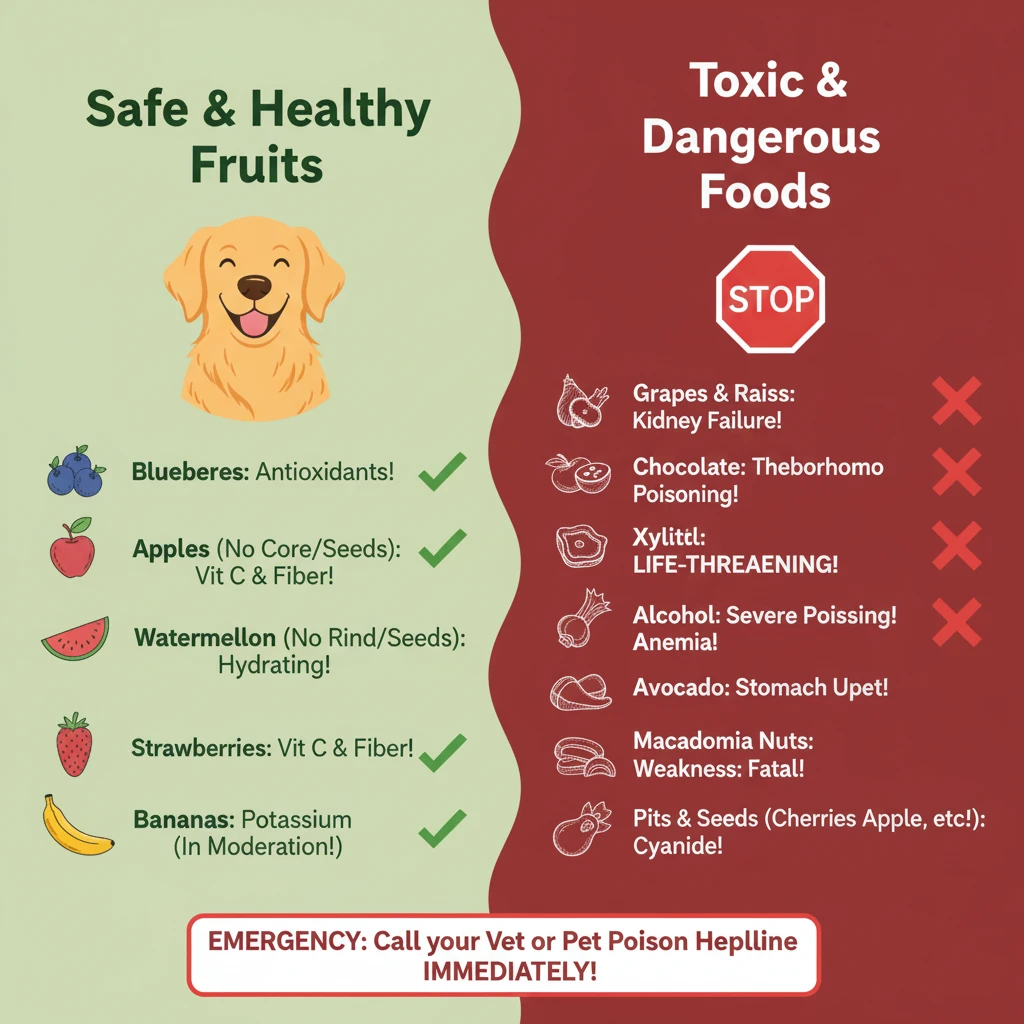
- Grapes and Raisins: Can cause acute kidney failure.
- Chocolate: Contains theobromine, which is highly toxic to dogs. Dark chocolate is the most dangerous.
- Xylitol: An artificial sweetener found in sugar-free gum, candy, peanut butter, and some baked goods. It causes a rapid, life-threatening drop in blood sugar and liver failure.
- Onions, Garlic, and Chives: These can damage a dog’s red blood cells, leading to anemia.
- Alcohol: Can cause alcohol poisoning, just as it does in humans, but it takes a much smaller amount.
- Avocado: Contains persin, which can cause vomiting and diarrhea.
- Macadamia Nuts: Can cause weakness, vomiting, tremors, and hyperthermia.
- Caffeine: Found in coffee, tea, and soda, it can be fatal.
- Pits and Seeds: The pits from cherries, peaches, and plums contain cyanide. Apple seeds also contain small amounts.
If you suspect your dog has eaten any of these foods, contact your veterinarian or the Pet Poison Helpline immediately.
The Final Verdict
Yes, dogs can safely eat blueberries. They are a healthy, low-calorie treat that many dogs love. Just remember to serve them in moderation, stick to the 10% rule, and choose fresh or frozen over any processed, sugary products.