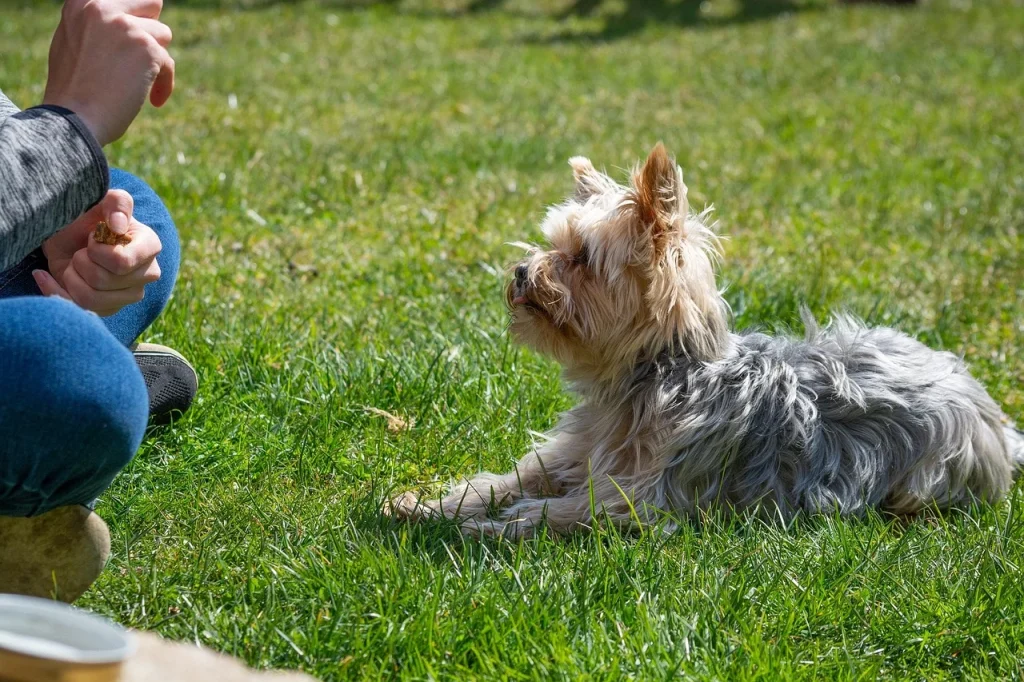
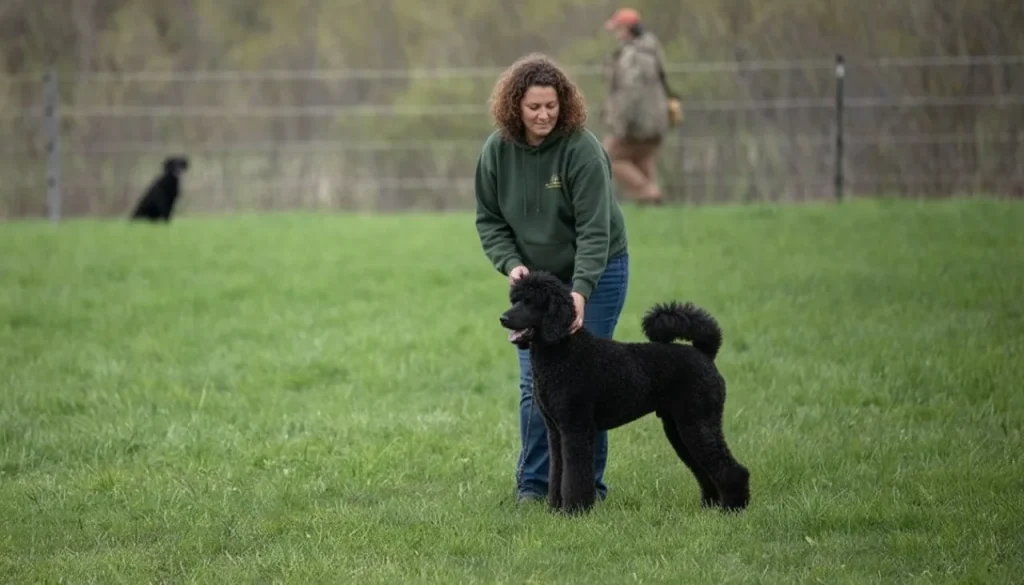
Dog training is often seen as a simple checklist of commands, but it’s truly both an art and a science—a delicate dance of communication that builds a unique bond between a person and their dog. It’s about more than just teaching “sit” and “stay”; it’s about creating a shared language based on trust and understanding. A well-trained dog is not just obedient, but a happy and confident companion who knows how to navigate the human world safely. This journey is a gift to your dog and your family—it helps you communicate clearly, correct unwanted behaviors, and keeps your dog’s mind active and entertained. The process starts not with the first command, but with making your puppy feel safe and secure in their new home.
The biggest change in modern dog training is a shift from being reactive to proactive. Instead of punishing “bad” behavior after it happens, the modern approach is to teach the dog the right thing to do from the start. Common issues like barking or chewing are seen as normal dog behaviors that just need to be redirected in a positive way. By proactively teaching your dog what you want them to do, you can prevent problem habits from forming. This approach helps your dog feel more secure and confident, which is the foundation for a great lifelong bond.
More Than Just Tricks: Building a Lifelong Partnership
Dog training is more than just teaching commands like “sit” and “stay.” It’s about building a strong relationship based on trust and understanding. A well-trained dog is a happy and confident dog who knows how to navigate the human world safely. Good training is a gift to your dog and your family—it helps you communicate clearly, correct unwanted behaviors, and keeps your dog’s mind active and entertained. The process starts with making your puppy feel safe and secure in their new home.
The biggest change in modern dog training is a shift from being reactive to proactive. Instead of punishing “bad” behavior after it happens, the modern approach is to teach the dog the right thing to do from the start. Common issues like barking or chewing are seen as normal dog behaviors that just need to be redirected in a positive way. By proactively teaching your dog what you want them to do, you can prevent problem habits from forming. This approach helps your dog feel more secure and confident, which is the foundation for a great lifelong bond.
Part II: The Trainer’s Toolkit: Essential Techniques for Success
Tip 5: Structure Short, Fun, and Frequent Sessions
The quality of training is more important than the length. Dogs, especially puppies, have short attention spans, so keep training sessions brief, focused, and fun—ideally between 5 and 15 minutes. Pushing them longer can lead to frustration. It’s better to do several short “mini-sessions” throughout the day. Always end on a high note while your dog is still successful and eager for more.
Tip 6: Find Your Dog’s “Currency”
Motivation is key. Figure out what your dog finds truly valuable—this is their “currency.” For many dogs, it’s food, but for others, it could be a favorite toy, praise, or a fun game like fetch. Experiment to see what your dog loves most. Use regular rewards, like their kibble, for practicing easy commands. Save the high-value rewards—like small pieces of chicken or a special squeaky toy—for learning new skills or for training in distracting environments.
Tip 7: Perfect Your Timing
For your dog to understand what they did right, the reward must be delivered immediately—within a few seconds—of the behavior. If you ask for a “sit” but don’t give the treat until after the dog stands up, you’ve rewarded them for standing up. To get the timing right, many trainers use a “marker.” This is a signal—like the word “Yes!” or a clicker—that you use the exact moment the dog does the correct action. The marker acts as a promise that a reward is on its way.
Tip 8: Use Clear and Simple Cues
Dogs don’t understand full sentences, so use short, one-word cues like “Sit,” “Stay,” or “Come.” It’s also very effective to pair each word with a unique hand signal. Each cue should have only one meaning. For example, “Down” should always mean “lie down,” not “get off the furniture.” Avoid repeating cues like “Sit, sit, sit!” This only teaches the dog to ignore the first command. Give the cue once, and if they don’t respond, help them succeed.
Tip 9: Manage the Environment
Always set your dog up for success, and that starts with managing the environment. When teaching a new behavior, start in a quiet, familiar place with no distractions, like your living room. Once your dog has mastered the command there, you can gradually start practicing in places with more distractions. You might move to the backyard, then a quiet sidewalk, and eventually a park. This builds your dog’s confidence and keeps them from getting overwhelmed.
Tip 10: Break It Down with “Shaping”
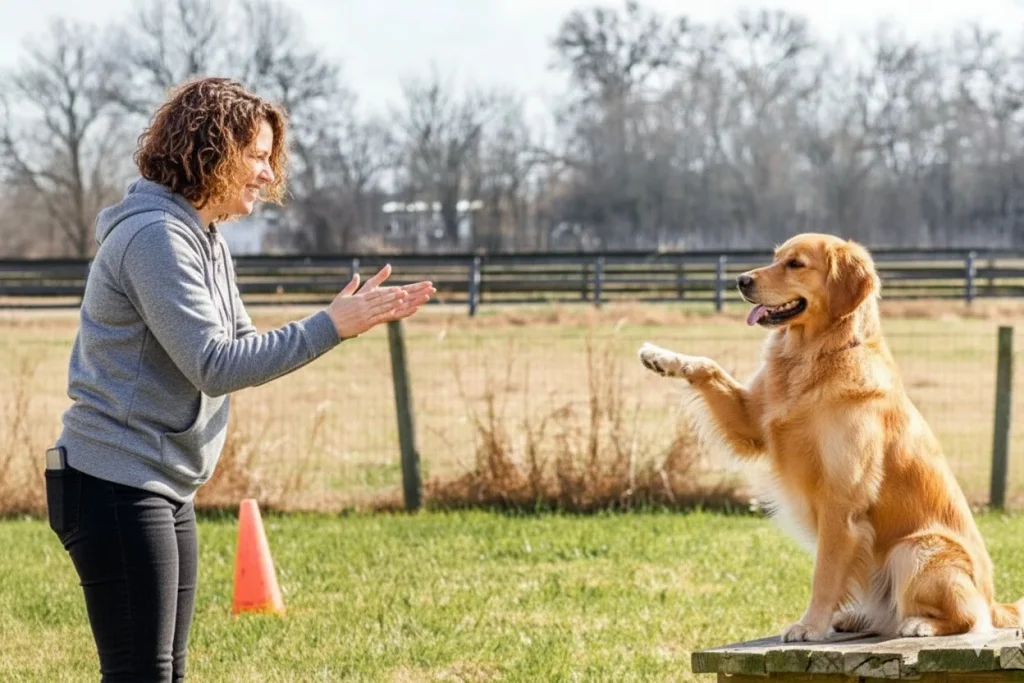
For more complex behaviors, you can’t just wait for your dog to do them perfectly. This is where “shaping” comes in. Shaping means you reward small steps along the way to the final goal. For example, to teach a dog to “shake,” you would first reward them for just lifting a paw. Once they do that consistently, you only reward for lifting the paw higher. Next, for touching your hand, and finally, for letting you hold their paw. This technique teaches your dog to think and problem-solve.
Part III: Mastering the Essentials: A Guide to Foundational Commands
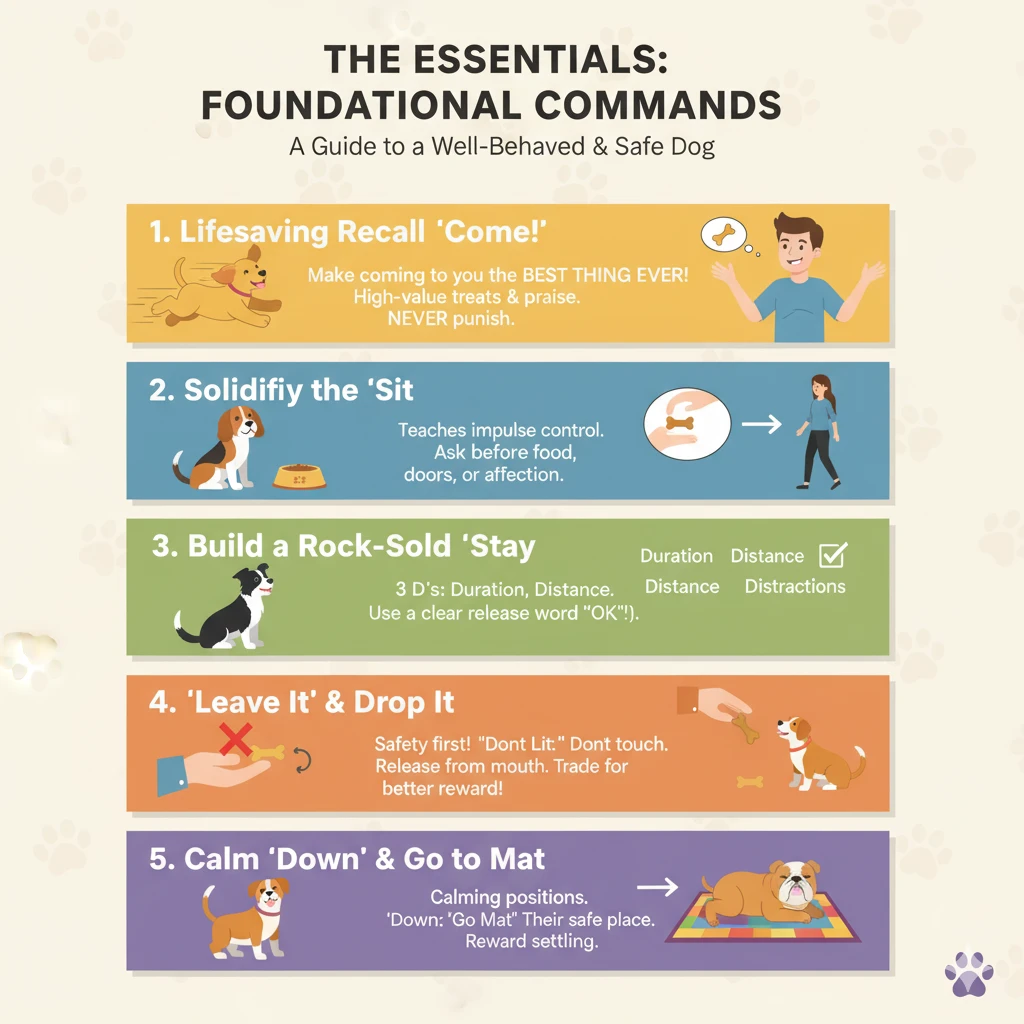
Tip 11: Teach a Lifesaving Recall (“Come”)
A reliable “Come” command is the most important skill your dog can learn and could save their life. The goal is to make coming to you the best, most rewarding thing they could possibly do. Start indoors by saying your dog’s name or “Come” and giving them a high-value treat. Turn it into a fun game by calling them and rewarding them with lots of praise and treats when they run to you. Never use the “Come” command for something your dog dislikes, like a bath, and never scold them for coming to you.
Tip 12: Solidify the “Sit”
The “sit” command is a great tool for teaching impulse control. For a puppy, learning to sit before getting something they want is like a child learning to say “please.” You can teach “sit” by luring your dog into position with a treat held over their head. Once they know the command, integrate it into daily life. Ask for a sit before putting down their food bowl, before opening the door to go outside, and before giving them affection.
Tip 13: Build a Rock-Solid “Stay”
The “stay” command teaches self-control and is crucial for safety. Teach it by breaking it down into three parts: duration (how long), distance (how far away you are), and distractions. First, teach a release word like “OK” or “Free” that tells your dog the stay is over. Then, start with a very short stay of just a second or two. Gradually increase the time. Next, add distance by taking one step back before returning to reward them. Slowly increase the distance. Finally, practice with low-level distractions.
Tip 14: Master the “Leave It” and “Drop It” Commands
“Leave It” and “Drop It” are essential safety commands to prevent your dog from eating something dangerous. “Leave It” tells a dog not to pick something up, while “Drop It” tells them to release something from their mouth. Teach “Leave It” as a fun trade-up game, where ignoring one item gets them an even better reward from you. “Drop It” can be taught by offering a high-value treat in exchange for whatever they have in their mouth.
Tip 15: Teach a Calm “Down” and “Go to Mat”
The “down” (lie down) position is naturally calming for a dog. A “Go to Mat” or “Place” command is a great tool that gives your dog a designated safe spot to settle. You can teach “down” by luring a dog from a sit position with a treat. To teach “Go to Mat,” make a specific mat or bed a wonderful place to be by rewarding your dog whenever they go on it. Practice sending them to the mat from increasing distances.
Part IV: Beyond the Session: Integrating Training into Daily Life
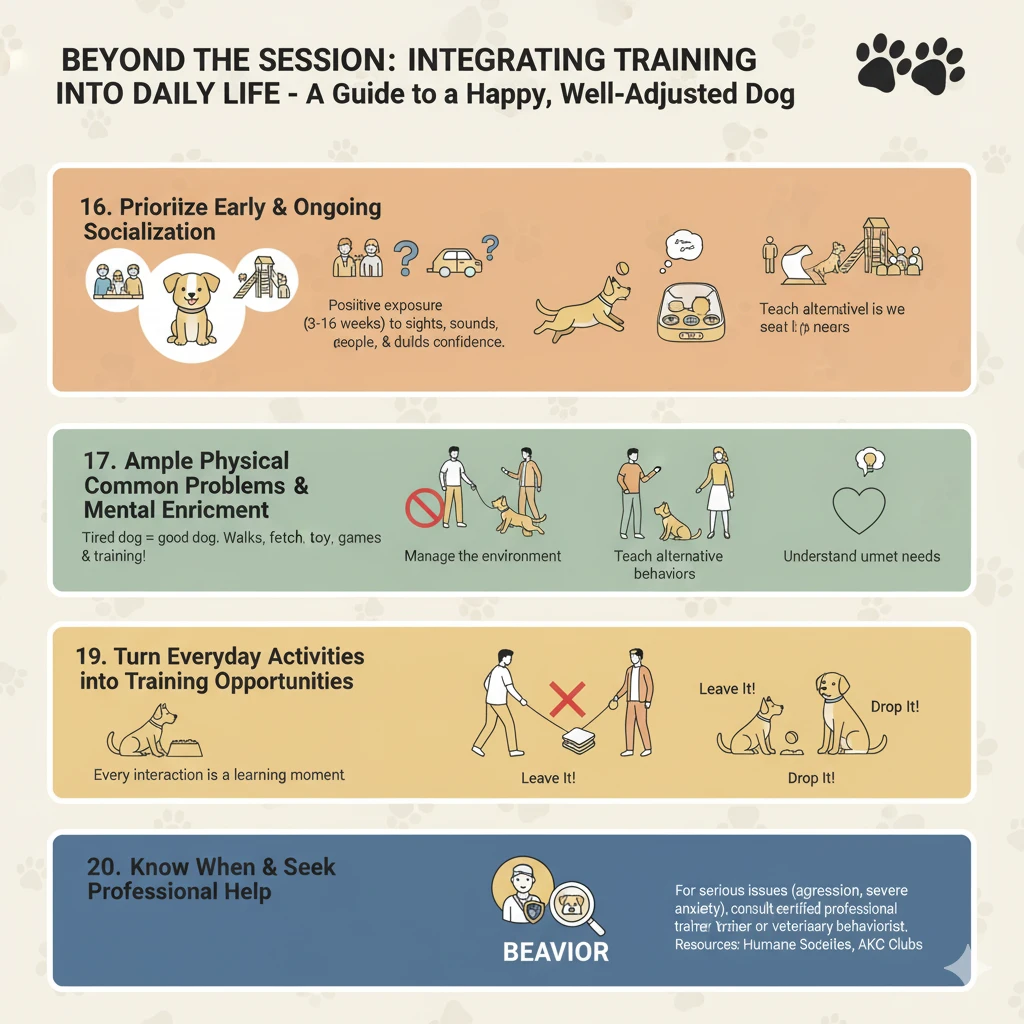
Tip 16: Prioritize Early and Ongoing Socialization
Socialization is the process of exposing your puppy to a wide variety of sights, sounds, people, and other animals in a positive way. This helps build a confident, well-adjusted adult dog. The most important time for socialization is between 3 and 16 weeks of age. During this time, make sure all new experiences are positive and not overwhelming. Forcing a puppy into a scary situation can do more harm than good.
Tip 17: Provide Ample Physical Exercise and Mental Enrichment
A tired dog is a good dog. Many common behavior problems, like destructive chewing or excessive barking, are often symptoms of boredom and pent-up energy. Make sure your dog gets regular physical exercise every day, like playing fetch or going for a run. Mental enrichment is just as important. Puzzle toys, scent games, and regular training sessions give your dog’s brain a workout and keep them happy.
Tip 18: Troubleshoot Common Problems with Empathy
“Bad” behaviors like jumping, barking, and chewing are usually just normal dog behaviors happening at an inappropriate time, or they are a sign that your dog has an unmet need. The best way to solve these problems is to first manage the situation to prevent the dog from practicing the unwanted behavior. For example, keep a jumping dog on a leash when guests arrive. Then, teach them an alternative, better behavior—like sitting to greet people—and reward them for it.
Tip 19: Turn Everyday Activities into Training Opportunities
Formal training sessions are important, but training should be part of your everyday life. Every interaction is a learning opportunity. Ask for a “sit” before putting down the food bowl. Practice “leave it” with interesting things you see on your walks. Incorporate “drop it” into games of fetch. By using these small moments, training becomes a natural and continuous part of your life with your dog.
Tip 20: Know When to Seek Professional Help
It’s okay to ask for help. Recognizing when you need a professional is a sign of a responsible owner. If you are dealing with serious behavioral issues like aggression, severe separation anxiety, or deep-seated fear, it’s best to consult a certified professional dog trainer or a veterinary behaviorist. These experts have the knowledge to diagnose the problem and create a safe and effective plan. Local humane societies and AKC clubs can also be great resources.
Conclusion: Your Journey to a Well-Behaved, Happy Companion
Training your dog is one of the most rewarding things you can do. It’s about much more than teaching commands; it’s about building a language, fostering respect, and creating an unbreakable bond. These 20 tips provide a simple roadmap to help you on your journey. By using positive reinforcement, clear communication, and consistency, you can help your dog become a confident, happy, and well-behaved member of your family. Training is not a final destination but a continuous conversation that enriches the lives of both you and your dog for a lifetime.