
Grooming isn’t just about making your dog look good; it’s an essential part of their overall health and well-being.1 Regular grooming helps keep their coat healthy, prevents uncomfortable mats, and gives you a chance to check for any skin issues, parasites, or lumps.2 Whether you have a long-haired beauty or a short-coated scamp, here are the top tips for a successful and stress-free grooming routine for your furry best friend.
1. Brush, Brush, Brush
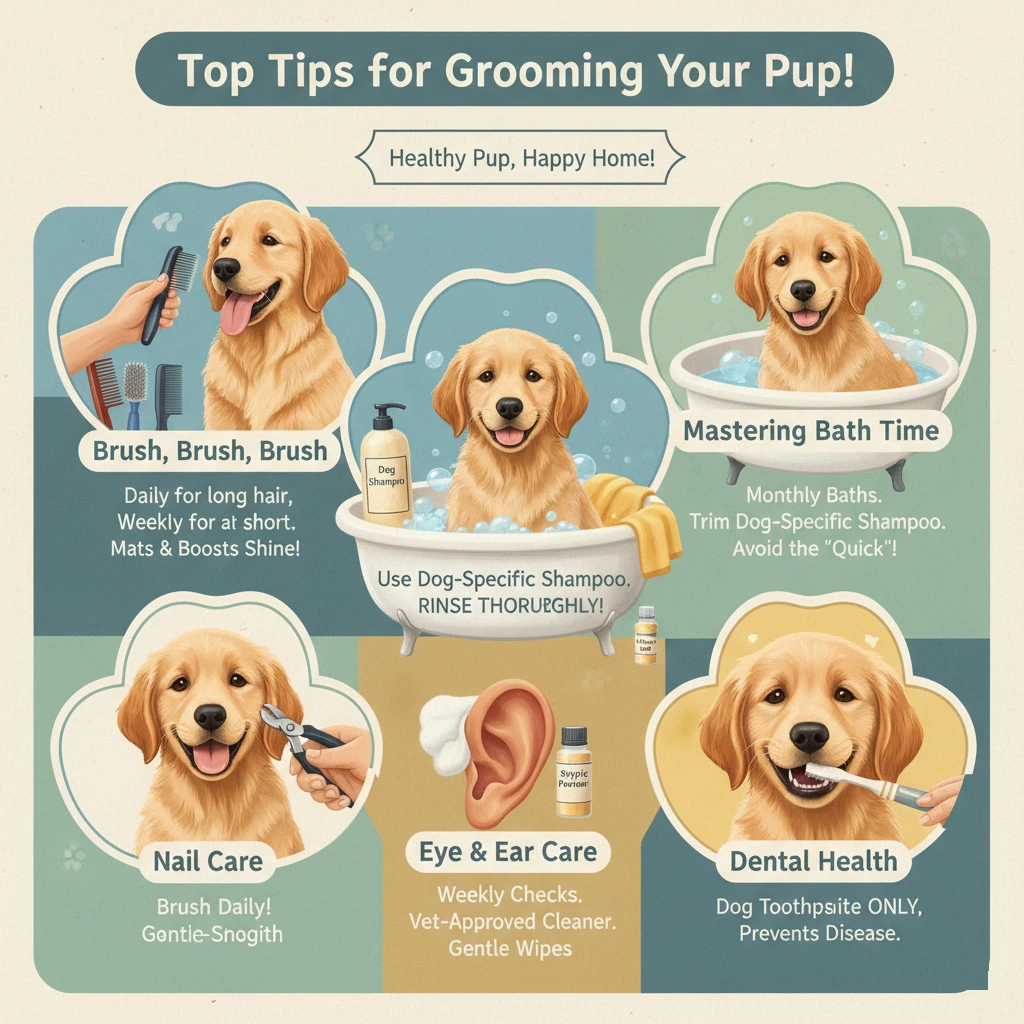
Brushing is the bedrock of good dog grooming. The right brush and frequency depend heavily on your dog’s coat type:3
- Long or Curly Coats (e.g., Poodles, Goldendoodles, Collies): These dogs need daily brushing with a slicker brush to prevent painful mats and tangles from forming deep within their fur. Pay special attention to areas like behind the ears, armpits, and the tail. You may also need a metal comb to check that you’ve reached down to the skin.
- Medium Coats (e.g., Labs, German Shepherds): Brushing a few times a week with a de-shedding tool or rake can help manage loose undercoat and reduce shedding around your house.
- Short Coats (e.g., Boxers, Beagles): A quick once-a-week brush with a rubber curry brush or hound glove will remove dead hair and stimulate the skin’s natural oils for a nice shine.4
Tip: Make brushing a positive experience by giving treats and praise. Start with short sessions, especially when your dog is a puppy, to get them used to the process.
2. Mastering Bath Time
While some dogs require professional grooming (especially those with continuously growing hair), most can be bathed at home.
- Frequency: Don’t over-bathe! Too many baths can dry out their skin and strip away essential oils.5 Generally, a bath every 4 to 6 weeks is sufficient for most dogs, unless they’ve rolled in something smelly!
- The Right Products: Always use a shampoo specifically formulated for dogs. Human shampoos can irritate their skin because dogs have a different 6$\text{pH}$ level.7
- Thorough Rinsing is Key: Shampoo residue is a common cause of itching. Ensure you rinse every bit of soap out, especially under the belly and legs.
- Drying: Towel-dry as much as possible, then use a low-heat, dog-safe hairdryer or let them air dry in a warm, draft-free space. Make sure long-haired dogs are completely dry before a final brush to prevent mats from tightening.
3. Nail Care: Don’t Forget the Quick!
Long nails aren’t just annoying; they can cause discomfort, alter your dog’s gait, and lead to serious foot and joint problems over time.8
- Frequency: Trim your dog’s nails every 3 to 4 weeks. If you can hear their nails clicking on a hard floor, it’s definitely time for a trim.
- The “Quick”: All dog nails contain a blood vessel and nerve called the quick.9 Cutting into the quick is painful and will cause bleeding.10 If your dog has clear nails, you can see the pink quick. If they have dark nails, cut small slivers at a time until you see a small black dot in the center of the cut surface—that means you are close to the quick and should stop.
- The Right Tool: Use quality guillotine or scissor-style nail clippers, or a nail grinder (Dremel). If you accidentally cut the quick, immediately apply styptic powder (a clotting agent) to stop the bleeding.11
4. Eye and Ear Maintenance
These sensitive areas need gentle and regular attention:
- Ear Cleaning: Check your dog’s ears weekly for redness, discharge, or an odor (a sign of potential infection).12 Use a veterinarian-approved ear cleaner and a cotton ball to gently wipe the visible part of the ear canal. Never use cotton swabs as they can push debris further down and damage the eardrum.13
- Eye Gunk: Gently wipe away “eye boogers” with a soft, damp cloth. For dogs prone to tear staining (like white-coated breeds), keep the hair around the eyes trimmed and clean the area daily to prevent staining and irritation.14
5. Smile for the Camera: Dental Health
Dental care is often the most neglected part of a dog’s grooming routine, but it’s vital for preventing periodontal disease, which can lead to pain and systemic health issues.
- Brush Daily: Ideally, you should brush your dog’s teeth daily with a dog-specific toothbrush and toothpaste. Never use human toothpaste, as it can be toxic to dogs.15
- Supplements: Dental chews, water additives, and specialized kibble can help, but they are not a substitute for regular brushing.16
- Professional Care: Schedule regular veterinary dental checkups and professional cleanings as recommended by your vet.
Patience is the Key Ingredient
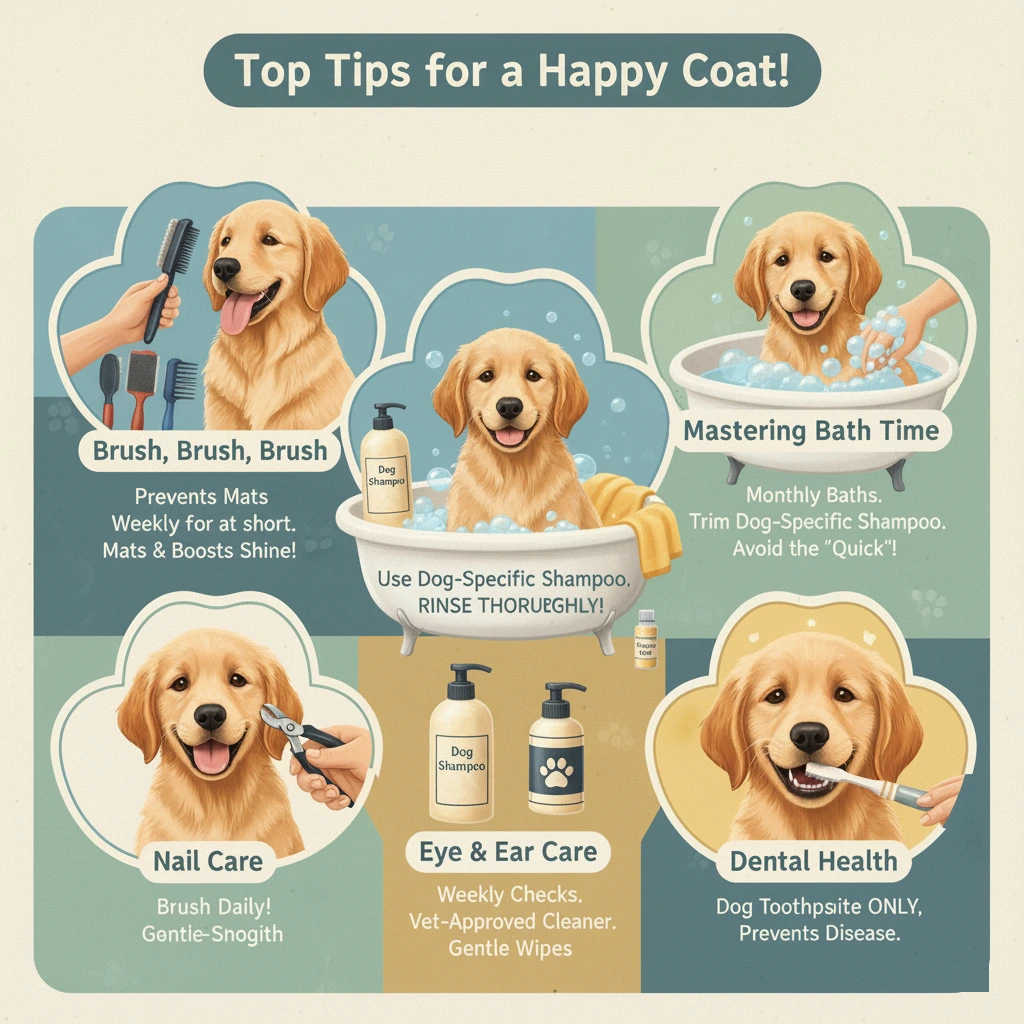
Remember that grooming is a bonding experience. If you are patient, calm, and use lots of positive reinforcement (treats!), your pup will come to associate grooming with good things. Consistency is key—establishing a routine early will make the process easier for both of you for years to come!