
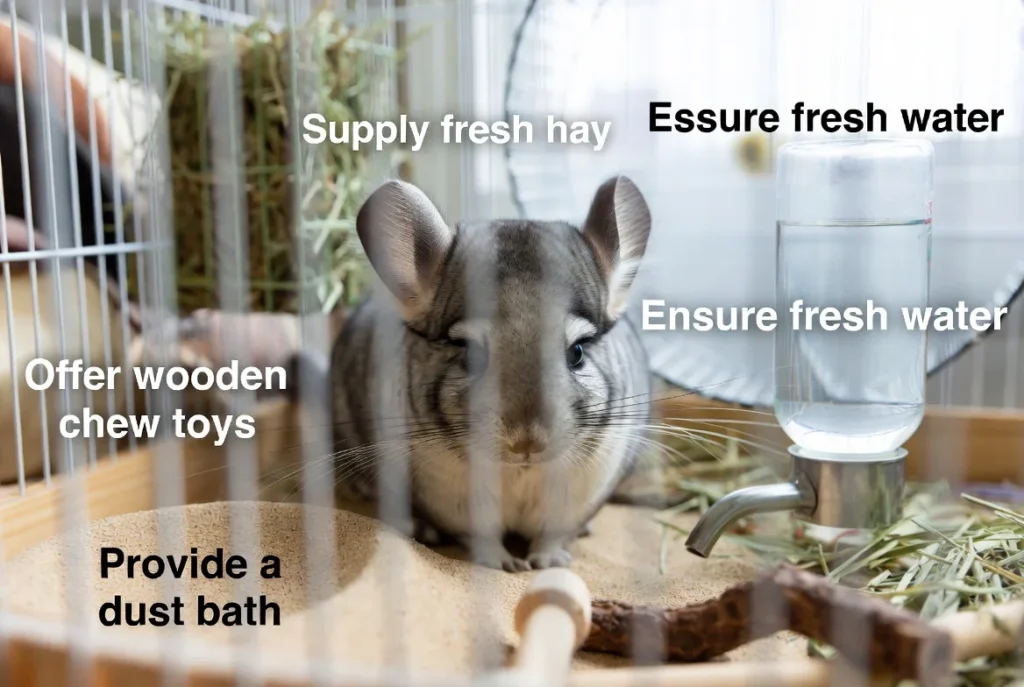
Chinchilla care isn’t as hard as it sounds at first, but there are a few steps to follow. I love all types of pets, so I decided to write this guide and explain the best ways to house and care for your chinchilla. Some breeds of chinchillas can live up to 20 years, so getting the right setup when you first start caring for them can help ensure decades of happiness.
Read More : Chinchillas for Sale
1: Get A Comfortable Cage
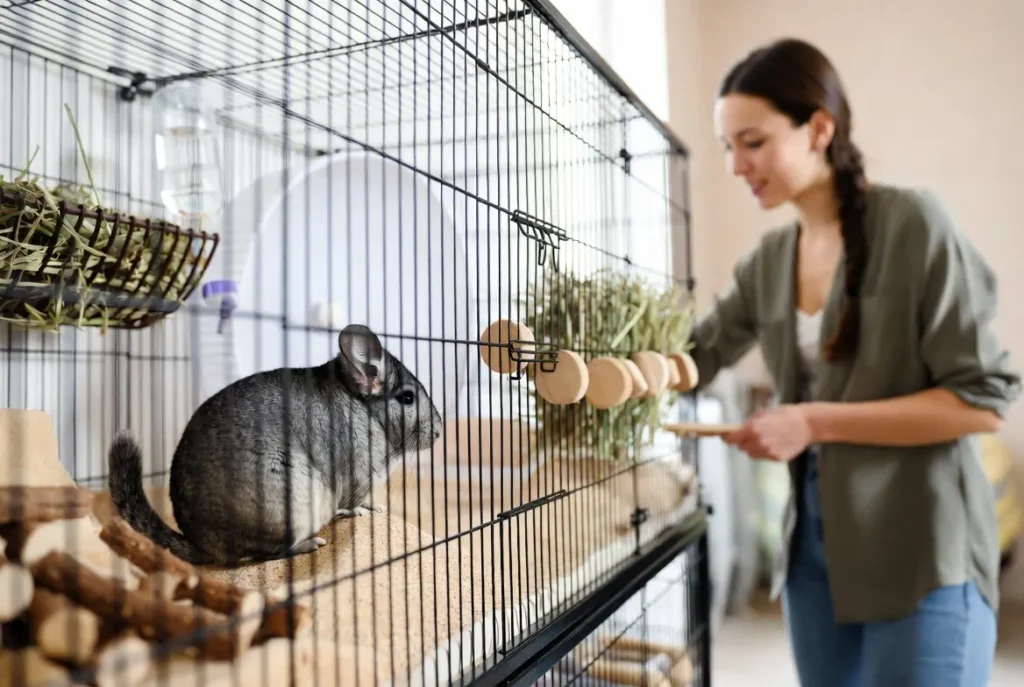
The best chinchilla cages have flat, solid bottoms and plenty of vertical space. Chinchillas are natural jumpers from the rocky Andes Mountains, so they thrive in tall enclosures with multiple levels.
Avoid wire flooring whenever possible—chinchillas can develop foot injuries (often called “bumblefoot”) from standing on wire for long periods.
Minimum cage size: 30 x 28 x 20 inches
Ideal setup: The bigger, the better—especially vertically.
Look for:
- Multiple wooden ledges
- Safe chewable platforms
- Good airflow
- Secure doors (they’re clever escape artists!)
A spacious cage reduces stress, prevents boredom, and gives you more room to add enrichment items.
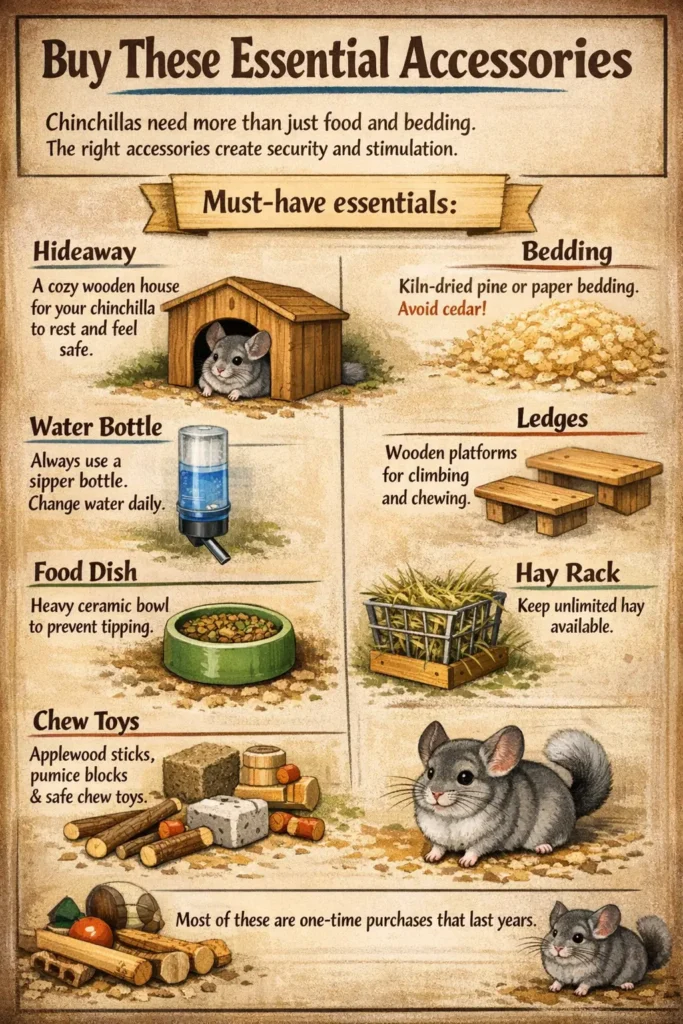
2: Buy These Essential Accessories
Chinchillas cost so much, it need more than just food and bedding. The right accessories create security and stimulation.
Must-have essentials:
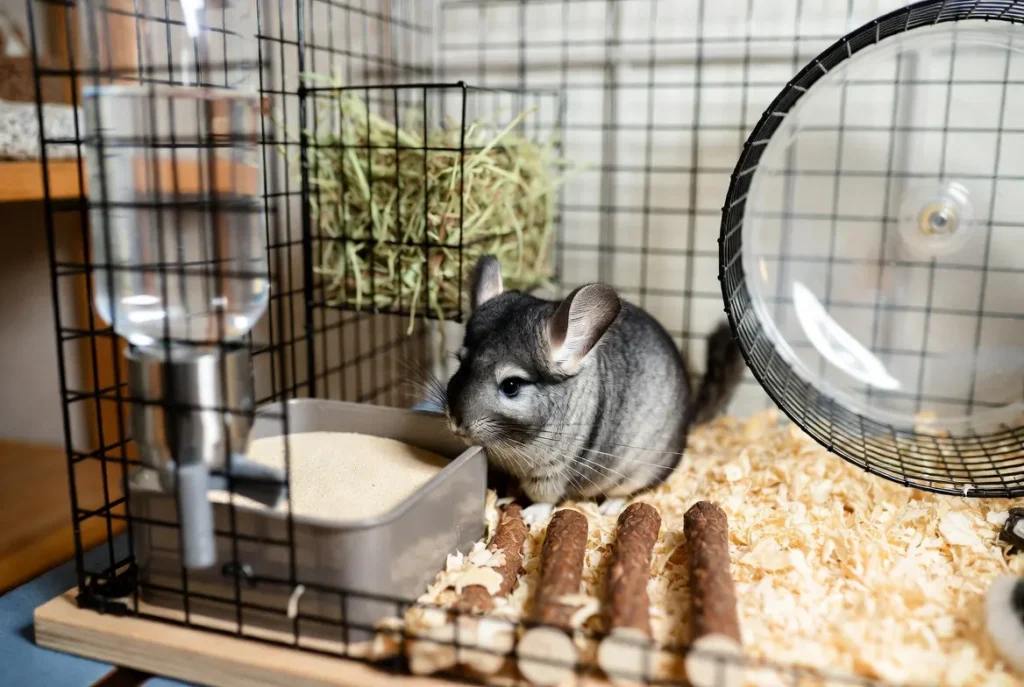
- Hideaway: An enclosed wooden house where your chinchilla can rest and feel safe. Never force them out—use gentle encouragement or a treat.
- Water Bottle: Always use a sipper bottle, not a bowl. Change water daily to keep it clean and cool.
- Bedding: Use kiln-dried pine shavings or paper-based bedding. Avoid cedar—it can irritate their respiratory system.
- Ledges: Wooden platforms are ideal (and safe for chewing).
- Food Dish: A heavy ceramic bowl prevents tipping.
- Hay Rack: Unlimited hay access is critical for digestion and dental health.
- Chew Toys: Applewood sticks, pumice blocks, and safe wooden toys help prevent dental overgrowth.
Most of these are one-time purchases that last years.
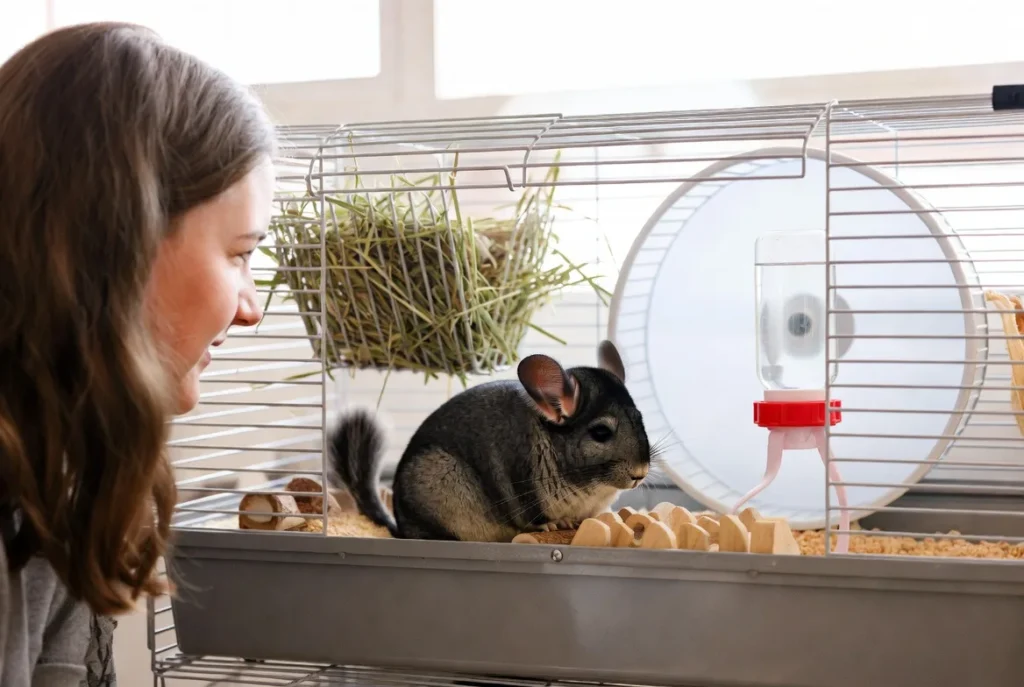
3: Put The Habitat In The Right Area
Temperature control is extremely important.
Chinchillas do best between 60–75°F (15–24°C). Anything above 80°F can lead to dangerous overheating. They do not tolerate heat well due to their dense fur.
Tips:
- Keep cages away from direct sunlight.
- Avoid kitchens and laundry rooms (noise + temperature changes).
- Use a thermometer in the room.
- Air conditioning is often safer than heaters.
They also have excellent hearing. Sudden loud noises (TVs, barking dogs, slamming doors) can stress them. Choose a calm, stable area of your home.
4: Help Them Meet Their Social Needs
Chinchillas are social animals. While some can live alone with enough human interaction, many thrive in bonded pairs.
If you house two together:
- Introduce them gradually.
- Provide enough space and multiple hideouts.
- Monitor for aggression.
Littermates often bond easily, but personality matters more than age.
Even single chinchillas need daily interaction. Gentle talking, supervised playtime, and patience help build trust.
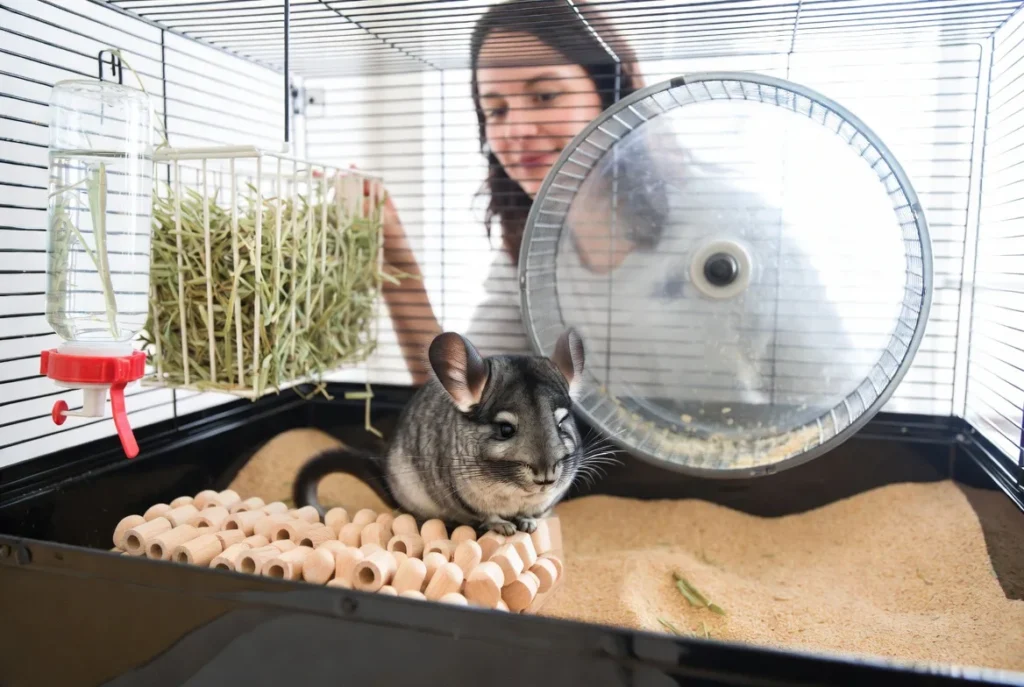
5: Let Your Chinchilla Adjust
Bringing your chinchilla home is exciting—but for them, it’s overwhelming.
For the first few days:
- Avoid excessive handling.
- Keep noise low.
- Let them explore at night (they’re most active at dawn and dusk).
Chinchillas are prey animals. They build trust slowly. Consistency and calm behavior help them feel safe.
6: Feed A Proper, Balanced Diet
Chinchilla Diet is one of the most important factors in a chinchilla’s lifespan.
A healthy diet includes:
- Unlimited high-quality hay (Timothy hay is ideal)
- Measured chinchilla pellets (1–2 tablespoons daily)
- Occasional treats (no more than 10% of diet)
Chinchillas need high fiber to maintain healthy digestion and proper tooth wear. Their teeth grow continuously, so chewing hay is essential.
Avoid:
- Sugary fruits
- Nuts
- Seeds
- Fresh vegetables (can upset digestion)
Simple is best.
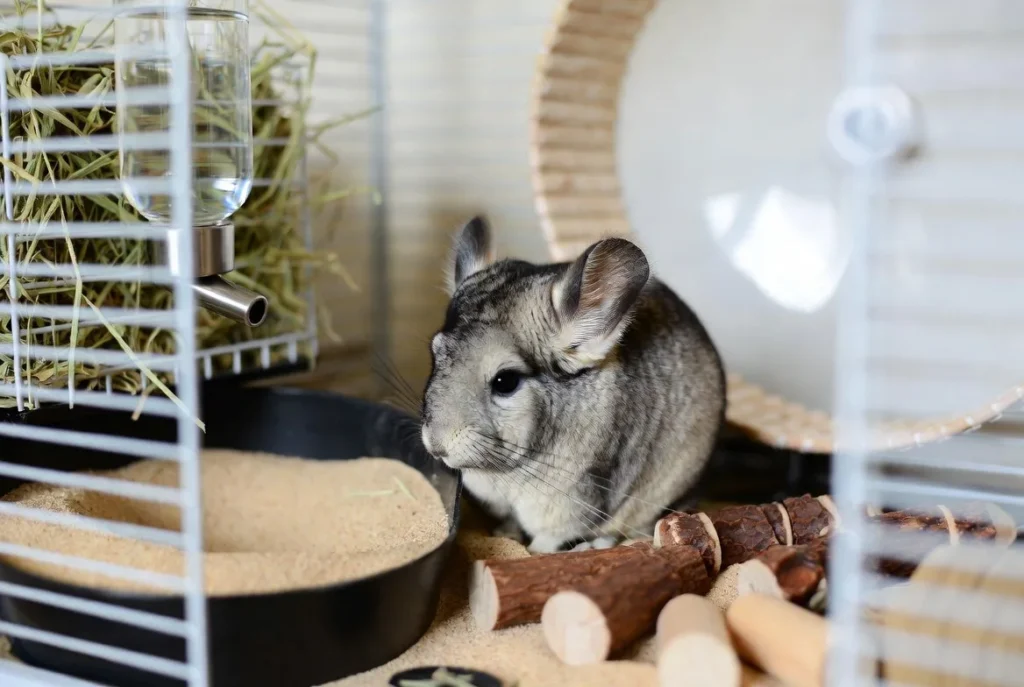
7: Give Regular Dust Baths
Chinchillas should never be bathed in water. Their dense fur traps moisture, which can cause fungal infections.
Instead, provide a chinchilla dust bath 2–4 times per week for about 10–15 minutes.
Use only dust specifically made for chinchillas. Regular sand is too coarse and can damage their fur and skin.
Watching them roll and flip in their dust bath is one of the joys of chinchilla ownership.
8: Handle With Care
Chinchillas have delicate bones and can become stressed if handled improperly.
To pick one up:
- Support the body fully.
- Avoid squeezing.
- Never grab fur (they can release patches of fur when frightened).
Some chinchillas enjoy short cuddle sessions; others prefer minimal contact. Respect their boundaries. Trust builds over time.
9: Keep The Cage Clean
Cleanliness prevents illness and odor.
Daily:
- Remove soiled bedding
- Replace dirty hay
- Check water bottle
Weekly:
- Change bedding
- Wipe down shelves and accessories
Monthly:
- Deep clean entire enclosure with pet-safe disinfectant
Regular cleaning also gives you a chance to monitor for changes in droppings, appetite, or behavior—early signs of health issues.
10: Provide Safe Exercise Time
Chinchillas are energetic and curious. Supervised out-of-cage time helps prevent boredom and obesity.
Before letting them roam:
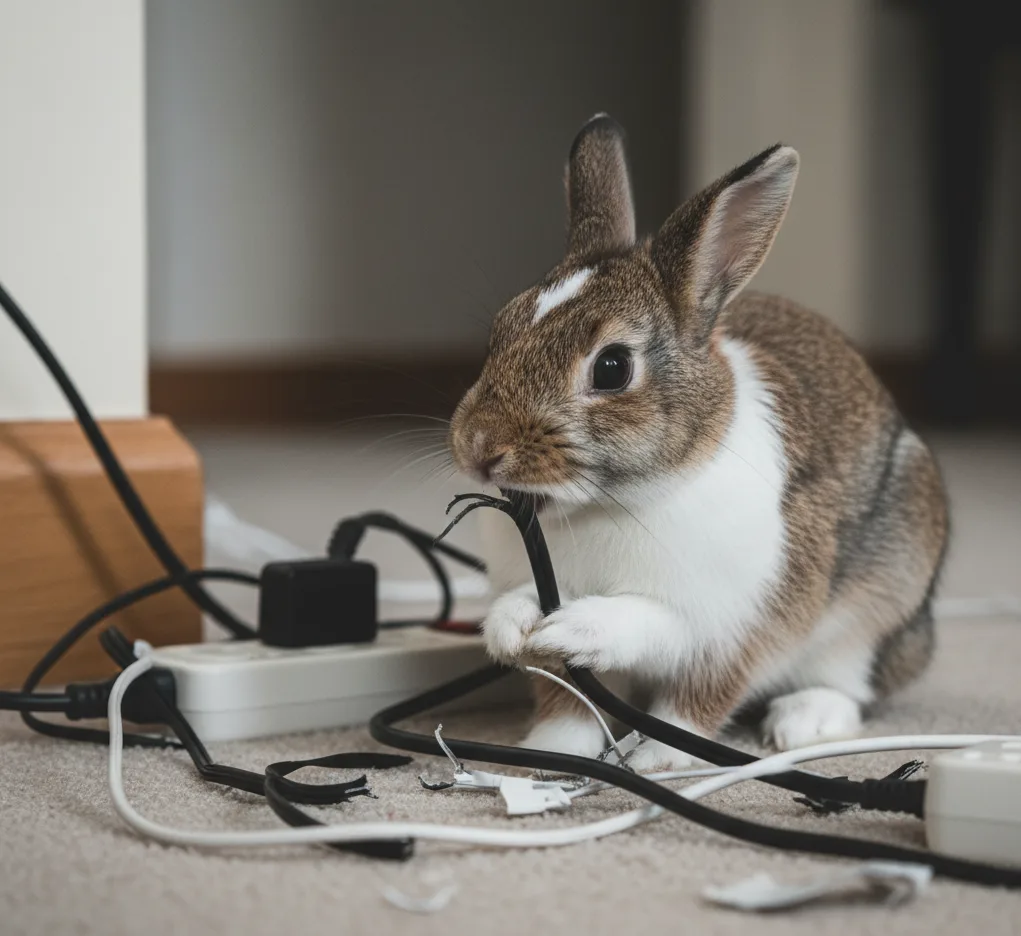
- Cover electrical cords
- Remove houseplants
- Block tight spaces behind furniture
Never use exercise balls—they can overheat and injure their spine. A chinchilla-proofed room or secure playpen is much safer.
11: Schedule Regular Vet Care
Even healthy chinchillas benefit from annual exotic vet checkups.
Look for signs that require attention:
- Drooling (possible dental issues)
- Weight loss
- Changes in droppings
- Lethargy
- Fur chewing
Because chinchillas hide illness well, subtle changes matter.
12: Make Sure Your Pet Is Truly Happy
A happy chinchilla will:
- Eat and drink regularly
- Bounce or “popcorn” around the cage
- Respond to your voice
- Make soft chirps or squeaks
They also love chewing—so provide safe outlets. Enrichment toys rotated weekly help prevent boredom.
Happiness comes from:
- Stable environment
- Proper nutrition
- Mental stimulation
- Social connection
- Predictable routine
Conclusion
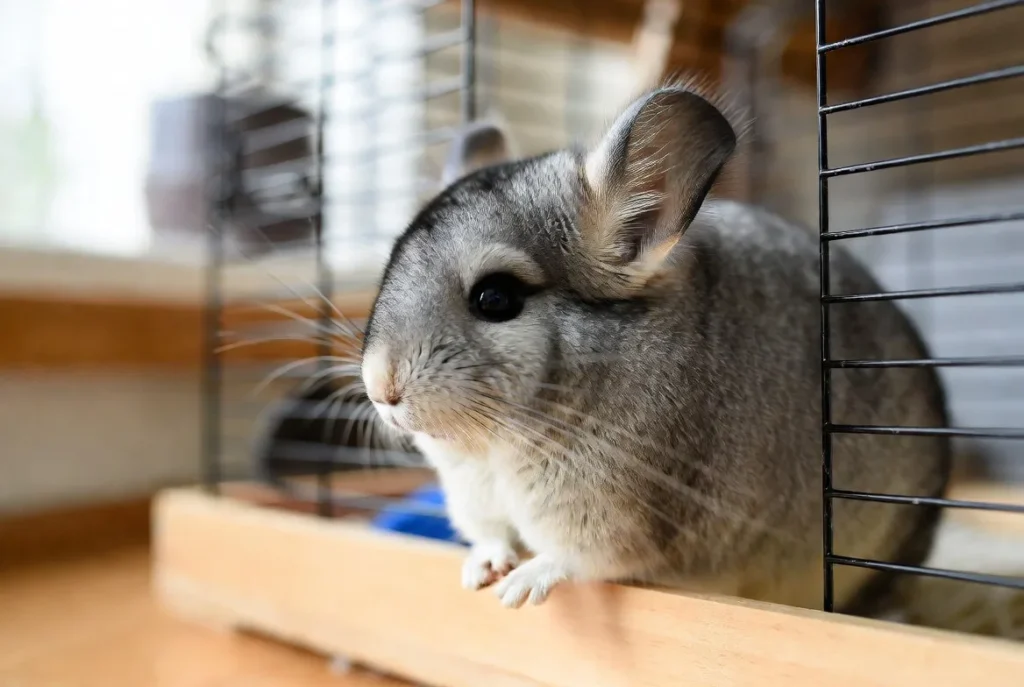
Chinchillas are intelligent, sensitive, and surprisingly affectionate pets once they trust you. Their long lifespan means they’re a commitment—but with proper care, that commitment becomes deeply rewarding.
By providing the right cage, balanced nutrition, temperature control, enrichment, and gentle handling, you’re not just keeping your chinchilla alive—you’re helping them thrive.
And when you see them leap across their shelves or roll joyfully in their dust bath, you’ll know every effort was worth it.

Pingback: How Much Does A Chinchilla Cost? - Animals
Pingback: The Complete Chinchilla Diet Guide - Animals
Pingback: Chinchilla Breeds: Everything You Need to Know Before Getting One - Animals