
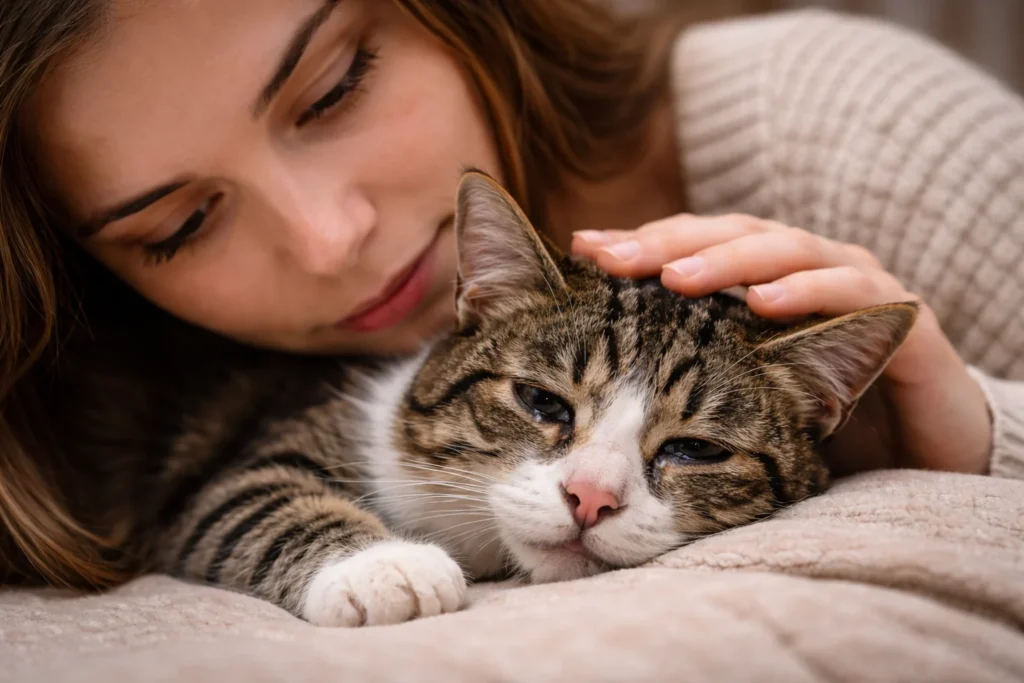
If you’ve ever watched your cat eat dry food only to vomit minutes later, you’re not alone. Many cat owners search “why does my cat throw up after eating dry food” because this issue is common, frustrating, and concerning.
Common causes include eating too quickly and gulping kibble without chewing, or dry food expanding in the stomach after a meal. The good news is that it’s usually not serious, but it can be your cat’s way of signaling that something isn’t quite right.
In this article, we’ll take a closer look at these and other potential causes, explain when vomiting is harmless versus a red flag, and share practical, vet-approved steps to solve the issue and help prevent it from returning.
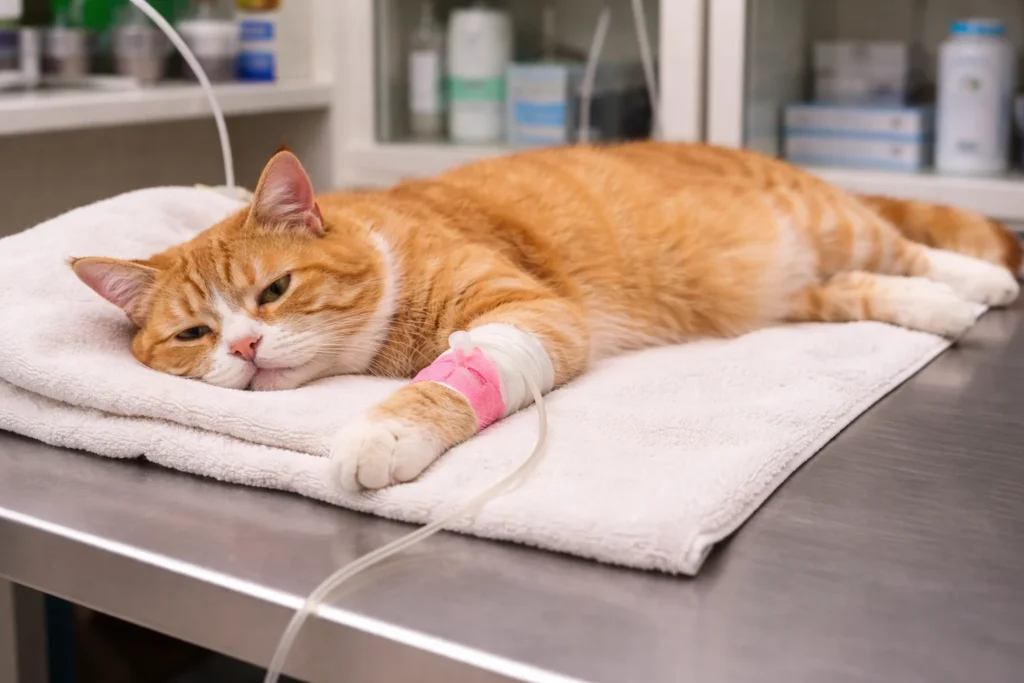
Why Does My Cat Throw Up After Eating Dry Food?
If you’re asking why does my cat throw up after eating dry food, the answer usually comes down to how your cat eats, how dry food behaves in the stomach, or how well your cat tolerates certain ingredients.
Cats commonly throw up after eating dry food for six main reasons:
- Eating too fast
- Dry food expanding in the stomach
- Food sensitivity or allergy
- Hairballs
- Dehydration
- Underlying medical conditions
Let’s break each one down clearly and explain why it happens and how to fix it
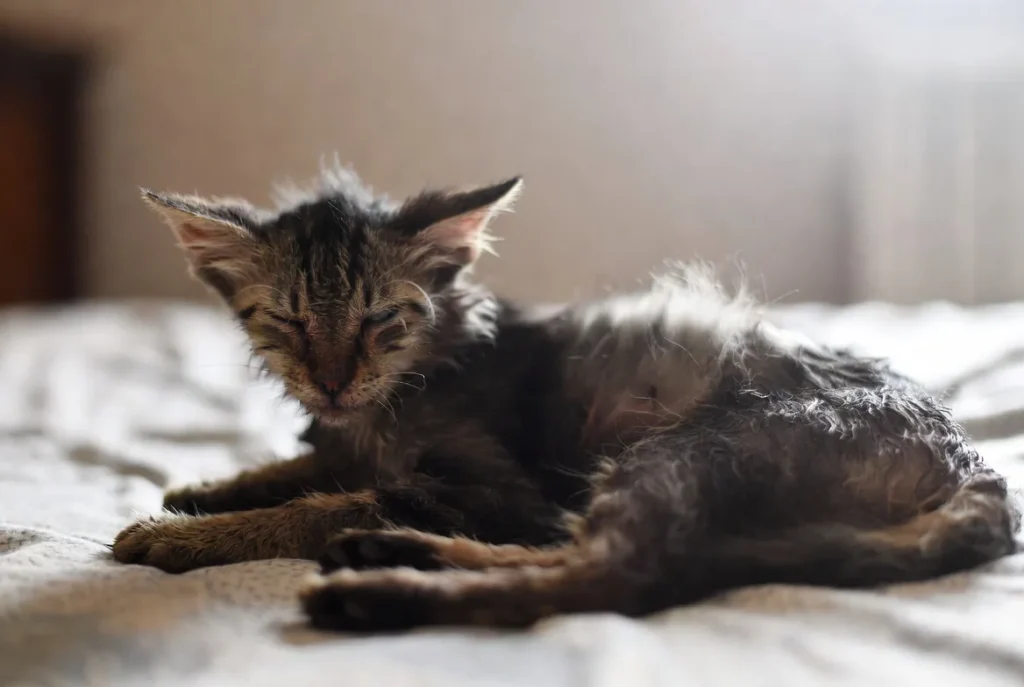
1. Eating Too Fast (Most Common Cause)
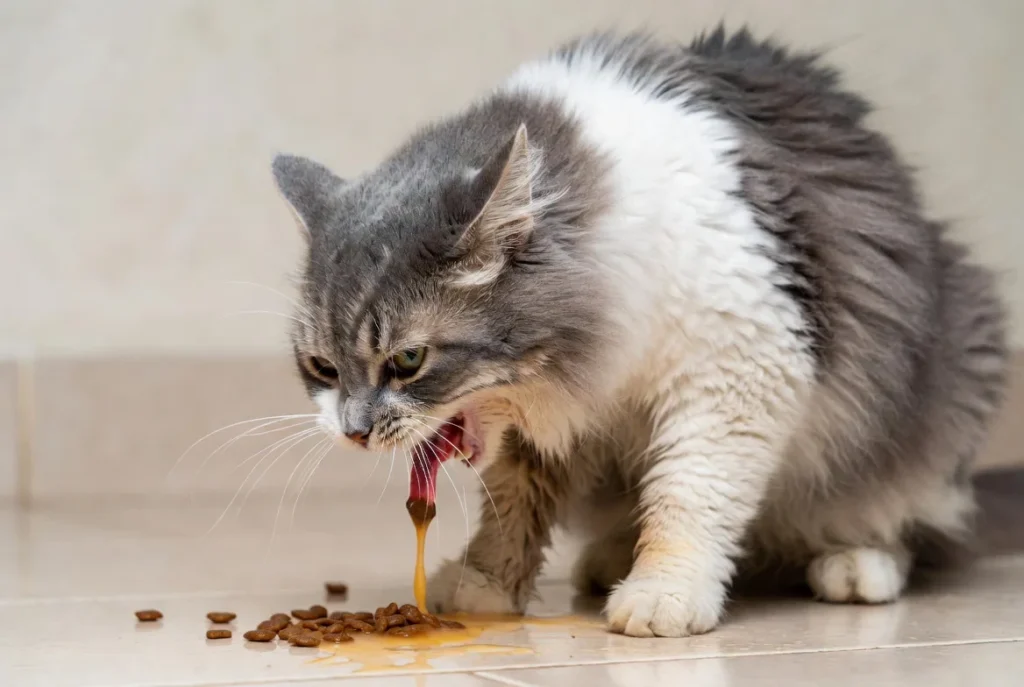
The simplest and most common answer to “why does my cat throw up after eating dry food?” is that they’re gulping it down too quickly. This is especially common in cats that feel the need to eat before others, have experienced food insecurity, or are strongly food-motivated.
- Inside the stomach: the dry food (kibble) is swallowed in large, dry pieces with little saliva, arrives suddenly, and the stomach reacts by ejecting it. Vomiting often happens 5–30 minutes after a meal.
- How to recognize it: the vomit contains whole kibble, it occurs soon after eating, and your cat otherwise behaves normally, no changes in appetite, energy, or weight.
- How to help: switch to a puzzle/slow feeder, feed smaller portions more frequently, or spread the kibble out on a mat to slow consumption.
2. Dry Food Swells in the Stomach
A common reason cats vomit after eating dry food is that it expands after they swallow it. Dry food pulls moisture from the stomach and can swell quickly. For sensitive cats, older cats, or those with easily upset digestion, this rapid swelling may cause discomfort and lead to regurgitation.
This may result in:
- Stomach irritation
- Increased stomach pressure
- Regurgitation (food coming back up without nausea)
It’s more likely if your cat:
- Drinks a lot of water right after eating
- Eats a big portion in one sitting
- Eats very dry or compact kibble
What to do:
- Mix warm water or bone broth into the kibble
- Soak it for 5–10 minutes before feeding
- Switch to a diet that supports better hydration
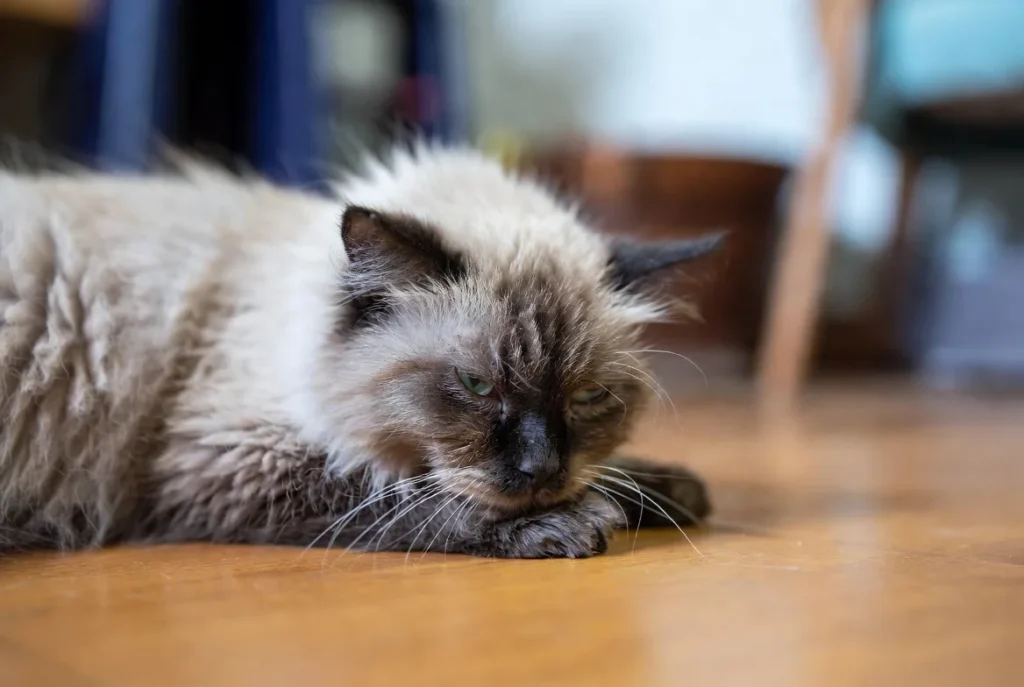
3. Food sensitivity or intolerance to ingredients
If your cat keeps vomiting after eating dry food, the issue may be what’s in the kibble. Some cats react poorly to certain proteins or additives commonly used in dry diets.
Common triggers:
- Chicken (a frequent feline allergen)
- Beef
- Corn or wheat
- Artificial colors, flavors, or preservatives
Other signs to watch for:
- Itchy skin or frequent scratching
- Overgrooming or hair loss
- Soft stools, diarrhea, or gas
- Ongoing vomiting after meals
What to do:
- Switch to a limited-ingredient dry food
- Consider novel proteins like duck, rabbit, or venison
- Avoid switching foods often, since that can upset digestion
4. Dry food may worsen hairball buildup and lead to throw-up
Hairballs are another common explanation for why a cat throws up after eating dry food, especially in long-haired or heavy-grooming cats.
When cats groom, they swallow loose hair. Dry food can bind to this hair in the stomach, forming clumps that are difficult to pass.
Hairball-related vomit usually looks like:
- Tubular or cylindrical material
- Mixed with partially digested food
- Sometimes accompanied by foam or mucus
How to fix it:
- Brush your cat regularly to reduce hair ingestion
- Use hairball-control dry food
- Add vet-approved fiber supplements
5. Dehydration Makes Dry Food Harder to Digest
Cats have a naturally low thirst drive, which is why dry food can sometimes cause digestive issues.
Dry kibble contains only 8–10% moisture, compared to 70–80% in wet food. Mild dehydration can slow digestion and irritate the stomach, leading to vomiting.
Dehydration-related vomiting may include:
- Vomiting shortly after meals
- Firmer stools or constipation
- Reduced water intake
How to fix it:
- Place multiple water bowls around the home
- Use a cat water fountain
- Mix wet food into your cat’s daily meals
6. Underlying Medical Conditions (Less Common, but Important)
While most cases of why does my cat throw up after eating dry food are not serious, frequent or worsening vomiting can signal a medical issue.
Possible underlying conditions include:
- Gastritis
- Inflammatory bowel disease (IBD)
- Pancreatitis
- Intestinal parasites
- Kidney disease (especially in senior cats)
Contact a veterinarian if vomiting occurs along with any of the following: unexplained weight loss, lethargy or weakness, blood in the vomit, loss of appetite, or vomiting that happens daily or becomes chronic.
Is It Normal for Cats to Throw Up After Eating Dry Food?
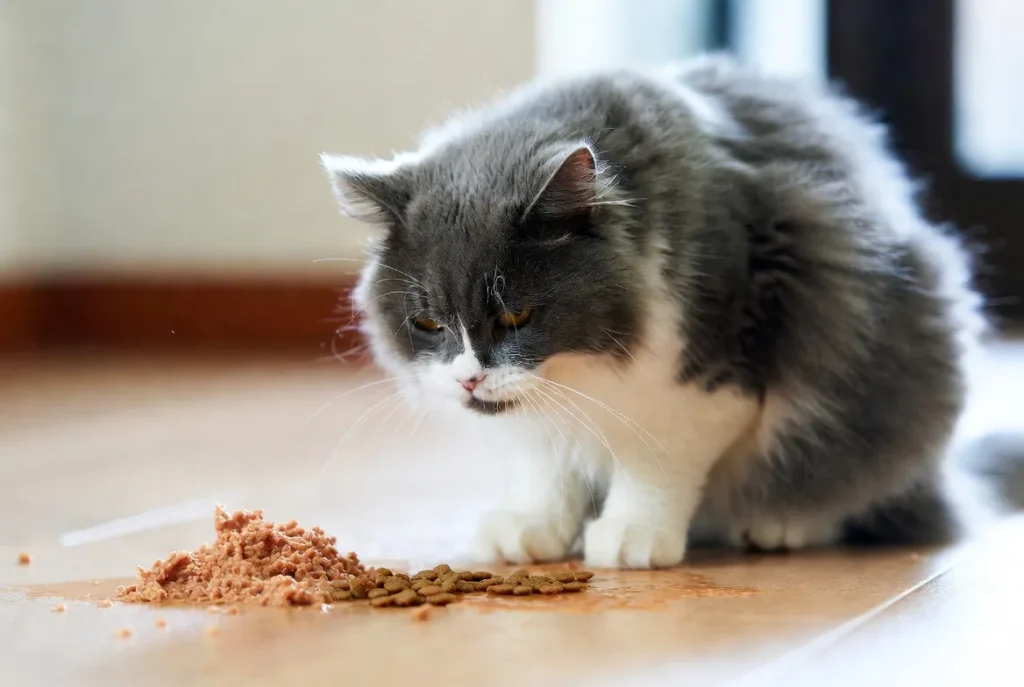
If you’re asking why does my cat throw up after eating dry food, you may be relieved to know that occasional vomiting can be normal for some cats, but frequent vomiting is not.
Occasional vomiting: often normal
Cats sometimes vomit, especially if they eat too quickly or swallow hair. If your cat throws up dry food only rarely and seems fine afterward, it’s usually not a big concern.
Frequent vomiting: not normal
Regular vomiting after eating dry food suggests something needs to be adjusted – feeding routine, the type of food, or a vet check.
General guideline:
- About once a month → typically okay
- Once a week or more → not typical and should be addressed
If the vomiting becomes more frequent or severe, or comes with other symptoms, it’s time to look into the cause.
How to Prevent Your Cat From Vomiting After Eating Dry Food
Once you know why your cat throws up after eating kibble, the next step is to prevent it. The good news is that most cats improve with a few simple adjustments.
A practical plan:
- Offer smaller meals: Big servings can overload the stomach. Smaller, more frequent portions are easier to digest and can cut down on vomiting.
- Help your cat eat more slowly: Try slow-feeder bowls, puzzle feeders, or scatter feeding to reduce gulping – one of the most common triggers with dry food.
- Add moisture to kibble: Mixing in a little water can lessen stomach irritation and limit how much the kibble swells after it’s swallowed.
- Upgrade the food quality: Pick a dry food with minimal fillers, clearly identified protein sources, and no artificial additives to lower the chance of intolerance.
- Address hairballs: Brushing regularly, using hairball-formula foods, and adding fiber can reduce vomiting linked to hair buildup.
- Support hydration: Use water fountains, place multiple bowls around the home, and include occasional wet-food meals.
With these changes, many cats stop vomiting within 7–14 days.
Dry vs. Wet Food for Vomiting Cats
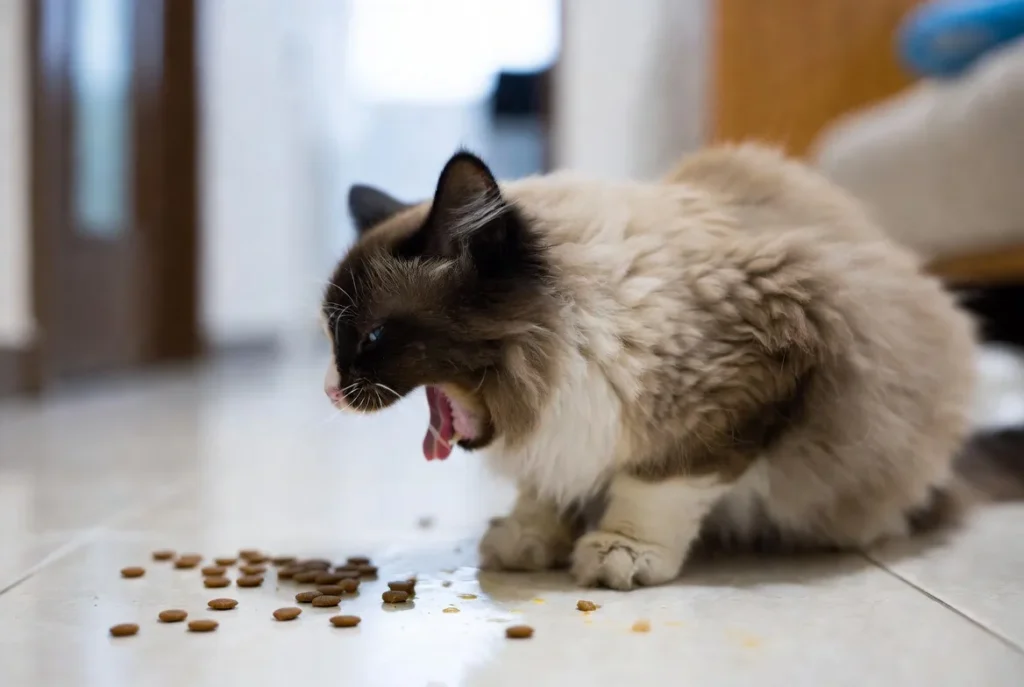
If you’re still wondering why does my cat throw up after eating dry food but not wet food, moisture content is often the key difference.
- Dry food: low moisture, can be harder on the stomach
- Wet food: high moisture, typically easier to digest
- Dry may offer a small dental perk, while wet supports hydration better
| Feature | Dry Food | Wet Food |
|---|---|---|
| Moisture | Low | High |
| Vomiting risk | Higher | Lower |
| Dental benefit | Mild | None |
| Hydration support | Poor | Excellent |
Bottom line: Cats prone to vomiting often do better with wet food.
Best approach: Feed a mixed, balanced diet (wet + dry) based on your cat’s age, health, and how sensitive their digestion is.

A really good blog and me back again.