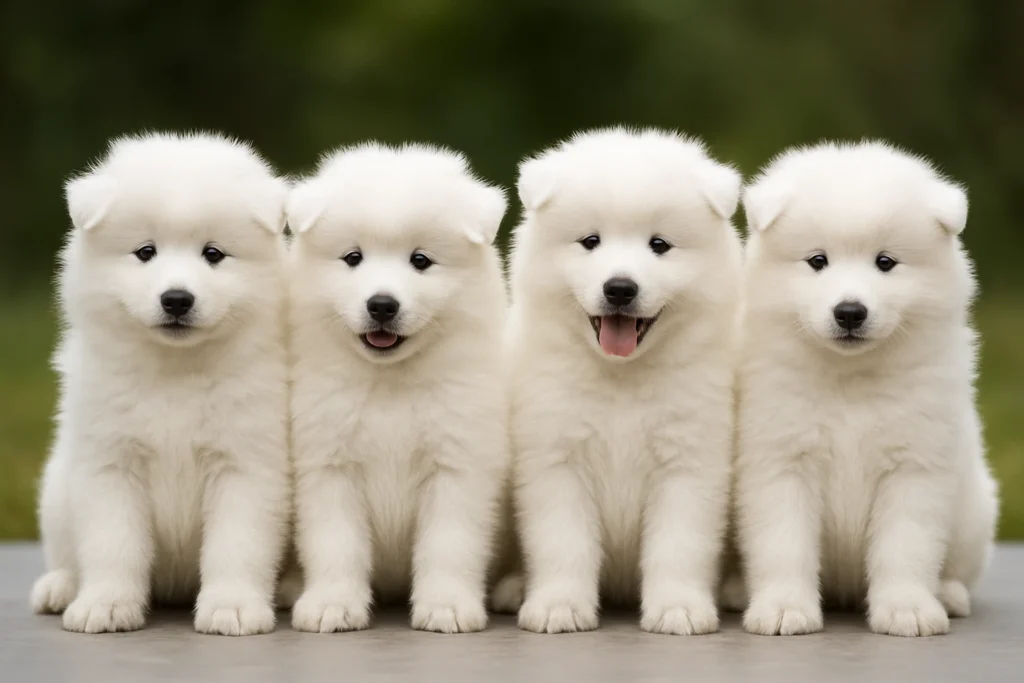
Here’s why adopting Samoyed puppies can be a wonderful choice: they are friendly, playful, loyal, and intelligent companions who bring joy and warmth into any home. Known for their signature “Sammy smile,” these fluffy pups thrive on human interaction and quickly become cherished family members.
Beyond their charming personalities, Samoyeds are also highly adaptable, making them great for active households, families with children, or anyone looking for an affectionate, energetic canine friend.
Read on for essential care tips, training advice, grooming guidance, and everything you need to know to help your Samoyed puppy grow into a happy, healthy adult dog!
Meet the Samoyed Puppy
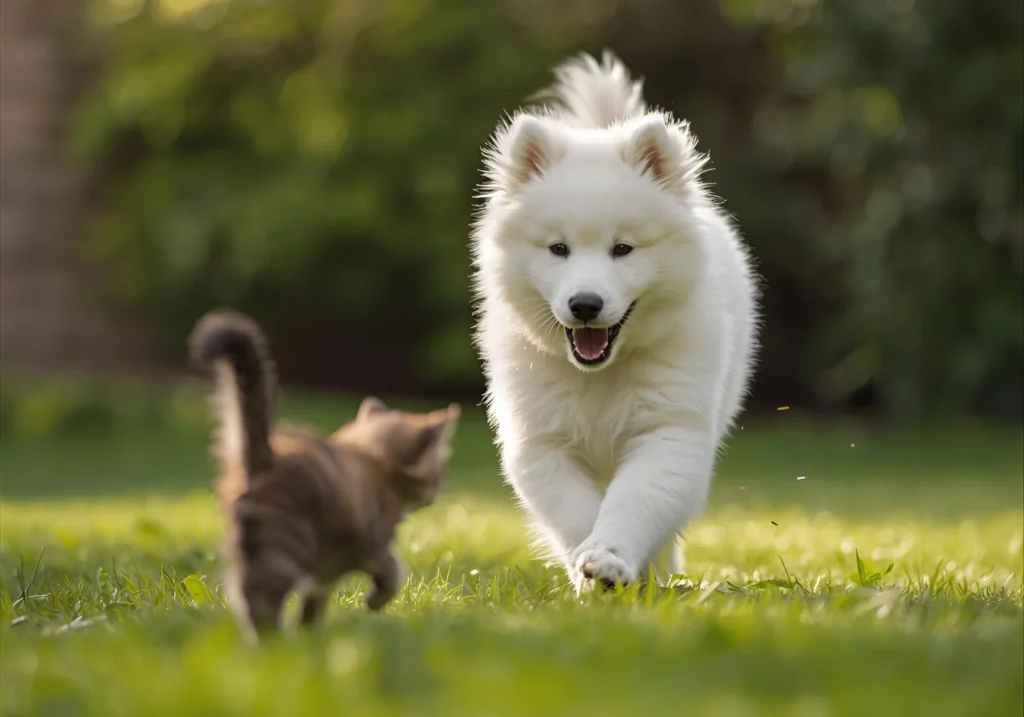
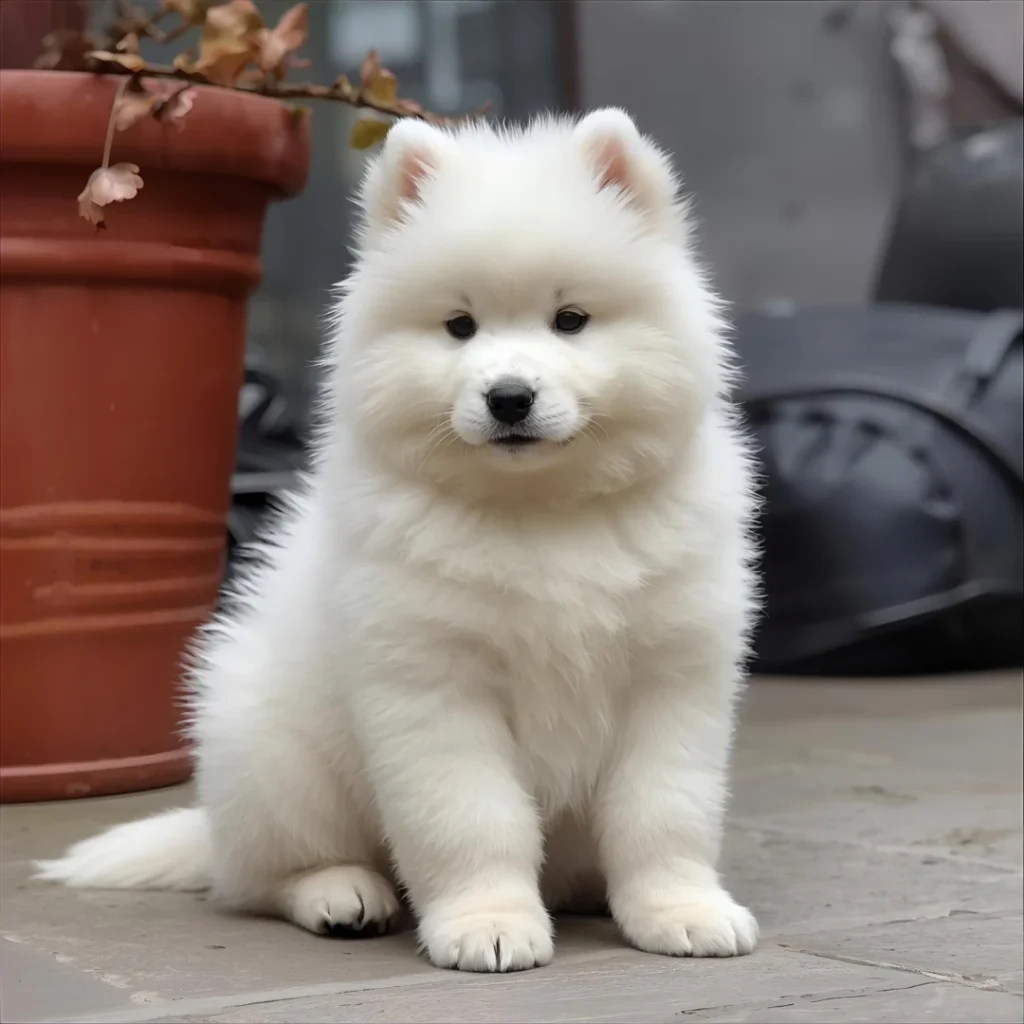
Samoyed puppies are one of the most beloved and instantly recognizable dog breeds, they are famous for their fluffy white coats and signature “Sammy smile.” Originally bred in Siberia to herd reindeer and pull sleds, these dogs are intelligent, energetic, and affectionate, making them ideal companions for families and active owners alike.
People are drawn to Samoyeds not just for their beauty, but also for their friendly and social personalities. They are playful, loyal, and love being part of family activities, often forming deep bonds with their owners. Their joyful nature and expressive “smile” make them feel approachable and loving, even to strangers.
Understanding these traits is essential for anyone considering adopting a Samoyed puppy. This ensures they grow into a happy, healthy, and well-adjusted adult dog.
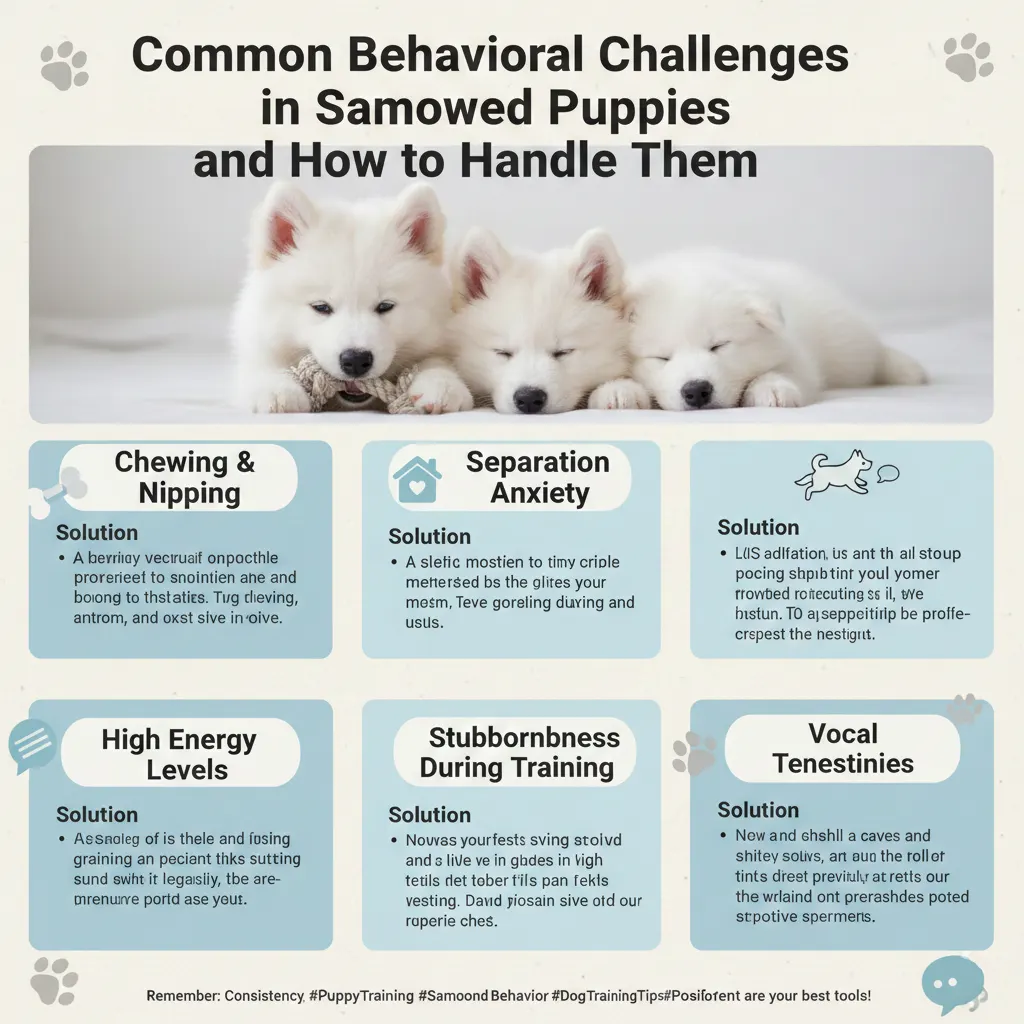
Common Behavioral Challenges in Samoyed Puppies and How to Handle Them
While Samoyed puppies are playful, affectionate, and intelligent, they do have some behavioral quirks that new owners should be aware of. Understanding these early can make training and bonding easier for you.
1-Chewing and Nipping
Samoyed puppies are naturally curious chewers. They explore the world with their mouths, which can lead to chewing furniture, shoes, or cords.
- Solution:
- Provide plenty of safe chew toys.
- Use positive reinforcement when they chew the right items.
- Puppy-proof your home by keeping dangerous items out of reach.
2-Separation Anxiety
Samoyeds thrive on social interaction and can get stressed if left alone for long periods. Puppies may whine, bark, or even destroy objects when lonely.
- Solution:
- Gradually teach independence with short periods alone.
- Provide comfort items like toys or blankets.
- Maintain a consistent routine to reduce anxiety.
3-Stubbornness During Training
Even though Samoyed puppies are intelligent, they can sometimes be stubborn and resist commands, especially if bored or distracted.
- Solution:
- Keep training sessions short and engaging.
- Use rewards such as treats, praise, or playtime.
- Introduce new commands gradually and consistently.
4-High Energy Levels
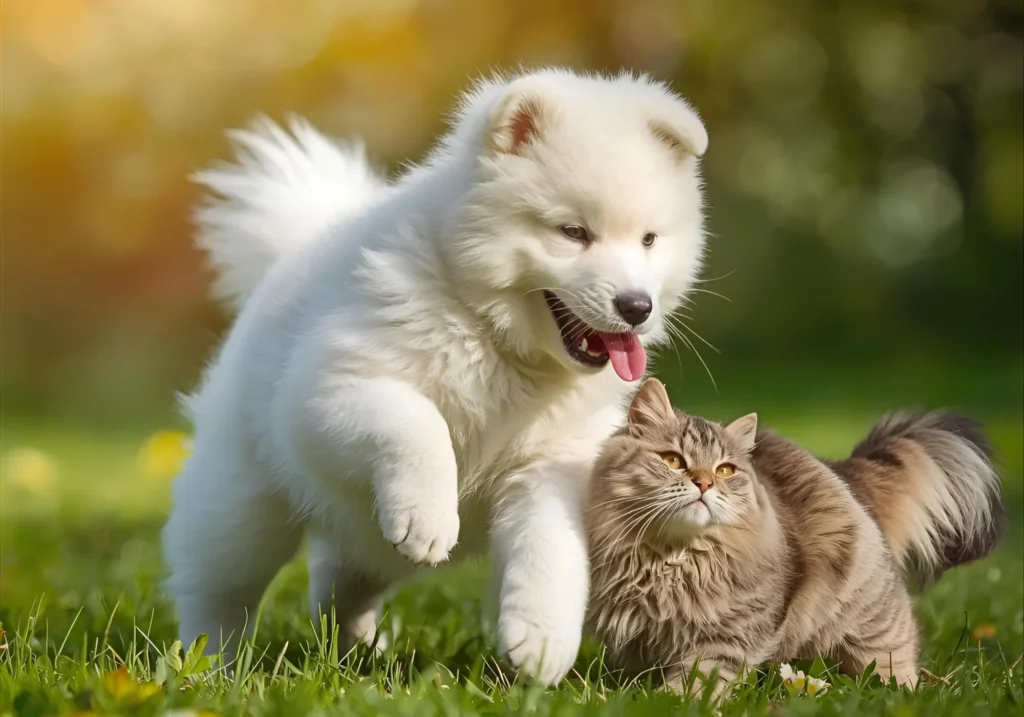
These puppies are active and playful, which can become overwhelming without enough physical and mental stimulation. Lack of activity can lead to destructive behaviors or hyperactivity.
- Solution:
- Schedule daily walks, playtime, and interactive games.
- Offer puzzle toys to challenge their minds.
- Rotate toys to maintain interest.
5-Vocal Tendencies
Samoyeds are naturally vocal dogs. Puppies may bark, howl, or whine to get attention or express excitement.
- Solution:
- Teach quiet commands early using positive reinforcement.
- Ensure their needs for attention, exercise, and play are met.
- Avoid yelling, as it may increase anxiety or confusion.
Housing and Habitat Requirements
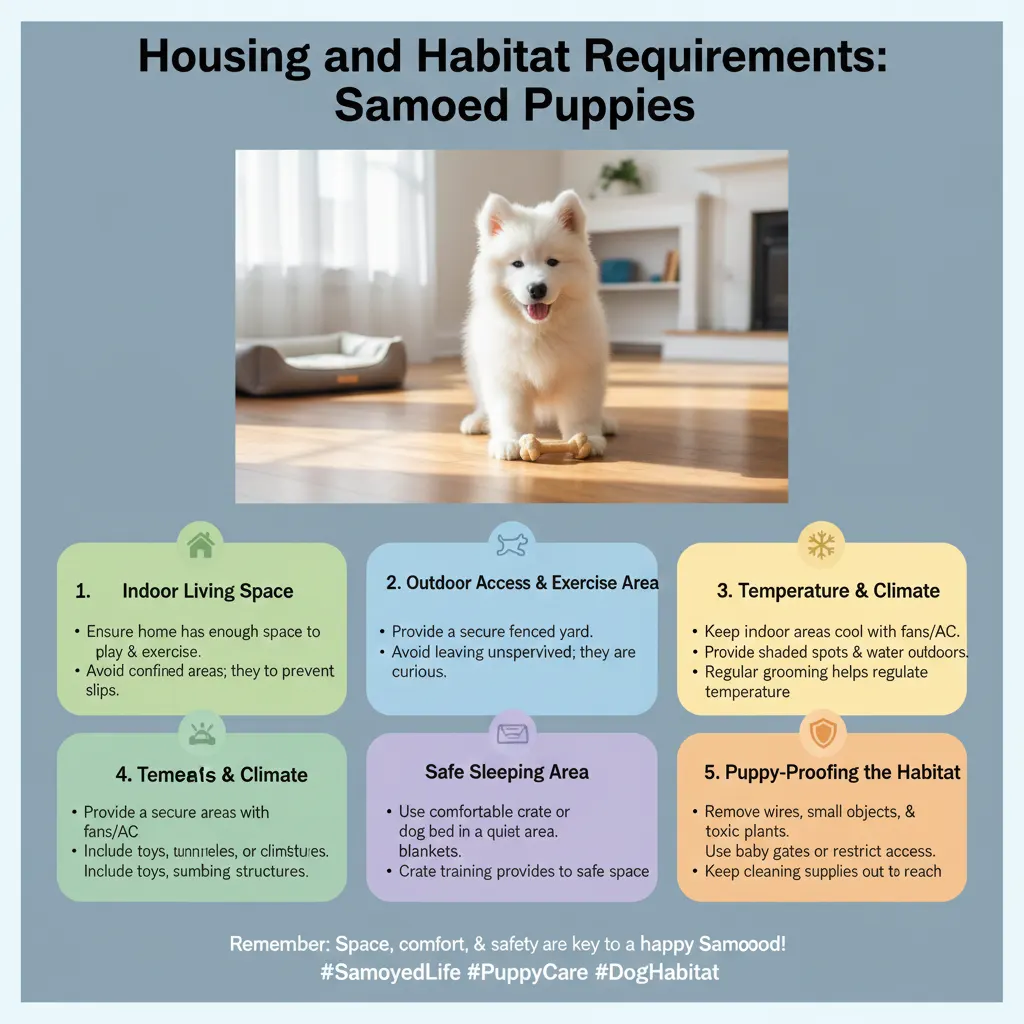
Providing the right environment is crucial to keeping Samoyed puppies happy, healthy, and well-adjusted. These energetic and social dogs need space, comfort, and safety to thrive.
1. Indoor Living Space
While Samoyeds can adapt to indoor living, they are medium-to-large, active dogs, so they need plenty of room to move around.
- Tips:
- Ensure your home has enough space for play and exercise.
- Avoid confined areas for long periods; puppies need freedom to explore safely.
- Keep floor surfaces safe to prevent slips, especially when they are playful or energetic.
2. Outdoor Access and Exercise Area
Samoyed puppies love the outdoors and require daily exercise to burn energy.
- Tips:
- Provide a secure, fenced yard for safe outdoor play.
- Avoid leaving them unsupervised for long periods, as Samoyeds are curious and may try to escape.
- Include toys, tunnels, or climbing structures to keep them engaged.
3. Temperature and Climate Considerations
Samoyeds have a thick double coat adapted to cold climates, so they are sensitive to heat.
- Tips:
- Keep indoor areas cool in warm weather with fans or air conditioning.
- Provide shaded spots and water outdoors to prevent overheating.
- Regular grooming helps regulate temperature and keeps their coat healthy.
4. Safe Sleeping Area
Every Samoyed puppy needs a cozy and secure spot to sleep and rest.
- Tips:
- Use a comfortable crate or dog bed in a quiet area.
- Make the bed inviting with blankets or soft bedding.
- Crate training can provide a safe space while helping with potty training.
5. Puppy-Proofing the Habitat
Samoyed puppies are curious and playful, which can sometimes lead to accidents or chewing hazards.
- Tips:
- Remove or secure wires, small objects, and toxic plants.
- Use baby gates to restrict access to unsafe areas.
- Keep cleaning supplies and harmful items out of reach.
Diet and Feeding Guide for Samoyed Puppies
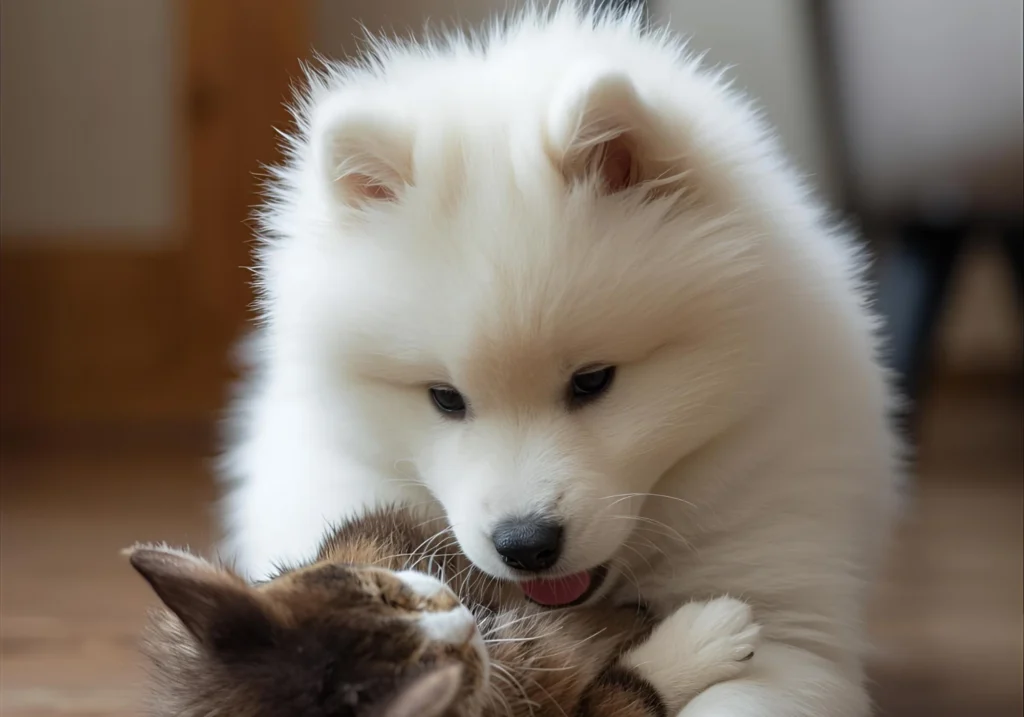
Proper nutrition is crucial for Samoyed puppies to grow healthy and strong. Their energy levels, coat condition, and overall development depend on a balanced diet suitable for their age, size, and activity level.
Choosing the Right Puppy Food
- Select high-quality commercial puppy food formulated for medium-to-large breeds.
- Ensure it contains adequate protein (22–30%), healthy fats, and essential vitamins and minerals.
- Avoid foods with artificial fillers, by-products, or low-quality grains, which can affect digestion and coat health.
Feeding Schedule
- Up to 3 months: 4 small meals per day
- 3–6 months: 3 meals per day
- 6–12 months: 2 meals per day as they approach adult size
Consistent meal times help with digestion, potty training, and behavior.
Portion Control
- Monitor weight and body condition. Overfeeding can lead to obesity or joint problems.
- Adjust portions based on activity level, growth, and your veterinarian’s guidance.
- Healthy Treats and Supplements
- Use treats sparingly for training and positive reinforcement.
- Healthy options: small pieces of carrot, apple (without seeds), or puppy-friendly treats.
Most Samoyed puppies don’t require supplements if eating a complete puppy formula. Consult your vet if needed.
Toxic Foods to Avoid
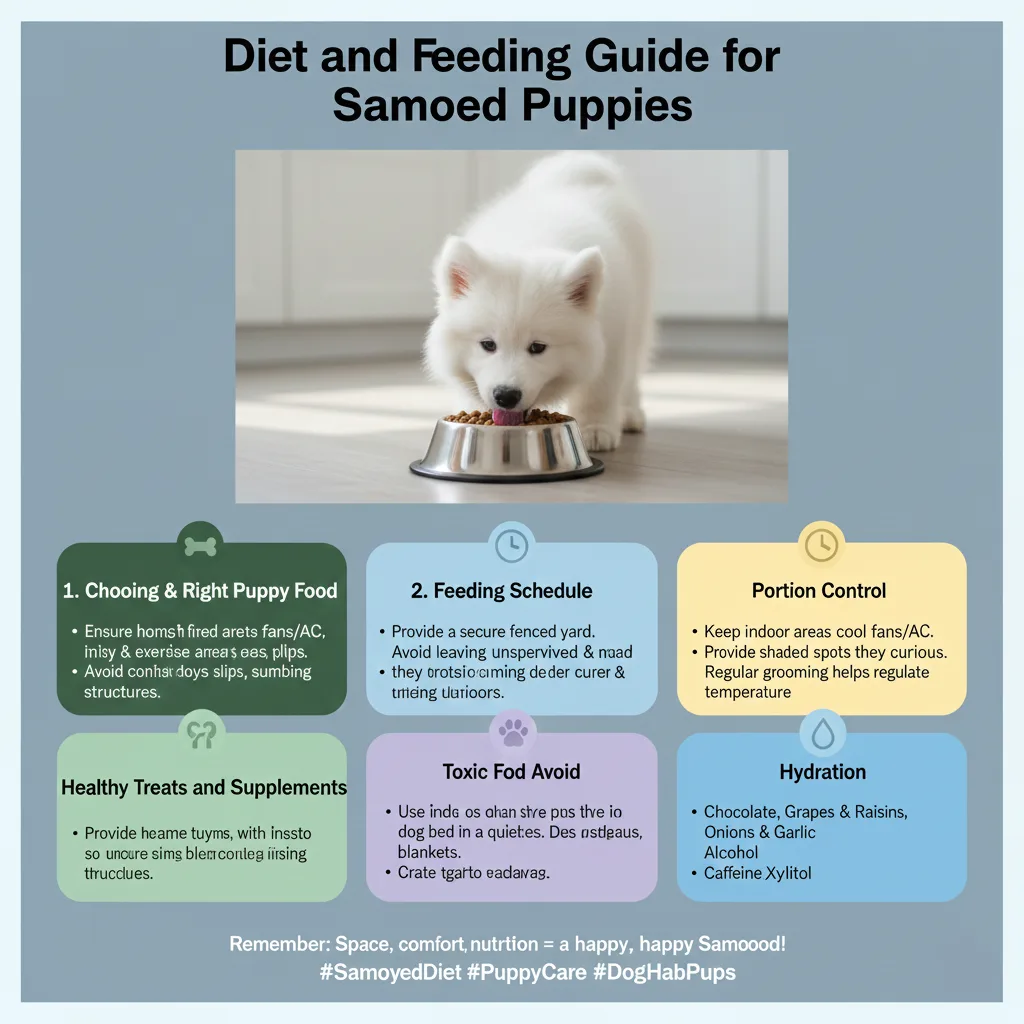
Certain human foods can be dangerous or even deadly for Samoyed puppies:
- Chocolate
- Grapes and raisins
- Onions and garlic
- Avocado
- Alcohol
- Caffeine
- Macadamia nuts
- Xylitol (found in sugar-free gum or candy)
Feeding even small amounts of these can cause vomiting, diarrhea, organ failure, or more severe complications.
Hydration
Always ensure your Samoyed puppy has access to fresh water, as proper hydration is essential for digestion, maintaining a healthy coat, and keeping their energy levels high.
Tips for a Smooth Feeding Routine
To keep your Samoyed puppy’s feeding routine stress-free, place food and water bowls in a consistent, quiet location. When introducing new foods, do so gradually to prevent stomach upset, and always monitor your puppy for signs of allergies or sensitivities, such as itchy skin, diarrhea, or vomiting.
Lifespan
Samoyed puppies grow into adults with a typical lifespan of 12 to 14 years. With proper diet, exercise, and regular vet care, they can enjoy long, healthy, and happy lives. Early attention to health and preventive care ensures your puppy thrives into adulthood.
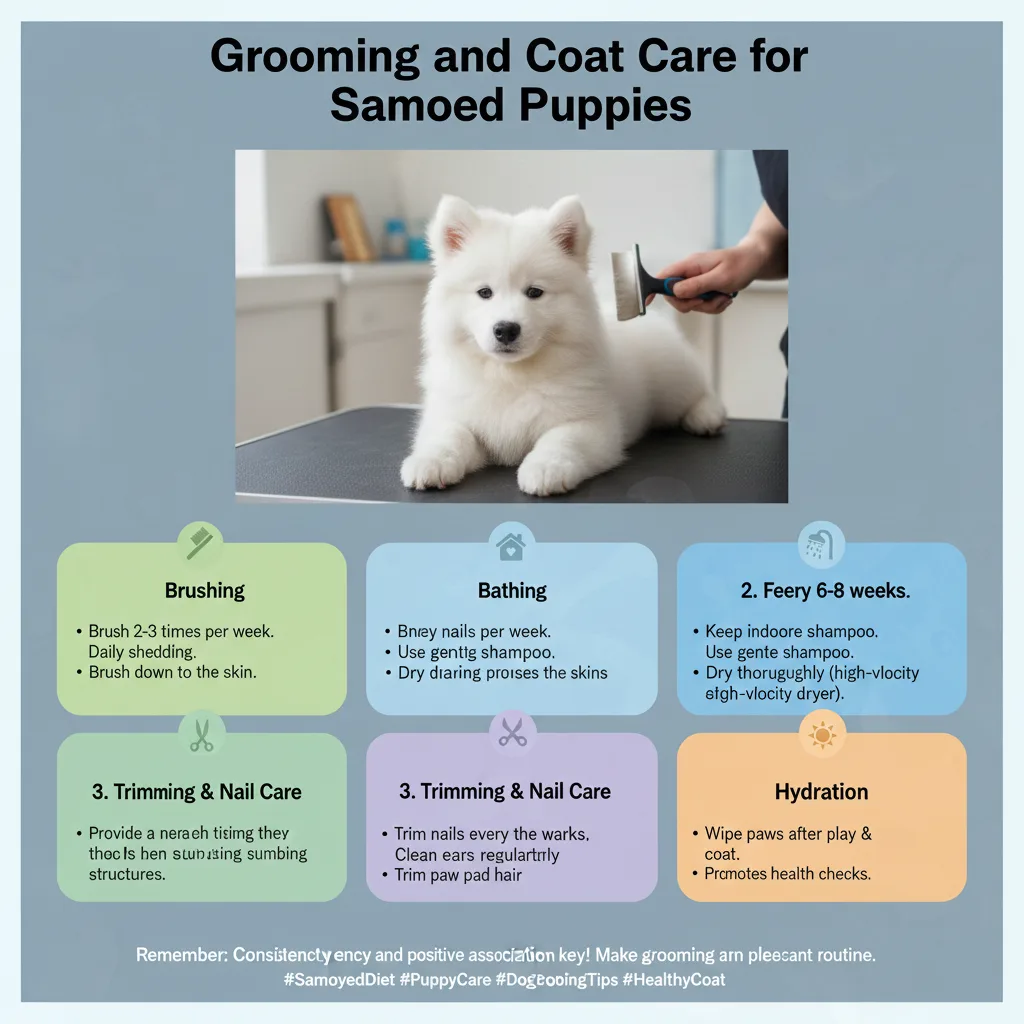
Grooming and Coat Care for Samoyed Puppies
Samoyed puppies are famous for their luxurious, fluffy white coats, but maintaining this beautiful fur requires consistent grooming. Their double coat keeps them warm in cold climates but can quickly develop tangles or mats if neglected.
Brushing
- Brush your Samoyed puppy at least 2–3 times per week using a slicker brush or comb.
- During shedding season (spring and fall), daily brushing may be necessary to remove loose undercoat and prevent mats.
Bathing
- Bathe your puppy once every 6–8 weeks, or as needed, using a gentle dog shampoo.
- Always dry thoroughly to prevent skin irritation or fungal infections.
Trimming and Nail Care
- Trim nails every 3–4 weeks to prevent overgrowth.
- Check and clean ears regularly to avoid infections.
Coat Maintenance Tips
- Keep their coat clean and free from debris by wiping paws and fur after outdoor play.
- Avoid shaving the coat—it protects against sunburn and temperature extremes.
Regular grooming not only keeps Samoyed puppies looking their best but also promotes healthy skin, a shiny coat, and early detection of health issues like lumps or skin irritations.
Health and Veterinary Care
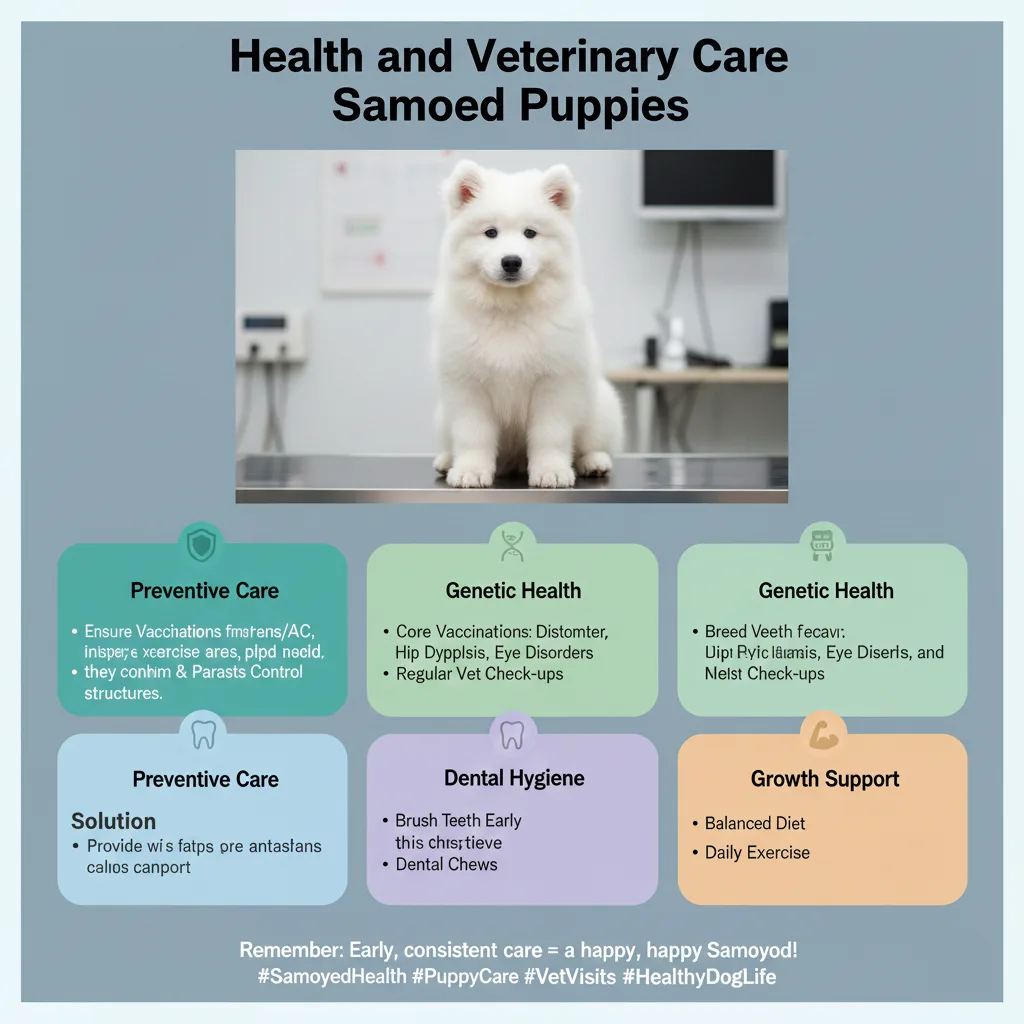
Caring for the health of Samoyed puppies is essential to help them grow into strong, happy adult dogs. Regular veterinary visits, vaccinations, and preventive care lay the foundation for long-term well-being and a healthy, active life.
Puppies require core vaccinations to protect against diseases such as distemper, parvovirus, adenovirus, and rabies. In addition, it’s important to consult your veterinarian for a proper deworming schedule and advice on flea and tick prevention, ensuring your puppy remains protected from common parasites.
Like all breeds, Samoyeds can be prone to certain genetic health concerns, including hip dysplasia, heart conditions, and eye disorders. Regular check-ups help detect any potential problems early, allowing for timely treatment and better long-term outcomes.
Dental care is another important aspect of your puppy’s health. Start brushing your Samoyed puppy’s teeth early with dog-safe toothpaste to prevent dental disease, and consider using dental chews to maintain oral hygiene and promote healthy gums.
A balanced diet and daily exercise are critical for supporting healthy growth, building strong bones, and maintaining an ideal weight. Proper nutrition combined with active play ensures your Samoyed puppy develops into a healthy, energetic adult dog.
Finally, monitor your puppy for any changes in behavior, appetite, or energy levels, as these may signal underlying health issues. Early veterinary intervention is key to addressing problems promptly and helping your Samoyed puppy thrive throughout its life.
Cost of Owning Samoyed Puppies
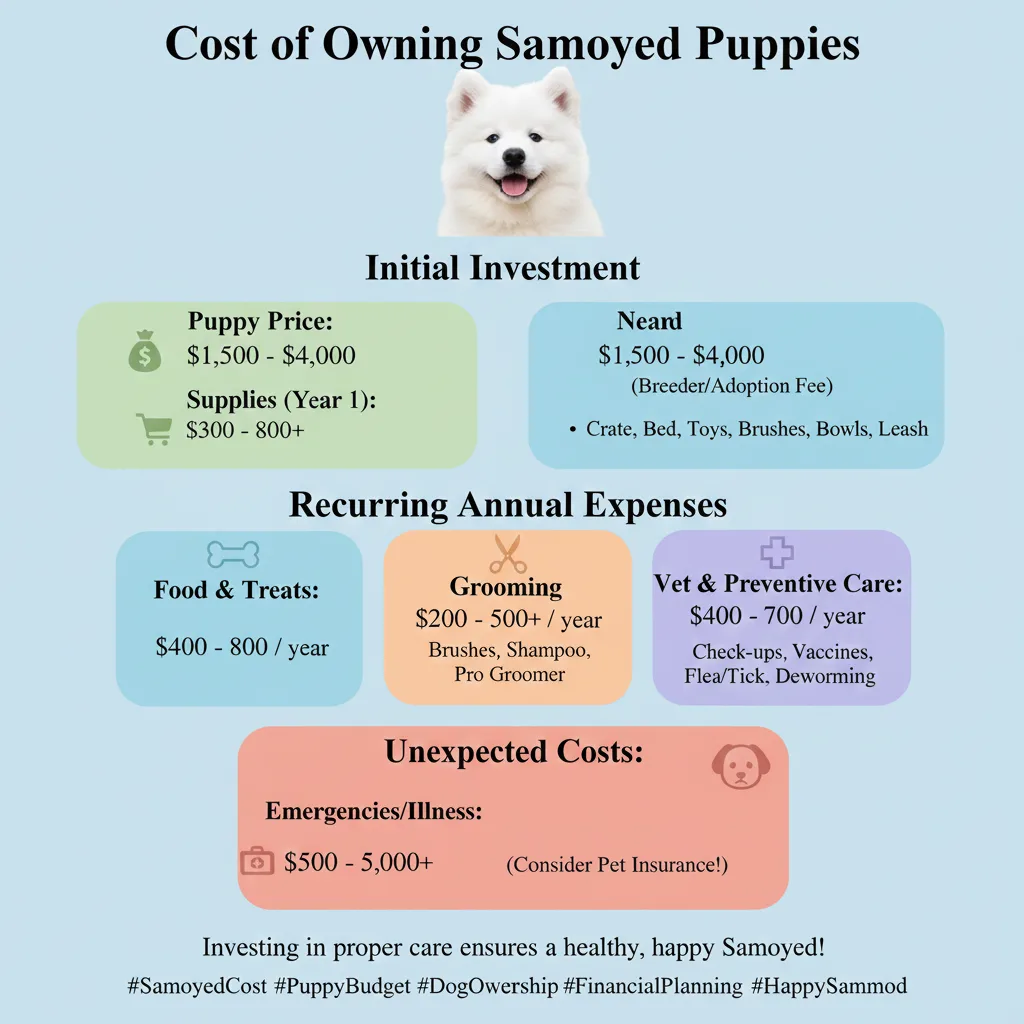
Owning a Samoyed puppy can be a rewarding experience, but it’s important to understand the costs involved before bringing one home. The initial purchase or adoption price for a Samoyed puppy typically ranges from $1,500 to $4,000, depending on factors like breeder reputation, pedigree, and location. Beyond the initial cost, prospective owners should budget for essential supplies such as a crate, bed, toys, grooming tools, and food, which can add several hundred dollars in the first year.
Regular expenses also include food, grooming, veterinary care, and preventive medications, which can total $1,000 to $2,000 per year. Samoyeds have a thick double coat that requires frequent brushing, occasional professional grooming, and seasonal shedding management, so grooming costs should be factored in. Additionally, unexpected veterinary visits for illness or injury can increase costs, making pet insurance a wise consideration.
While the financial commitment is significant, investing in proper care ensures that your Samoyed puppy grows up healthy, happy, and well-adjusted, making the expense worthwhile for those ready to provide the attention and love this breed requires.
Key Advantages and Challenges to Know
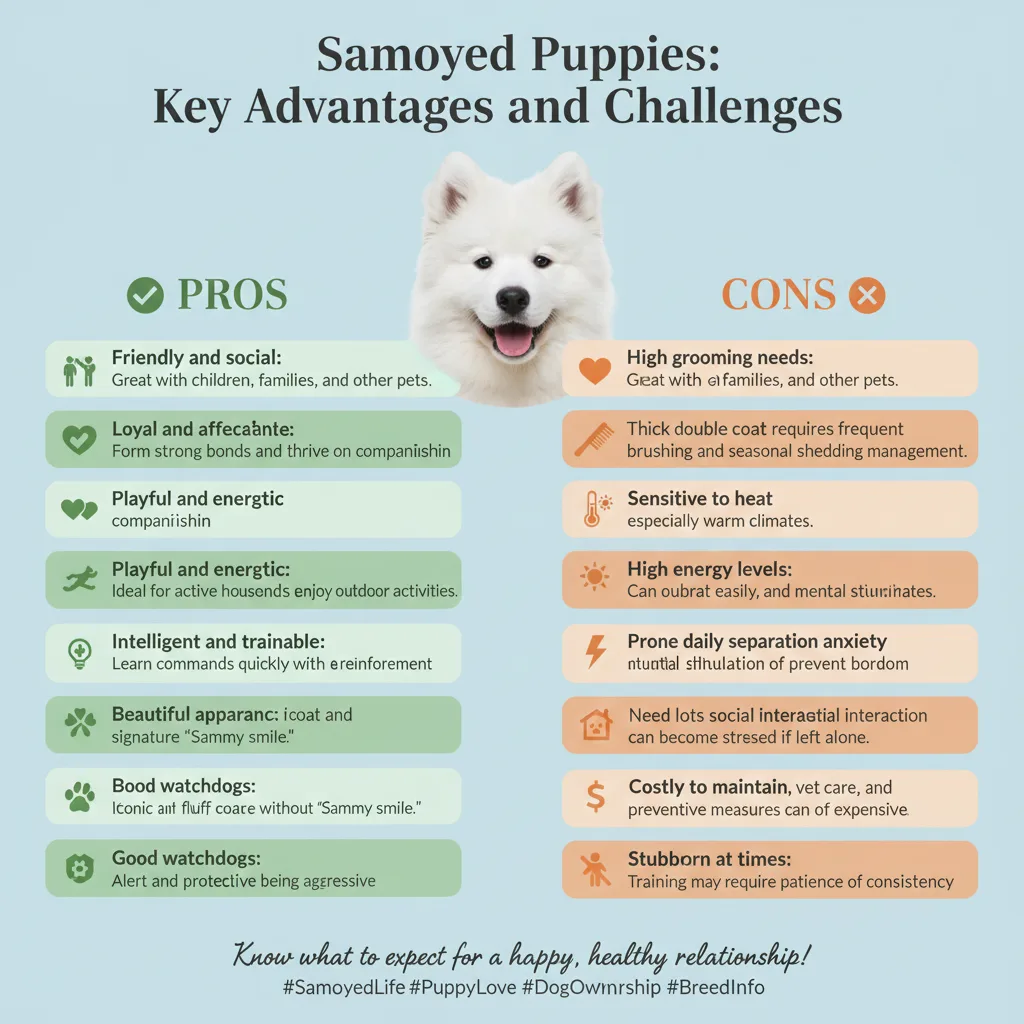
Pros
- Friendly and social: Great with children, families, and other pets.
- Loyal and affectionate: Form strong bonds and thrive on companionship.
- Playful and energetic: Ideal for active households who enjoy outdoor activities.
- Intelligent and trainable: Learn commands quickly with patience and positive reinforcement.
- Beautiful appearance: Iconic fluffy coat and signature “Sammy smile.”
- Good watchdogs: Alert and protective without being aggressive.
Cons
- High grooming needs: Thick double coat requires frequent brushing and seasonal shedding management.
- Sensitive to heat: Can overheat easily, especially in warm climates.
- High energy levels: Require daily exercise and mental stimulation to prevent boredom.
- Prone to separation anxiety: Need lots of social interaction and can become stressed if left alone.
- Costly to maintain: Grooming, food, vet care, and preventive measures can be expensive.
- Stubborn at times: Training may require patience and consistency.
Training Tips for a Samoyed Puppy
Training Samoyed puppies early is key to raising a well-behaved, confident adult dog. These intelligent and energetic pups respond best to positive reinforcement, patience, and consistency.
- Start Early: Begin basic commands such as sit, stay, come, and leash walking as soon as you bring your puppy home.
- Short, Fun Sessions: Samoyeds have a playful nature, so keep training sessions short (5–10 minutes) and fun to maintain focus.
- Socialization: Expose your puppy to different people, pets, and environments to build confidence and reduce fearfulness.
- Crate Training: Introduce crate training as a safe space for your puppy, which also supports potty training and prevents destructive behavior.
- Consistency is Key: Use the same commands and rewards consistently. Mixed signals can confuse your Samoyed puppy and slow progress.
- Mental Stimulation: Include puzzle toys, interactive games, or basic agility exercises to challenge their intelligence and prevent boredom.
- Avoid Harsh Punishments: Samoyeds are sensitive dogs. Harsh scolding can cause stress and damage the bond with your puppy.
What Other Owners Say About Samoyed Puppies
Samoyed owners on platforms like Reddit and Quora often share insights and tips from personal experience:
- Some owners note that Samoyed puppies can be stubborn, so patience and gentle guidance are crucial.
- Many emphasize the importance of early socialization to prevent shyness or fear around strangers.
- A recurring tip is that mental stimulation is as important as physical exercise; without it, puppies can become bored and destructive.
- Owners often highlight the joy of their puppy’s playful and affectionate nature, describing Samoyeds as highly loyal and loving companions.
- Several recommend consistent grooming routines alongside training, as a well-groomed puppy is easier to handle during sessions.
Conclusion
Samoyed puppies are friendly, intelligent, and affectionate dogs that bring joy and energy to any home. While they require proper care—including grooming, training, socialization, exercise, and a balanced diet—their loyalty, playful nature, and loving personality make the effort worthwhile. Understanding their behavior, health needs, and habitat requirements ensures that Samoyed puppies grow into healthy, happy, and well-adjusted adult dogs.
Whether you’re drawn to their iconic fluffy coat, their joyful “Sammy smile,” or their affectionate temperament, adopting a Samoyed puppy can be a rewarding experience for dedicated owners. By providing consistent training, attention, and preventive care, you’ll enjoy a lifelong bond with a companion that is both energetic and deeply loyal.