
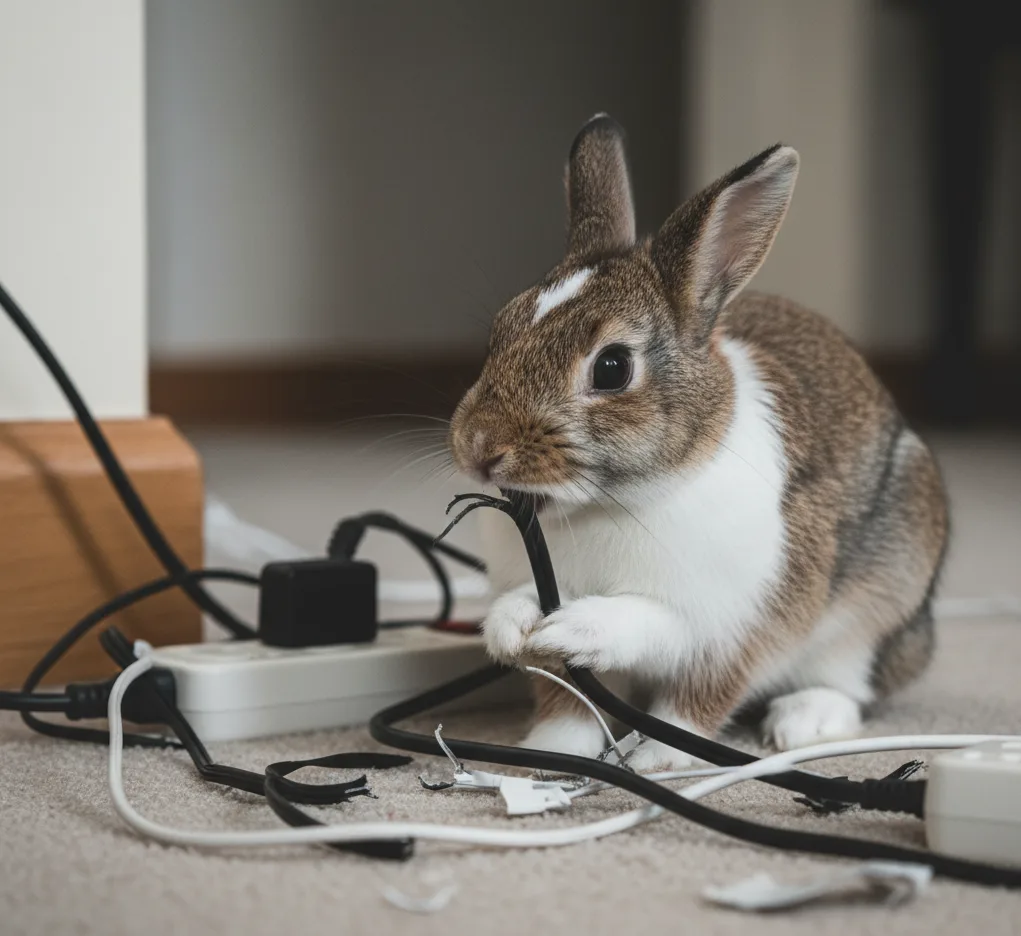
To stop your rabbit from chewing cords, first rabbit-proof your space by hiding cords in cable covers, tubing, or behind furniture. Offer plenty of safe alternatives like chew toys, hay, and untreated wood to satisfy their natural chewing instinct. You can also use bitter sprays on cords as a deterrent, but never punish your rabbit—redirect their chewing to appropriate items instead. Keeping them supervised or confining them to a safe area when unsupervised helps prevent accidents and keeps both your rabbit and your cords safe.
If you’ve ever caught your bunny eyeing your phone charger or lamp cable, you’re not alone. Rabbits naturally love to chew – it keeps their ever-growing teeth in check. But wires and cords are dangerous. (Just ask the bunny who shredded a cord cover in the photo above!) We’ll explain why rabbits chew and show you friendly, vet-approved ways to protect your pet (and your outlets).
Why Rabbits Chew
Rabbits must chew – it’s instinctive. Their teeth never stop growing, so gnawing on things is normal rabbit behaviour. They especially love soft, bendy items – which unfortunately includes plastic cords. A bored or curious bunny might find cables irresistible if there’s nothing else to chew. That’s why we need to give them plenty of safe chew toys and bunny-proof our homes.
1. Their teeth never stop growing.
A rabbit’s teeth grow continuously throughout its life, so chewing helps keep them worn down to a healthy length. If they don’t chew enough, their teeth can become overgrown, which is painful and dangerous.
2. Chewing helps with digestion.
Rabbits need a lot of fiber. Chewing hay keeps their digestive system moving properly and prevents stomach issues.
3. It’s part of their natural behavior.
In the wild, rabbits chew twigs, bark, grasses—basically anything plant-based. Even pet rabbits still have this instinct.
4. It relieves boredom and stress.
Chewing gives them something to do and helps them feel calm. A bored rabbit will chew on furniture, wires, baseboards… anything it finds.
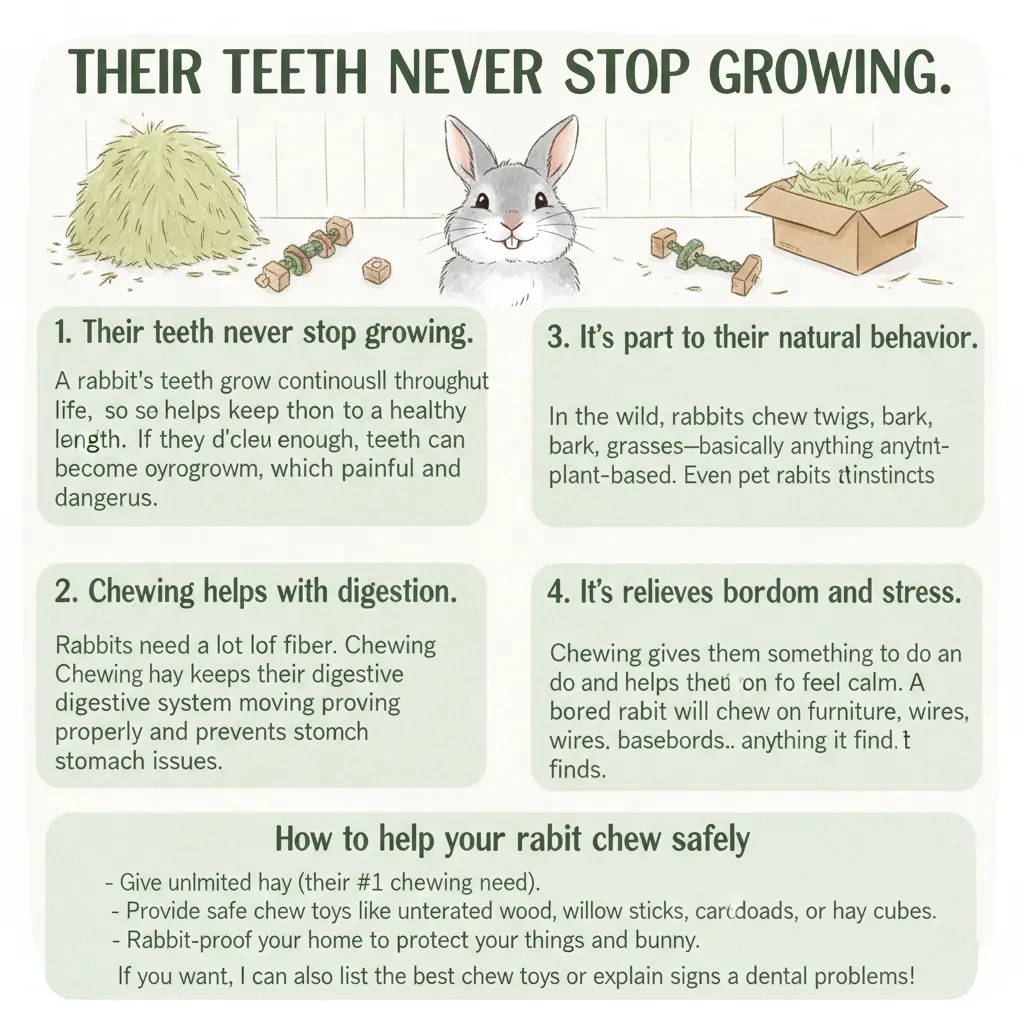
How to help your rabbit chew safely
- Give unlimited hay (their #1 chewing need).
- Provide safe chew toys like untreated wood, willow sticks, cardboard, or hay cubes.
- Rabbit-proof your home to protect your things and your bunny.
If you want, I can also list the best chew toys or explain signs of dental problems!
The Dangers of Cord Chewing
Biting into a live electrical cord can burn a bunny’s mouth or even electrocute it. Even an unplugged, chewed-through cord can cause cuts in the mouth or intestinal blockages if bitten up and swallowed. And frayed wires risk starting fires. As one vet guide warns, electrical cord bites can lead to “burns in the mouth, heart damage, [and] lung injuries”. In short, chewing cords is a medical emergency waiting to happen. That’s why protecting cords is crucial – for your bunny’s health and your home’s safety.
Bunny-Proofing Cords and Wires
Fortunately, keeping cords safe is mostly about prevention. Here are the most effective tips:
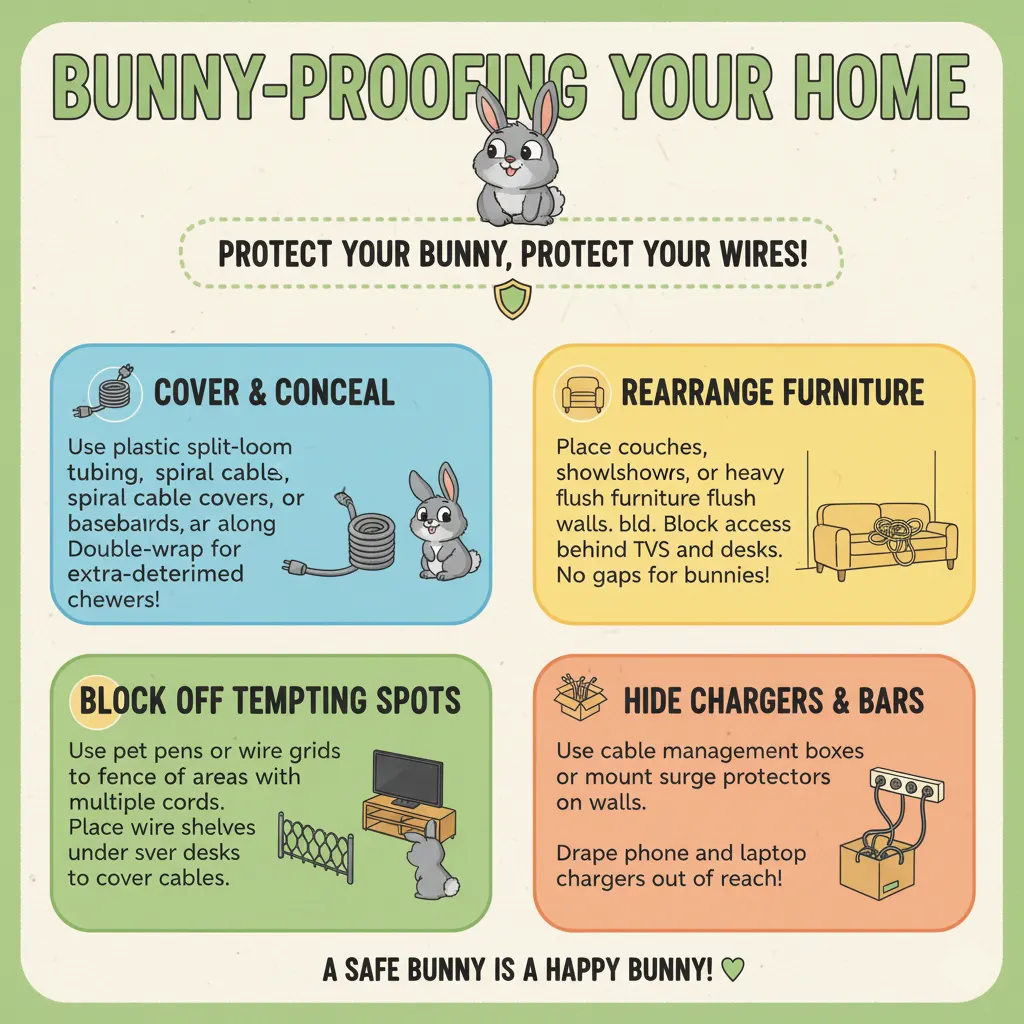
- Cover and conceal cables. Slide cords into plastic split-loom tubing, spiral cable covers or conduit. These can be found at hardware or pet stores. The Humane Society notes that “wire tubing secured with electrical tape” and cord covers are great ways to hide exposed wires. For extra-determined chewers, even a second layer of wrapping can help. You can also use flat cord concealers along baseboards or floors to keep wires fully out of sight.
- Rearrange furniture. Place couches, bookshelves or other heavy furniture flush against walls so cords and outlets are tucked out of reach. For example, push a sofa or desk in front of loose plugs, or push pieces together to route cables behind them. This simple move can “make a room safe by rearranging your furniture… to keep power cables safely out of reach”. Remember that bunnies love any gaps, so check that furniture is flush and leaves no crawling space.
- Block off tempting spots. Use pet pens or wire grids to fence off areas with multiple cords. For instance, a short fence of pet-pen panels around a TV stand or entertainment center keeps curious buns away. You can also put a wire shelf or clear acrylic panel under desks or beds to cover cables. Always block the crawl space behind a TV or TV stand – it’s a magnet for bunnies.
- Hide chargers and bars. Use cable management boxes or mount surge protectors on walls. Even phone and laptop chargers can be draped behind furniture. The key is: if it dangles and looks chewable, hide it! As one bunny expert puts it, “keep power cables safely hidden away” and “fence off parts of a room” if needed.
Provide Safe Chew Alternatives
Since rabbits need to chew, give them plenty of safer options:
- Wood and hay toys. Offer untreated wood blocks, willow sticks, or compressed hay cubes. The Humane Society recommends things like wooden blocks, cardboard tubes, wicker baskets and plastic toys as chew substitutes. These satisfy the urge and wear down teeth without harm.
- Cardboard and mats. Heavy-duty cardboard tubes (like paper-towel rolls), seagrass mats or pine boards make great chew mats. (Pine boards must be untreated; pine shavings are a no-no.) Spread hay liberally: munching hay is good for teeth, and stuffing hay in toys or a digging box keeps buns busy.
- Toys and enrichment. Give interactive toys and rotate them often. A bored bunny will find something to destroy, so “make sure there are plenty of interactive toys for them to play with”. Digging boxes filled with shredded paper and hidden treats can redirect that digging-and-chewing energy. The goal is: the more fun and chew-safe items you offer, the less temptation there is in your tech wires.
Training and Supervision
Finally, supervise and gently train your bunny:
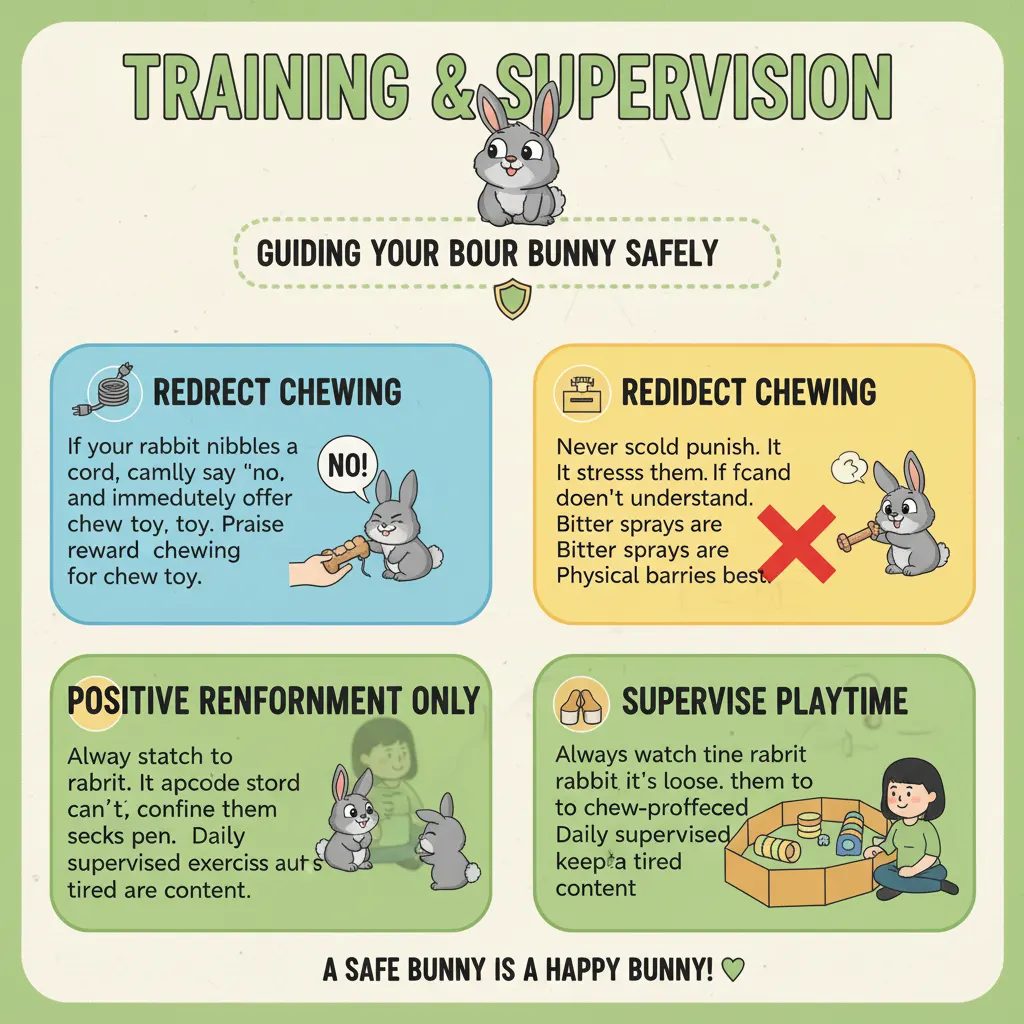
- Redirect chewing. If you catch your rabbit nibbling a cord, calmly say “no” and replace it with a chew toy immediately. Preventive Vet suggests interrupting the behavior and directing them to a safe alternative. Praise or reward them when they chew the toy. Over time, they learn which items are off-limits.
- Positive reinforcement only. Don’t scold or punish – rabbits don’t understand it, and it just stresses them. As bunny-proofing experts note, “never rely on telling your bunny off” or bitter sprays to stop chewing. In fact, taste deterrents (like bitter apple) often wear off or are ignored by determined chewers. Physical barriers are much more reliable.
- Supervise playtime. Always watch your rabbit when it’s loose in the room. If you can’t keep an eye out, it’s safest to confine your bunny to a chew-proofed pen. Provide daily exercise under supervision so they’re tired and content (a relaxed bunny chews less destructively).
Each rabbit learns differently, but with consistency, most buns catch on that cords are off-limits. And remember: “cord management is health management” – treating bunny-proofing as essential to your pet’s well-being.
Following these steps – hiding or covering wires, giving lots of safe chewables, and supervising carefully – will keep your home rabbit-safe. Soon you’ll see those shredded cords become a thing of the past, and your curious bunny will have a basket full of toys to chew instead.
Sources: Rabbit-care guides and vets agree that rabbits chew to keep teeth healthy and that protecting cords with tubing, furniture, or barriers is key to preventing injury. The House Rabbit Society and experienced rabbit owners also recommend plenty of safe chew toys and arranging furniture to hide outlets. These expert-backed tips will help you bunny-proof your home for a happier, safer pet.


Its really nice *
firt time know about how to Stop Your Rabbit from Chewing
Pingback: How to Train a Pet Rabbit to Use a Litter Box: Easy Step-by-Step Guide for Beginners - Animals