
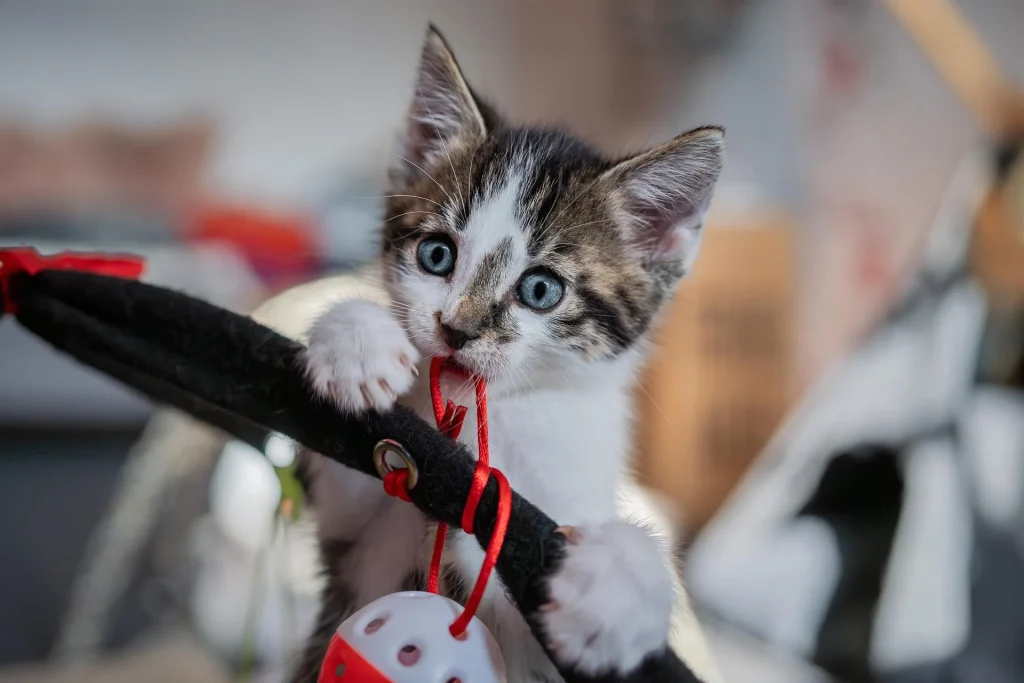
Best Indoor Toys For Large Cats: Caring for a large, high-mass cat breed like the Maine Coon or Ragdoll within a restricted indoor environment presents a distinct challenge: their superior physical strength and deeply ingrained predatory drives must be meticulously managed through highly specialized toys and infrastructure. Standard feline accessories are often insufficient, failing rapidly under the increased force and momentum generated by a powerful cat and posing serious safety risks.
This guide moves beyond general recommendations, providing a critical framework for selecting only the most durable, vet-approved equipment and structuring interactive play to meet the substantial mental and physical demands of the giant indoor feline, ensuring their long-term health, engagement, and safety.
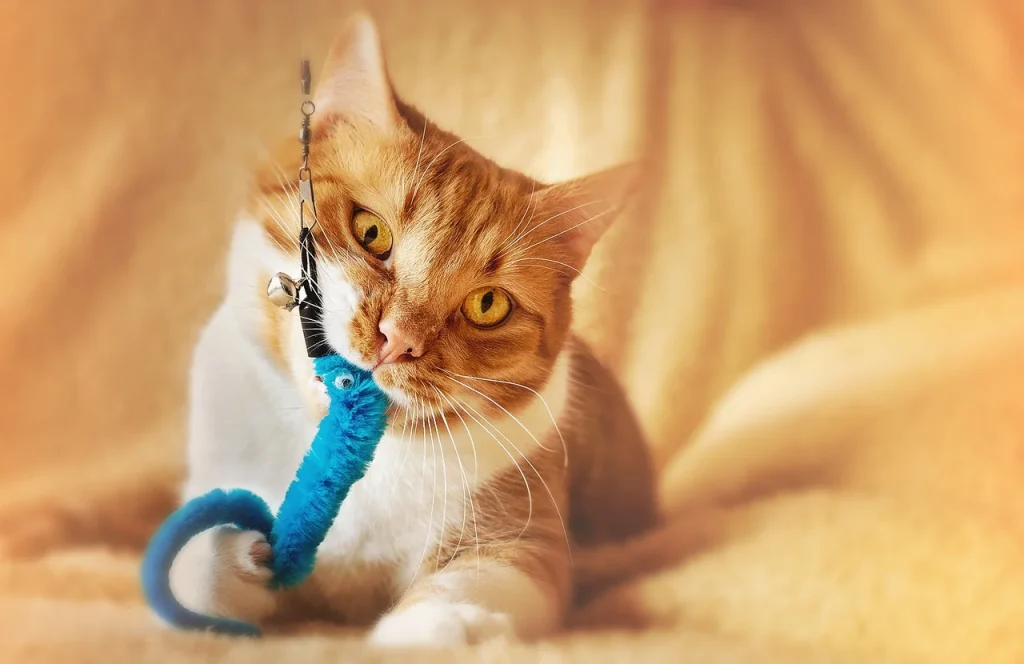
I. Introduction: Understanding the Large Feline Mandate for Indoor Enrichment
The management of large, often high-energy cat breeds—such as the Maine Coon and the Ragdoll—within a strictly indoor environment necessitates a comprehensive approach to enrichment that addresses their superior physical strength, cognitive demands, and specific social needs. Failing to satisfy these core behavioral and exercise requirements can lead to boredom, stress, and associated health issues, particularly obesity. Therefore, the selection of indoor toys and infrastructure must be treated not as a recreational purchase, but as a critical component of feline welfare and safety.
A. The Behavioral Imperative: Why Indoor Enrichment is Critical
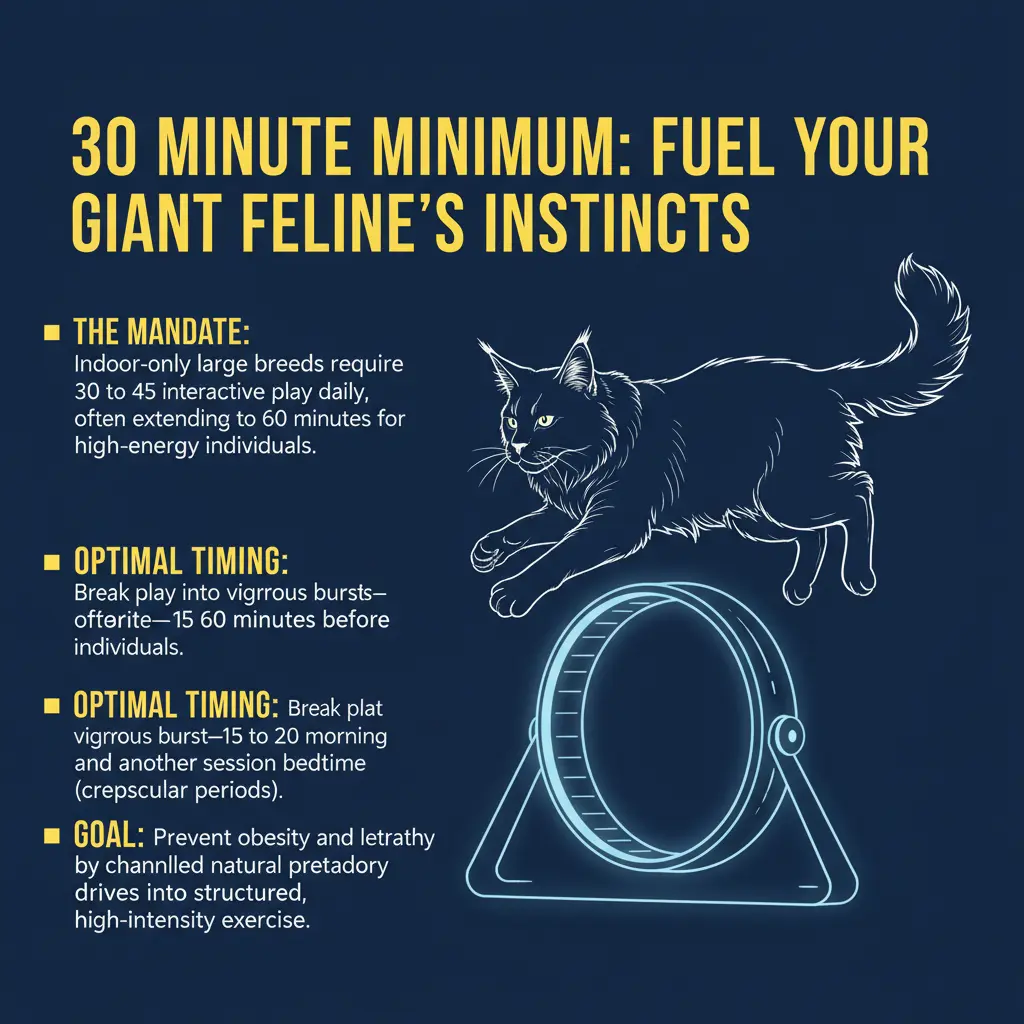
For large and highly social breeds that are confined exclusively indoors, their robust physical capabilities and deeply ingrained predatory drives must be meticulously channeled into safe, structured play and environmental stimulation. Research underscores that an indoor-only large cat, exemplified by the Maine Coon, requires substantial human interaction to fulfill these needs. A minimum of 30 to 45 minutes of interactive play daily is recommended, although general feline health guidelines often suggest extending this duration up to 60 minutes. This activity should not be consolidated into a single period but rather broken down into short, vigorous sessions, strategically timed to coincide with the cat’s natural activity peaks, known as crepuscular periods (dawn and dusk). Optimal timing generally consists of two 15-to-20 minute sessions, one in the morning and one before bedtime.
This structured play is indispensable for mitigating the risk of a sedentary lifestyle. Cats that do not have access to the outdoors or who are observed to be “carrying a bit of extra body fat” face an elevated risk of obesity. For a large cat, managing body weight is paramount to long-term joint and cardiovascular health. Since a high-mass cat, such as a 19 lb Maine Coon, requires exponentially higher caloric output than an average feline, 30 to 60 minutes of low-intensity engagement is metabolically insufficient. Therefore, the interactive play sessions must be highly efficient, high-intensity, and designed specifically to stimulate their natural predatory instincts. The intensity of the interaction must compensate for the cat’s greater body mass to maintain a healthy weight and prevent lethargy.
B. Defining the “Large Cat”: Physiological and Behavioral Differences
The sheer scale of large felines dictates specialized requirements for their environment. Increased body mass translates directly into greater momentum during activities such as running, jumping, and forceful kicking, requiring toys and support structures designed for superior stability and durability. Critically, toy selection must also be customized based on breed-specific temperament, as two popular large breeds demonstrate distinct play profiles.
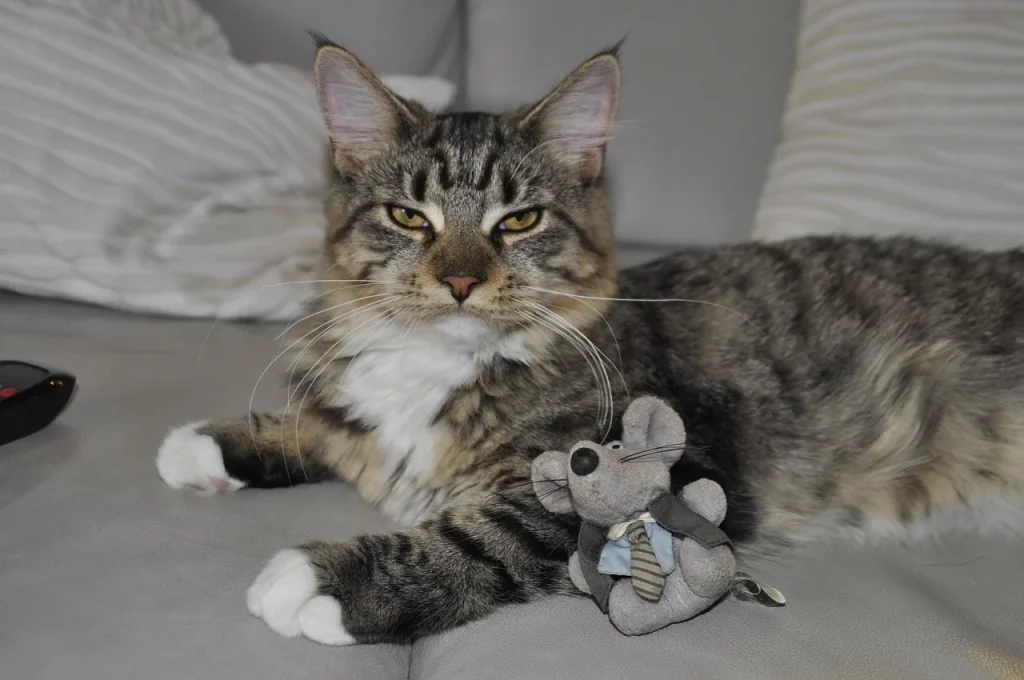
The Maine Coon profile is characterized by its high sociability, often earning it the moniker of a “dog-like” companion. They are highly curious, playful, and thrive on being included in family activities. Behaviorally, they are serious climbers who feel most secure surveying their domain from vertical vantage points, demonstrating a clear need for high-reach infrastructure. Furthermore, Maine Coons are distinctively known for their love of splashing and playing with water. Their playful nature means they excel with active, high-action toys and challenges.
In contrast, the Ragdoll profile describes an exceptionally sweet and mellow cat that prefers somewhat calmer pursuits. Ragdolls are highly social and thrive when surrounded by loving companions, but unlike their Maine Coon counterparts, they strongly prefer to keep all four feet nicely on the floor. They are not noted for being adventurous climbers, meaning their enrichment focus should be on ground-level activities that promote deep social bonds and physical engagement, without requiring significant vertical infrastructure. This physiological and behavioral dichotomy—the difference between a massive climber and a massive floor-dweller—confirms that the infrastructure choices required for large cats are not interchangeable luxuries, but critical, non-negotiable safety features.
II. Cornerstone of Care: Safety, Durability, and Material Science
The selection of indoor toys for a large, strong cat must adhere to stringent safety protocols that exceed those established for smaller, less destructive felines. The increased force exerted by a large cat during play dramatically amplifies the risk of component destruction and subsequent ingestion.
A. The Large Cat Safety Dilemma: High Force, High Risk
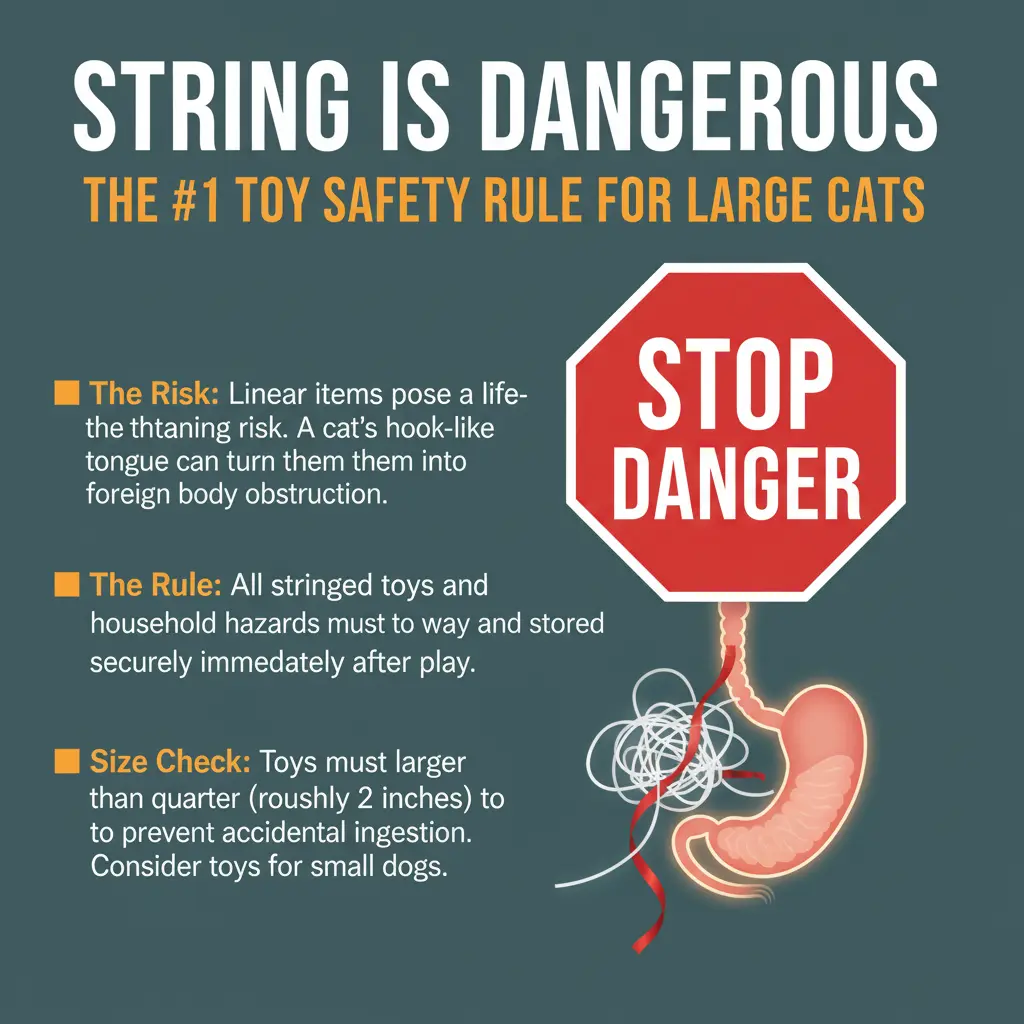
A fundamental safety principle is that toys must be sized appropriately to mitigate choking hazards. For any cat, the object should be larger than a quarter to prevent ingestion. For large breeds, the veterinary recommendation often leans toward selecting toys designed for small dogs or only the largest available cat toys, as smaller items are easily swallowed by felines of higher mass. Veterinarians and safety experts strictly caution against the use of toys that contain small components such as bells, buttons, plastic eyes or ears, and small metal clasps, which can be chewed off and swallowed. Small toys, such as “sparkle balls,” should be avoided entirely.
The most severe hazard specific to strong chewers is the ingestion of linear foreign bodies. Due to the feline’s specialized, hook-like tongue and powerful swallow reflex, stringy items, once partially ingested, often become difficult to vomit or pass. This includes common household items and toy components such as string, elastic yarn, ribbon, dental floss, fishing line, and shoelaces. Any toy utilizing string or wires, such as wand toys, must be put away and stored securely immediately after interactive play to prevent accidental unsupervised ingestion. The primary preventative measure against dangerous and expensive emergency room visits due to ingestion is the uncompromising selection of safe, non-toxic materials designed for aggressive play.
B. Durability Standards: Materials that Withstand Heavy Play
Since formal federal safety standards for pet toys are currently lacking, responsible manufacturers often choose to align with the stringent safety guidelines used for children’s toys. This standard focuses on robust construction, non-toxic components, and large parts. Toys for large cats must be specifically tested to hold up against pet-specific behaviors, including intense biting, chewing, pulling, and scratching.
Certain materials are veterinarian-approved and recommended for their superior durability:
- Rubber: Kong toys are frequently recommended by veterinarians due to their durable rubber material, which is engineered to accommodate different chewing levels, making them excellent choices for strong chewers. These can also be utilized for cognitive enrichment by filling them with wet food or treats.
- Fabric and Plush: Plush toys intended for large cats require superior structural integrity. Materials should be non-toxic and washable, utilizing thick fabrics such as denim, tough cotton, or felted wool. If constructing homemade toys, heavy-duty thread and double-stitched seams are essential for reinforcing edges.
- Sisal Reinforcement: For added texture and longevity, homemade toys can be wrapped securely around the middle with natural sisal rope, fixed with a firm double knot.
Regardless of initial quality, all toys are subject to wear. Owners must conduct mandatory, regular inspections for hard or sharp parts and check for signs of deterioration. If a toy begins to show significant wear, fraying, or is starting to fall apart—if it looks “too well-loved”—the instruction is clear: err on the side of caution and discard it immediately.
The following table summarizes the mandatory safety criteria for ensuring indoor toys are safe for powerful, large cats.
Table: Essential Toy Safety Checklist for Large Cats
| Safety Parameter | Requirement for Large Cats | Reason/Risk Mitigation |
| Minimum Size | Larger than a quarter (Approx. 2 inches diameter); use small-dog sizing | Prevents accidental ingestion and acute choking hazards. |
| Material Strength | Heavy-duty, bite-resistant rubber (e.g., Kong), thick cotton, or denim; reinforced stitching | Prevents rapid destruction and ingestion of plastic/fabric fragments. |
| Linear Hazards | String, yarn, dental floss, ribbons MUST be stored securely (or avoided entirely) | Prevents life-threatening linear foreign body obstruction. |
| Small Attachments | Remove all bells, plastic eyes/ears, small plastic/metal rings | Prevents detachment during rough play and subsequent swallowing. |
| Integrity Checks | Inspect daily/weekly; discard immediately if frayed, cracked, or stuffing is exposed | Avoids ingestion of internal stuffing or broken components. |
III. Interactive Systems: Maximizing the Hunting Sequence and Human-Feline Bond
Interactive play is the core mechanism for fulfilling the large cat’s social and predatory needs, providing high-intensity exercise that meets their physical demands. Wand toys are the most effective tool for this purpose, but their use requires strategic application to simulate a successful hunting experience.
A. The Role of the Wand Toy in Simulating Prey
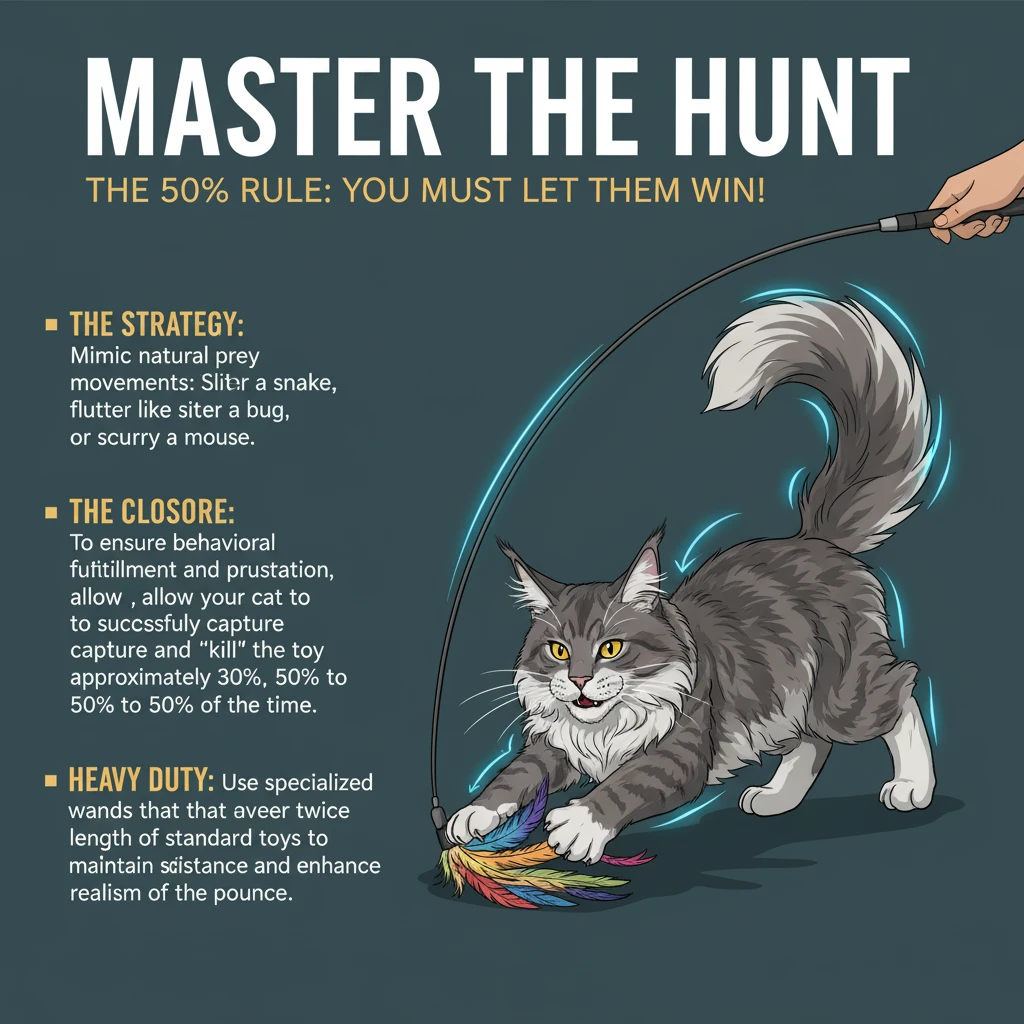
Wand toys are essential for owner-cat bonding, a vital activity for highly social breeds like the Maine Coon and Ragdoll. Effective engagement relies on mimicking the movements of natural prey, appealing directly to the cat’s fundamental predatory instincts. Owners should employ a variety of simulation techniques to challenge the cat and sustain interest:
- Flying Prey Simulation (Bird/Butterfly): Utilizing lightweight, fluttery attachments and maneuvering the toy through the air encourages jumping behavior, appealing to active, curious breeds. Letting the ‘prey’ land periodically mimics natural avian behavior.
- Slithering Prey Simulation (Snake): This involves moving the attachment slowly back and forth along the ground. This deliberate, slow movement encourages intense stalking behavior, often indicated by a fixed stare, tail twitching, a crouched position, and body wriggling before the pounce.
- Scurrying Prey Simulation (Mouse/Vole): Running a textured, fuzzy toy along the ground simulates small mammal movement. Running the toy under a play rug adds an element of rustling sound and unpredictability, utilizing auditory stimulation to promote hunting behaviors.
- Skittering Prey Simulation (Bug): Rapid, erratic movements—bouncing, flying, skittering, and abrupt stops—mimic insect behavior. Toys that incorporate a subtle rattle or noise, such as paper attachments, can enhance this auditory illusion.
Crucially, interactive play must provide closure to the hunting sequence. If a cat is only visually stimulated but never achieves a tangible “catch,” the energy remains unresolved, leading to potential frustration. To ensure behavioral fulfillment and satisfaction, the owner must allow the cat to successfully capture the toy and execute a “kill” approximately 30% to 50% of the time.
B. Best Practices for Heavy-Duty Wand Selection
For large cats, the physical dynamics of the pounce necessitate longer wands. Specialized, heavy-duty wands are often designed to be over twice the length of standard toys. This extended length serves two primary functions: first, it allows the owner to maintain a safe physical distance from the powerful pounce and rake of a large cat, minimizing the risk of accidental injury; second, it enhances the realism of the hunt by maintaining the illusion of distance, thereby increasing the cat’s stalking and pouncing intensity.
The owner must be vigilant regarding the durability of the wand attachment mechanism, ensuring it can withstand the powerful bite and pull force of a large cat. For breeds with significant hunting drive, caution must also be applied to light-based toys, such as laser pointers. While visually stimulating, the inability to capture the light can generate deep frustration. Behaviorists recommend immediately following play with light beams with a reward, such as a small treat, or transitioning to a tangible toy capture to provide satisfying behavioral closure.
IV. Cognitive Enrichment: Puzzle Feeders and Strategic Mental Stimulation
Cognitive enrichment, particularly working for food, is a vital tool for preventing behavioral problems, satisfying mental drive, and directly addressing the common issue of weight management in large indoor cats.
A. The Benefits of Working for Food
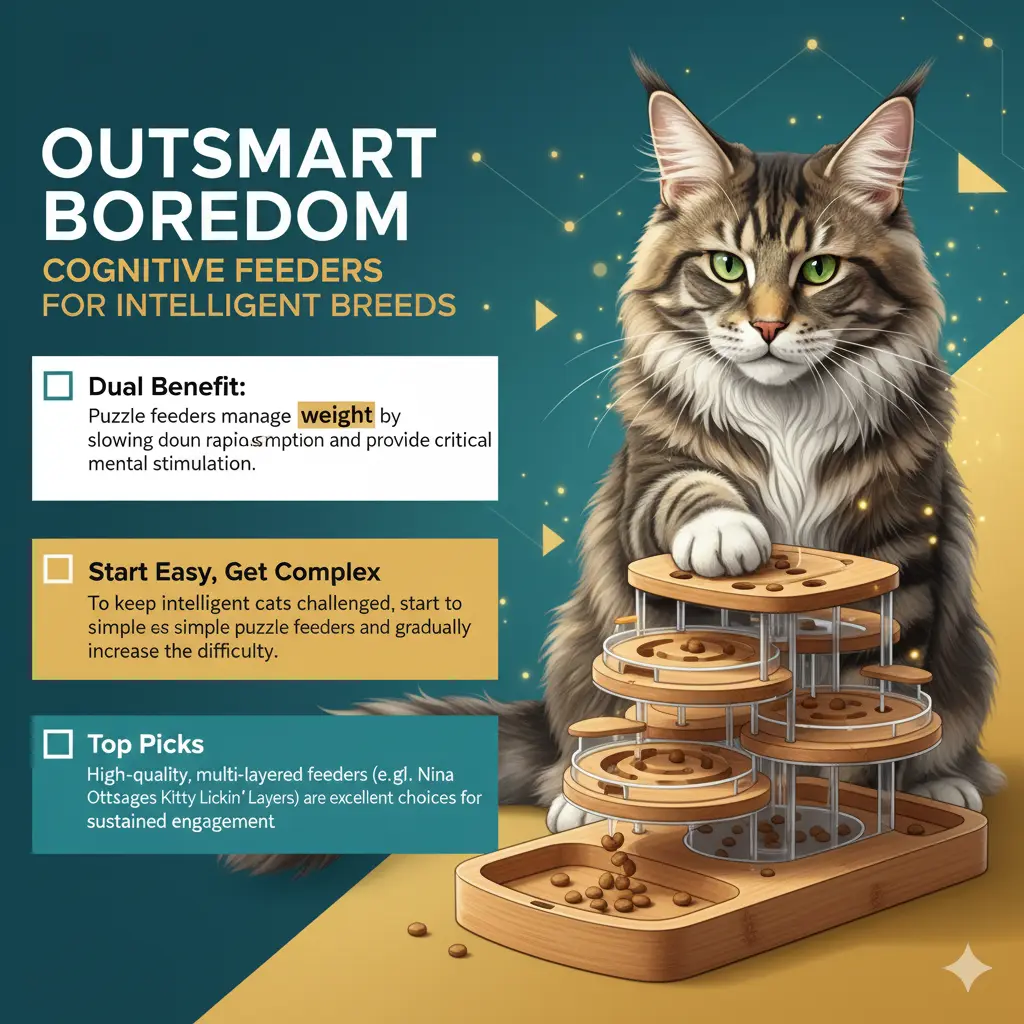
Food puzzle feeders and food-dispensing balls encourage the cat to expend energy and mental effort to access its daily sustenance. This activity naturally slows down the rapid consumption rate common among felines, which is beneficial for digestion and weight management. Puzzle feeding aligns with the cat’s natural instincts as a hunter accustomed to small, frequent meals throughout the day.
For cats that are struggling with obesity, leveraging their feeding routine is a highly effective strategy. This can be supplemented by simple behavioral changes, such as rotating feeding areas in the house to encourage the cat to forage and search for its food, or, if feeding dry kibble, tossing individual pieces down a hallway to encourage movement for each morsel.
B. Selecting Advanced Puzzle Feeders for Large Felines
The intelligence and physical capability of large, curious breeds require advanced puzzle feeders. These feeders must possess sufficient stability and high capacity to withstand rough manipulation and hold adequate portions without being easily tipped over.
Crucially, the feeder must provide a continuous, progressive challenge to prevent the intelligent cat from mastering the mechanism too quickly, which would render the device nothing more than a fast food delivery system. To maintain cognitive engagement, owners should start with an easy difficulty level and gradually increase the complexity over time by:
- Using feeders with fewer or smaller holes.
- Transitioning to opaque feeders that require memory rather than visual cueing.
- Choosing devices that demand complex manipulation, such as spinning layers or sliding components.
High-quality, multi-layered feeders, such as the Nina Ottosson Catstages Kitty Lickin’ Layers, are well-regarded because they require the cat to spin layers and utilize foraging instincts, providing sustained mental stimulation and slowing the eating pace. For low-difficulty foraging, snuffle mats can also offer valuable sensory enrichment.
C. Independent Play Devices and Visual Stimuli
While interactive human-led play is crucial, independent play systems are necessary, especially considering that cats are often most active during the night. Two safe options for solo engagement that mitigate the risk of swallowing small parts are:
- Ball Track Toys: These provide auditory and visual stimulation, allowing the cat to swat at and chase a contained ball without the risk of the ball being swallowed or lost.
- Motion/Timer-Activated Toys: Electronic cat toys are highly recommended for curious breeds like the Maine Coon. Battery-operated devices activated by motion sensors or timers provide intermittent stimulation throughout the day and night. Electronic toys require supervision, but they are effective at engaging the cat even when a human operator is not present.
Furthermore, visual environmental enrichment is essential. Providing access to a window view or setting up nature videos offers passive, stimulating activity.
V. Physical Infrastructure: Investing in Large-Scale Exercise and Vertical Territory
For large cats, standard-sized products often fail due to structural inadequacy. A significant financial investment in heavy-duty physical infrastructure is necessary to ensure safety and allow for the vigorous exercise appropriate for their size.
A. Vertical Space Supremacy: Heavy-Duty Cat Trees
For climbing breeds like the Maine Coon, vertical territory is a necessity for psychological well-being. However, the combination of high body mass and the momentum generated while running or jumping demands furniture with superior structural stability. Standard, wobbly cat trees present a significant injury risk. If a tree wobbles under the force of a large cat (e.g., a 19 lb Maine Coon), the negative experience can condition the cat to avoid climbing entirely, thereby restricting a crucial, natural behavior.
Specialized large cat furniture is designed for high weight capacity and robustness. Exemplary structures feature heavy-duty poles that are often larger than expected, providing non-negotiable core stability. The platforms and shelves must be appropriately large, allowing a big cat to fully stretch out and rest comfortably. High-quality structures are reported to be so sturdy that even large cats “zooming about” do not cause the structure to wobble in the slightest. Optimal structures provide comprehensive enrichment, including dens for quiet, dark resting, platforms for stretching, and large hammocks perfect for high-altitude surveying.
B. Dedicated Exercise Tools: Cat Exercise Wheels
For high-drive, indoor-only breeds, exercise wheels offer a safe option for self-regulated, high-output aerobic activity, effectively supplementing the daily interactive play requirements. The wheel serves as a metabolic tool, providing the intensive caloric burn necessary to manage the weight of a large cat when owners cannot maintain the required high-intensity interactive sessions.
The selection criteria for a cat wheel emphasize durability and size. The wheel must be large enough for the cat to run safely and comfortably, and the entire structure must be robustly constructed for long-term use. Key features include a comfortable running surface, such as EVA foam, which resists snagging by claws, and a smooth, stable base often incorporating skate wheels for fluid, quick movement. Leading products, such as the One Fast Cat wheel and the Ferris Cat Wheel, are recognized for being adequately sized and well-constructed, though the latter can be expensive and requires significant square footage.
C. Kicker Toys and Rough Play
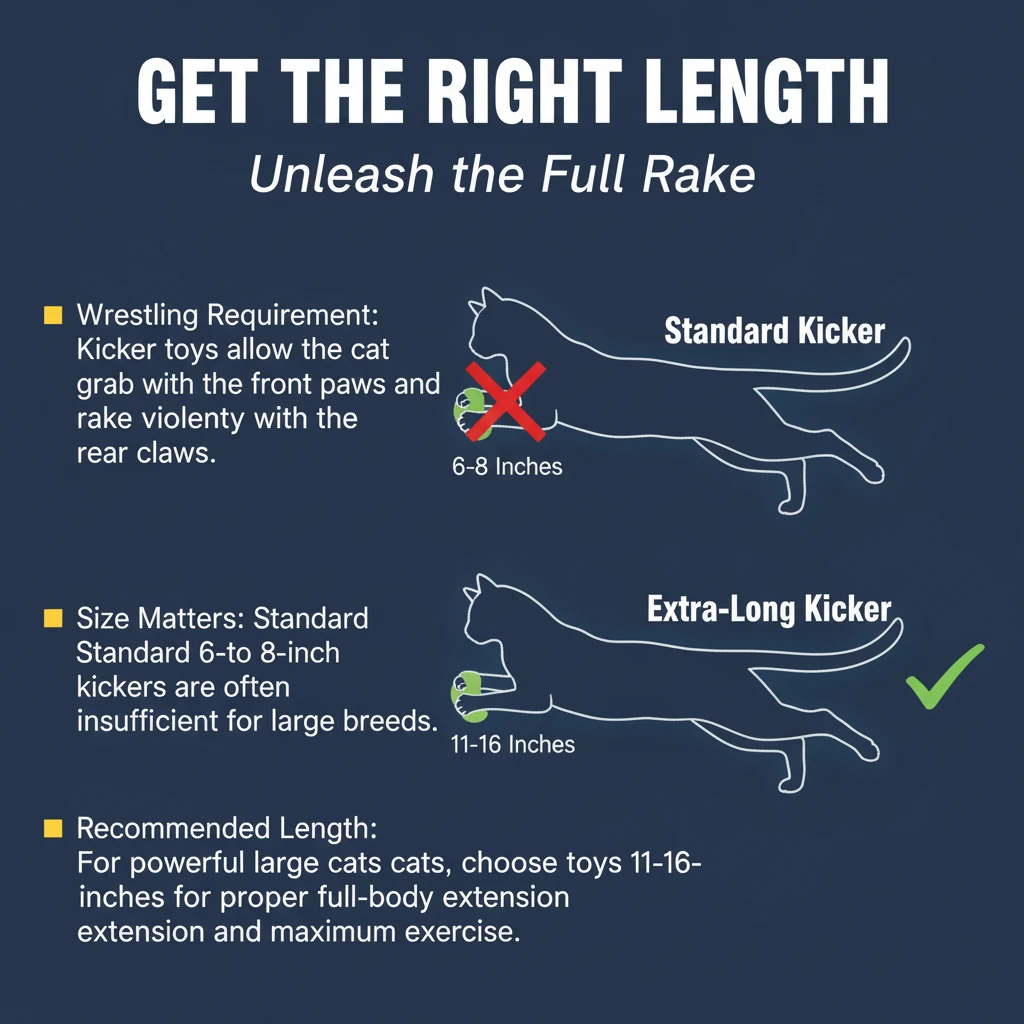
Kicker toys are crucial for allowing the large cat to fulfill the “kill” phase of the predatory sequence, engaging in powerful full-body wrestling. During this activity, the cat grabs the toy with its front paws and uses its immense strength to rake the object violently with its rear claws.
Standard kicker toys (6 or 8 inches in length) are insufficient for large breeds, as they do not permit full extension of the rear legs. For large cats to engage effectively, they require extra-long kicker toys. Recommended lengths range from 11 inches up to 16 inches. These larger toys must be constructed for extreme durability, often using multiple heavy-duty materials, and must be “VERY well-constructed and sturdy” to prevent immediate destruction. Potent catnip integration is also common to maximize the cat’s interest and engagement.
VI. Customized Play Profiles: Matching Toys to Temperament
Optimizing enrichment requires synthesizing safety standards and specific behavioral tendencies into tailored play profiles.
A. The Maine Coon Profile: High Curiosity, Climbing, and Water Play
The Maine Coon is characterized by high social drive, intense curiosity, and a pronounced desire for vertical territory. They enjoy challenge and high-action engagement.
Toy Priorities: The Maine Coon benefits most from interactive and electronic toys that provide mental stimulation and a challenge. Fetch games are highly effective due to their “dog-like” nature. Advanced, multi-stage puzzle feeders are crucial for challenging their intelligence. Due to their unique love of water, shallow, secure water sources for supervised play should be considered.
Infrastructure: Investment in heavy-duty, high-weight capacity climbing trees and cat shelves is mandatory to satisfy their climbing instincts safely. Cat exercise wheels should also be considered for high-energy individuals.
B. The Ragdoll Profile: Mellow, Social, and Floor-Oriented Activities
The Ragdoll is sweet, mellow, and avoids adventurous climbing, preferring to remain on the floor. They thrive on social bonds and calmer pursuits.
Toy Priorities: Play should focus on ground-level activities that reinforce social interaction. Wand toys should emphasize simulations of ground prey (slithering, scurrying), encouraging stalking and low pouncing. Large, soft kicker toys (16 inches) allow them to engage in wrestling without requiring vertical effort. Low-difficulty foraging tools, such as snuffle mats, provide gentle mental stimulation.
Infrastructure: Priority should be given to robust, stable scratching posts and wide, comfortable, large floor beds and window hammocks that are easily accessible, satisfying their need for comfort and high-level social observation without demanding vertical exertion.
The comparative needs of these two breed archetypes are summarized below.
Table: Large Cat Breed Play Profile Comparison
| Breed Archetype | Dominant Play Style | Recommended Toy Categories | Infrastructure Priority |
| Maine Coon (Curious/Climber) | High-action stalking, climbing, chasing, water play | High-flying wands, electronic/automated toys, advanced puzzle feeders, fetch toys | Heavy-duty, high-weight capacity climbing trees and shelves |
| Ragdoll (Mellow/Floor Cat) | Calmer pursuits, social interaction, low-height pouncing | Interactive floor wands (slithering prey), soft kicker toys (16 inches), snuffle mats/low-level puzzles | Stable, large floor beds; robust, stable scratching posts; wide, low platforms. |
VII. Long-Term Strategy: Toy Rotation and Maintenance
The effectiveness of any enrichment plan is dependent upon the longevity of the cat’s interest, which requires proactive management of the toy inventory and consistent safety checks.
A. Preventing Boredom: Strategies for Rotation
Cats require novelty to maintain engagement. If toys are left out permanently, the cat rapidly habituates, and the items lose their ability to stimulate. This behavioral stagnation is avoided through a strategy of toy rotation, simulating the natural variability of resource availability in the wild. By rotating the available toy inventory every few days, owners ensure that different predatory drives (e.g., chasing airborne prey one week, manipulating ground prey the next) are periodically engaged. This comprehensive approach provides a holistically satisfying environment that prevents under-stimulation and the formation of destructive behaviors rooted in boredom.
Play sessions should be kept short, ideally 15 to 20 minutes, to prevent over-exertion, particularly for older or overweight large cats. Even if older cats display reduced play vigor, opportunities for engagement must always be provided.
B. Utilizing Catnip and Alternative Scents
Catnip is a potent natural herb that can significantly increase a cat’s interest in a plush toy. This is particularly useful for encouraging interaction with new kicker toys or toys that have lost their novelty. Many high-quality plush toys now feature refillable catnip pouches, allowing owners to easily refresh the scent and sustain the cat’s interest over an extended period, maximizing the lifespan of the enrichment object.
C. Professional Oversight and Holistic Wellness
Due to their high social dependence and significant exercise needs (30-60 minutes daily), large breeds can struggle with prolonged owner absences. For households with busy schedules, contracting a pet sitter specifically for scheduled, interactive play sessions is recommended as a crucial mechanism for preserving the cat’s mental and social health during the day. This moves the provision of play from a luxury to a mandatory component of daily welfare.
Finally, regular veterinary monitoring is essential. The effectiveness of the enrichment and feeding strategy must be tracked through physical condition assessments and weight management check-ups, ensuring that the specialized indoor environment successfully maintains the large cat’s optimal physical and behavioral health.

that is realy nice i will try to check this for my pets