You may see yourself as a pet owner, but in your cat’s eyes, you are something far more powerful: the architect of their entire world. Every decision, from the type of litter box you choose to the height of their favorite perch, directly shapes their sense of security, confidence, and physical health. This guide moves beyond basic care to empower you with the principles of “Catification,” transforming your home into a dynamic ecosystem that satisfies your cat’s dual instincts as both a stealthy predator and a cautious prey animal. Prepare to see your living space through their eyes and learn how to build a world where your cat doesn’t just live, but thrives.
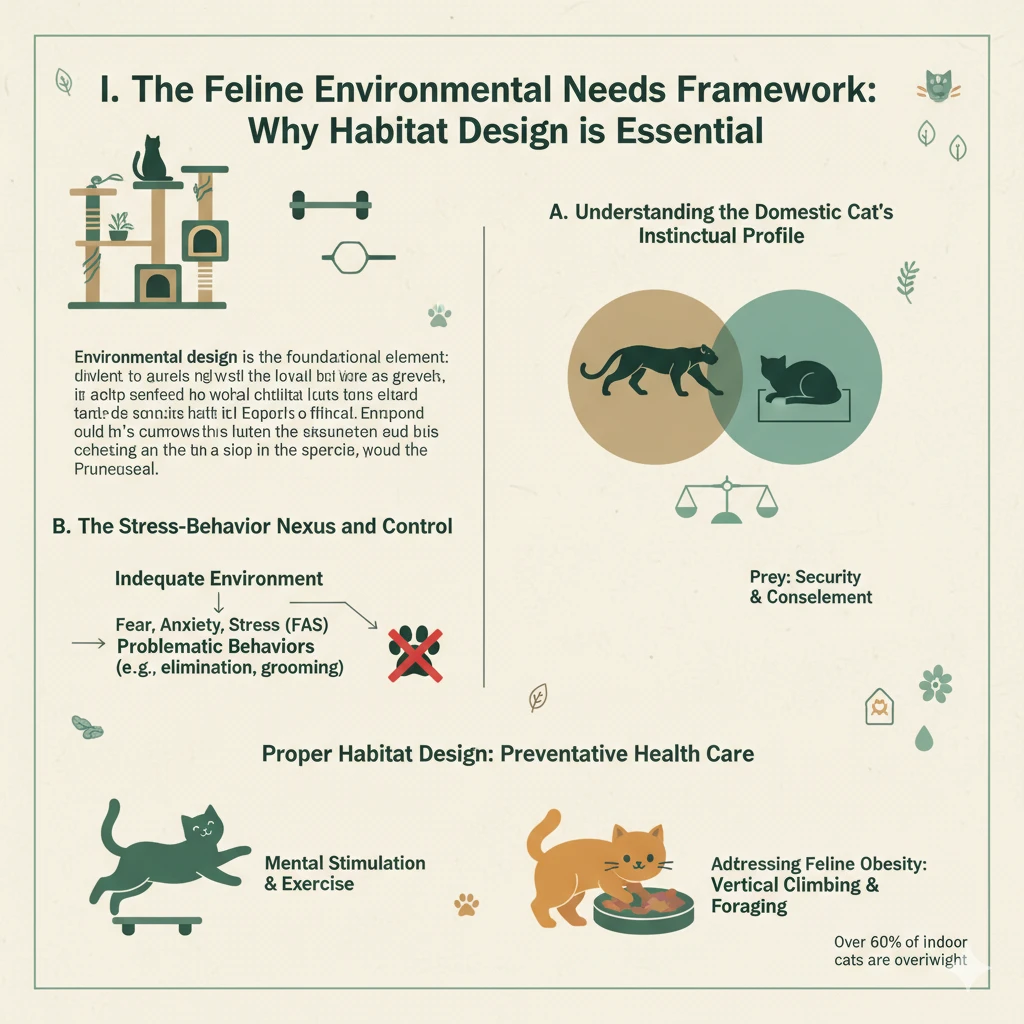
I. The Feline Environmental Needs Framework: Why Habitat Design is Essential
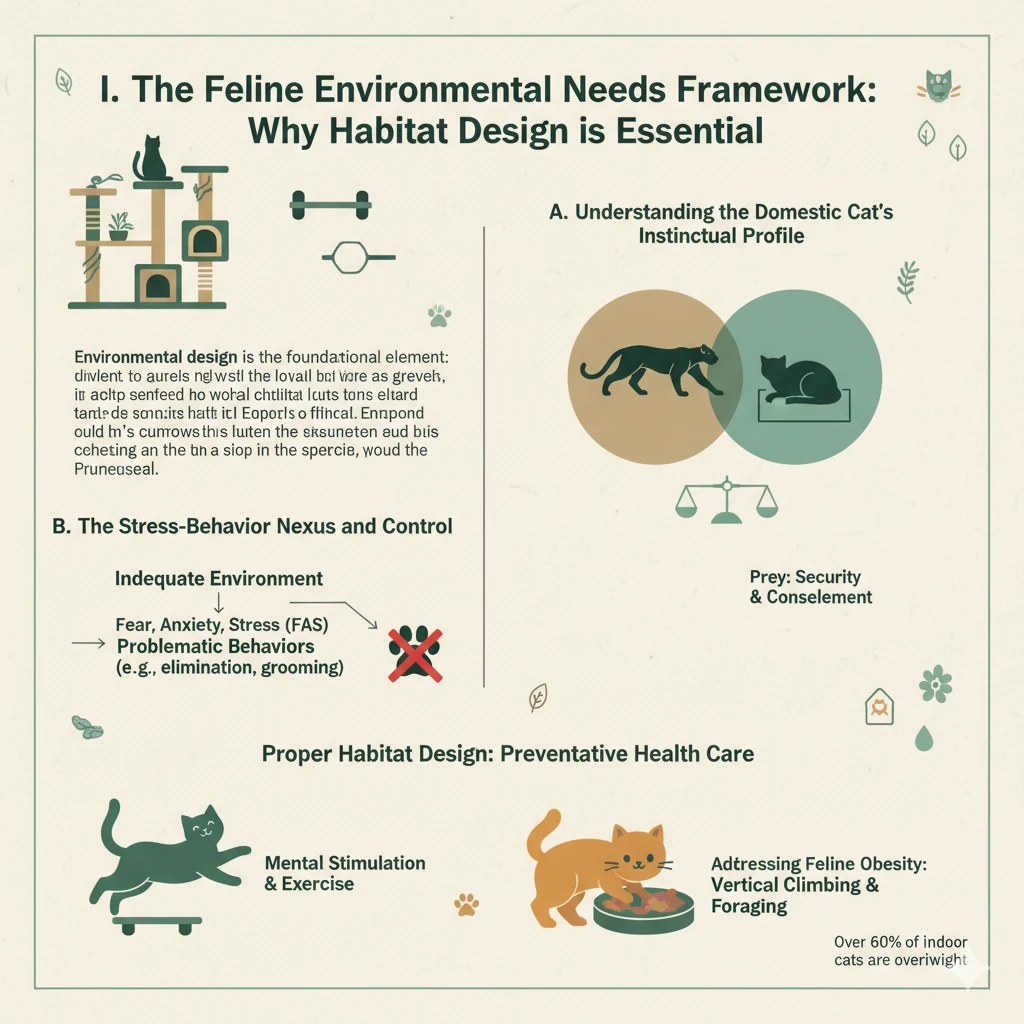
Environmental design is the foundational element of feline health and behavioral wellness. Behavior problems are a leading factor in pets being surrendered or euthanized, and these issues frequently arise because a cat’s complex, innate needs have not been adequately addressed within the home setting. Addressing the physical and emotional needs of the cat ensures an enhanced quality of life, acting as a crucial preventative health measure.
A. Understanding the Domestic Cat’s Instinctual Profile
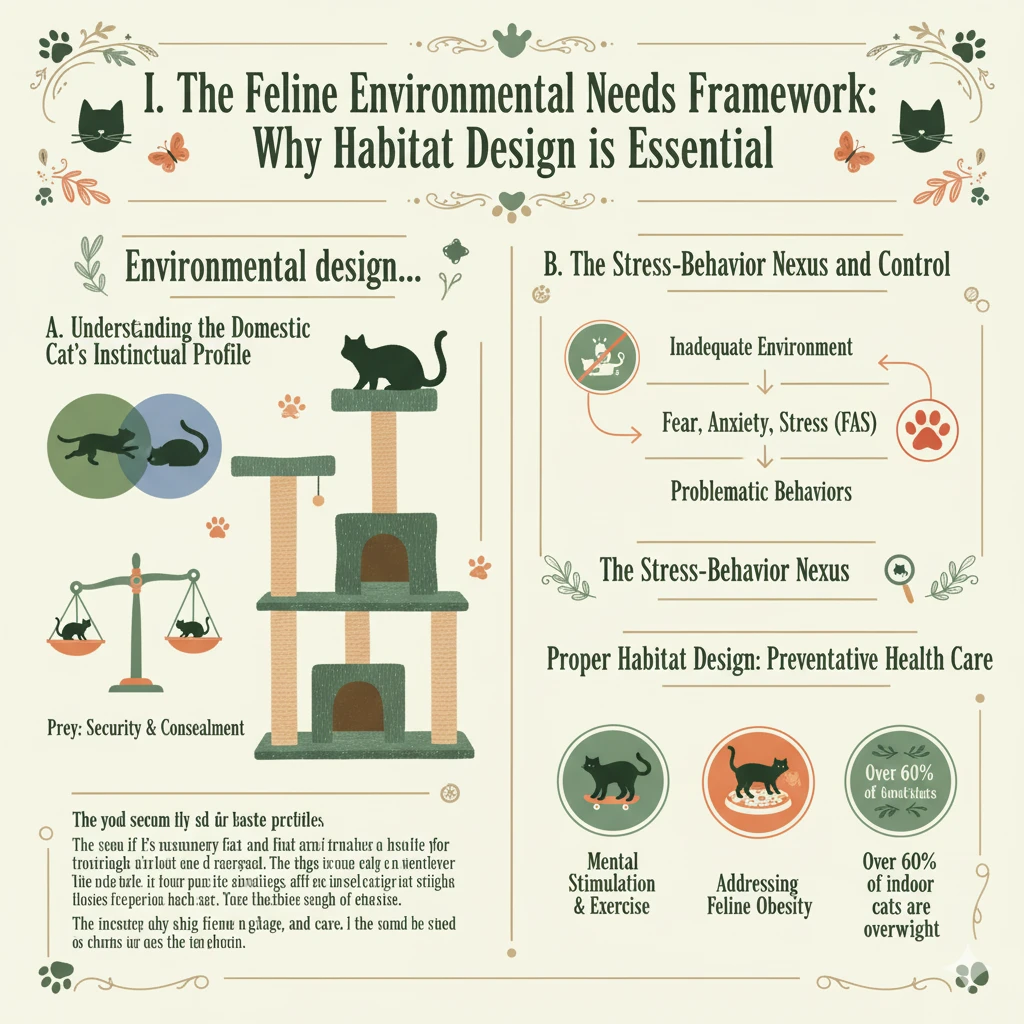
The domestic cat retains a dual, often contradictory, instinctual profile. Cats are highly efficient predators, driven to perform the full predatory sequence, which requires hunting stimulation and engagement. Simultaneously, they are a species traditionally situated in the middle of the food chain, meaning they retain strong prey instincts, necessitating security, concealment, and the ability to feel in control of their surroundings. A balanced home environment must reconcile these two identities.
B. The Stress-Behavior Nexus and Control
A cat’s sense of health and well-being is directly tied to its ability to feel secure and in control over its social interactions and access to essential resources. When environmental provisions are lacking or inadequate, the resulting elevation in Fear, Anxiety, and Stress (FAS) levels can manifest as problematic behaviors, ranging from inappropriate elimination to abnormal repetitive behaviors (e.g., excessive grooming or stalking).
For most feline behavioral pathologies, environmental modification is the necessary therapeutic foundation. The resolution of complex behavioral issues typically requires a combination of strategies, but these strategies must always begin with modifying the environment to prevent further problems. If the underlying cause of stress or the environmental deficit persists, symptomatic behaviors will likely continue regardless of medication or behavior modification techniques. Therefore, removing the environmental trigger or fulfilling the unmet need is the essential precursor to facilitating a more normal mental state and successful learning.
Furthermore, proper habitat design functions as a form of preventive health care. Insufficient mental stimulation and a lack of opportunities for exercise contribute significantly to inactivity. According to veterinary data, feline obesity is the leading disease affecting domestic cats, with more than 60 percent of indoor cats in the United States classified as overweight. By actively providing stimulating resources like vertical climbing areas and foraging opportunities (such as puzzle feeders), the home environment encourages physical activity and mental engagement, directly addressing the sedentary lifestyle typical of indoor cats and mitigating serious health risks.
II. The Sanctuary Principle: Creating Essential Safe Spaces and Hiding Zones
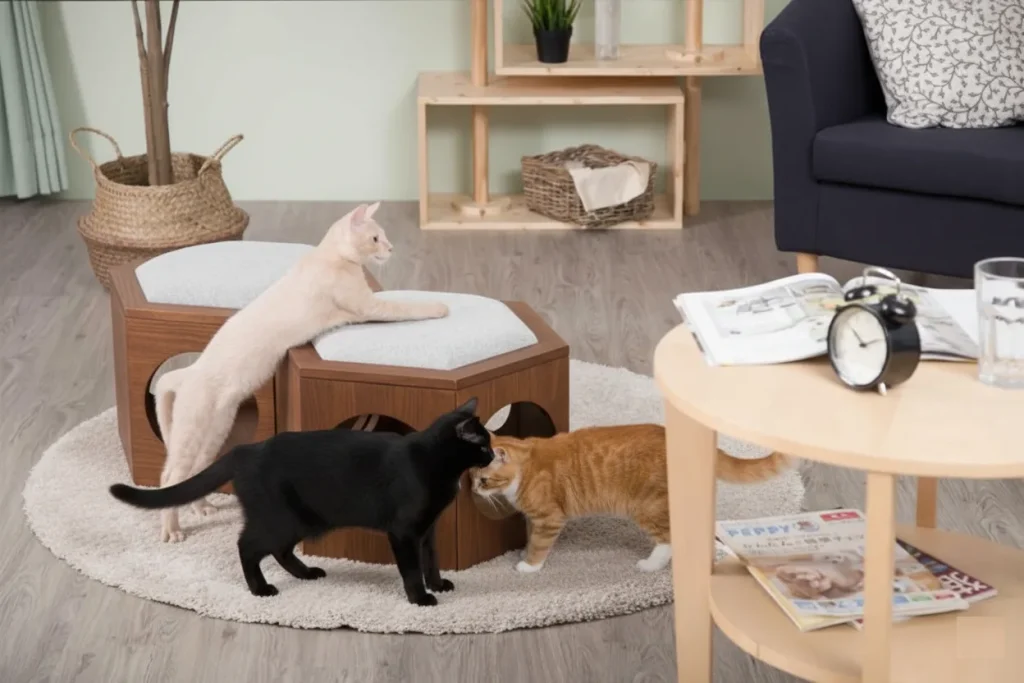
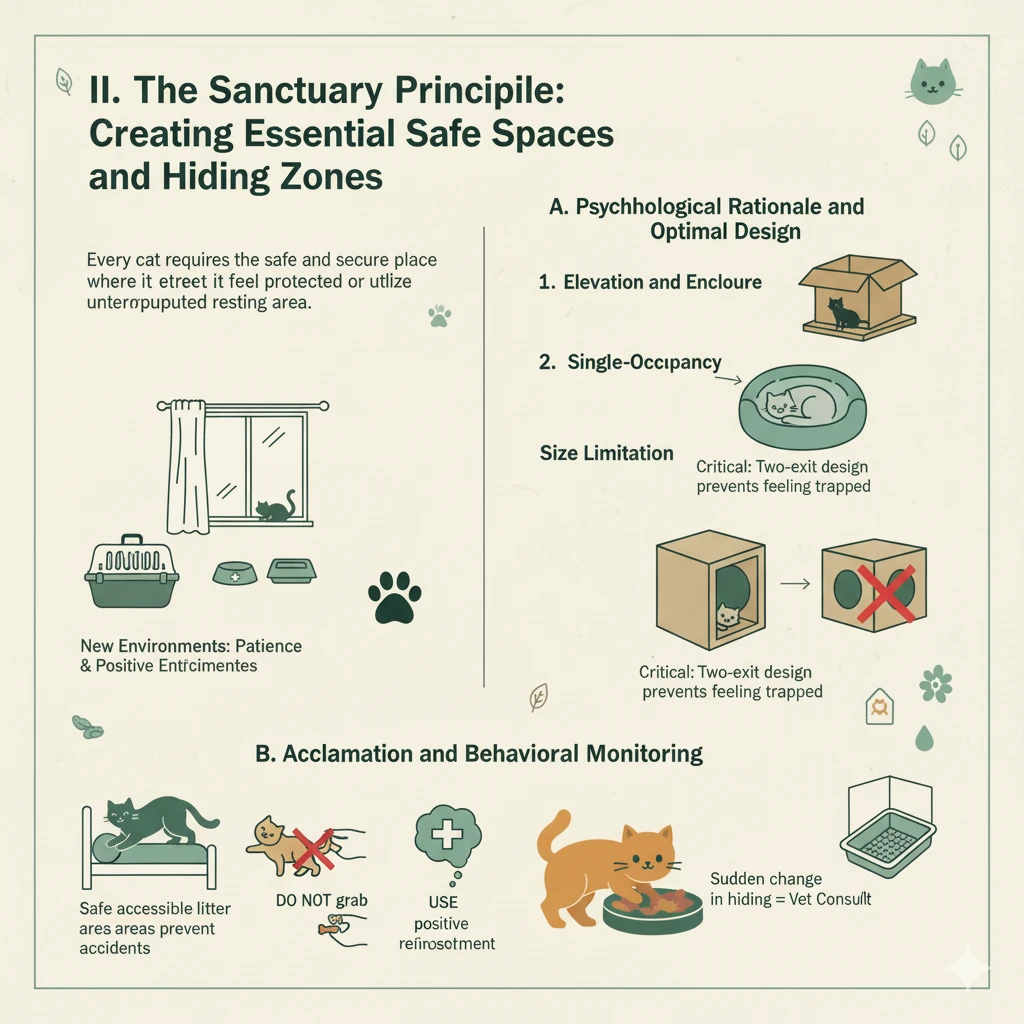
Every cat requires a safe and secure place where it can retreat to feel protected or utilize as an uninterrupted resting area. This is the core function of a hiding spot—it acts as a private refuge from noise, unfamiliar people, dogs, or simply a place to decompress after a stressful interaction.
A. Psychological Rationale and Optimal Design
Veterinary behaviorists have established optimal design principles for effective safe spaces :
- Elevation and Enclosure: Most cats prefer that the safe space is raised off the ground, as elevation enhances security and provides a vantage point. It should also have sides surrounding it, providing a sense of enclosure and concealment.
- Size Limitation: The space should ideally be just large enough to fit only the cat itself (single-occupancy). This size limitation maximizes the feeling of cozy security.
- Multiple Exits: Crucially, the safe space must allow the cat the ability to exit and enter from at least two sides if it feels threatened.
Common and effective examples that meet these criteria include simple cardboard boxes, covered beds, cat carriers left open and accessible, and raised cat perches or condos.
The two-exit requirement is not merely a design convenience; it is a critical safety mechanism rooted in the cat’s prey instincts. If a hiding spot has only one entrance, a perceived threat—such as another pet, a small child, or even another cat—can easily block the exit, trapping the cat. This total loss of perceived control can rapidly escalate fear into defensive aggression toward the perceived threat or, inadvertently, the human guardian. Designing spaces with guaranteed escape routes actively prevents this fundamental behavioral escalation.
B. Acclimation and Behavioral Monitoring
When a cat is introduced to a new environment, acclimation is necessary and highly variable, potentially taking a few hours to several months, depending on the cat’s temperament. During this period, the cat should initially be kept in a smaller, quieter room, ensuring that key resources—such as a safe litter box, food, and water—are easily accessible from its retreat.
For guardians, patience is paramount. If a cat is fearful or hiding, attempts to push oneself on the cat, pet it, or grab it to pull it out are counterproductive. Such actions do not provide reassurance; instead, they heighten fear and risk provoking defensive aggression if the cat feels cornered. The recommended guardian protocol is to use positive enticements, such as food or toys, to encourage the cat to explore and engage with the environment at its own pace.
Observation of hiding behavior is also a vital health metric. While hiding is a normal, healthy activity cats use for stress reduction and resting, a sudden change in hiding habits—such as retreating for long, unusual periods, or hiding in an isolated location—can signal illness and warrants an immediate veterinary consultation.
Furthermore, the provision of easily accessible safe places is indirectly linked to appropriate elimination behavior. If a scared cat perceives the journey to the litter box as too exposed or too far from its safe haven, it may begin relieving itself in what it deems a much safer spot, such as under a bed or in a closet, leading to unwanted behavior. Ensuring safe, discreet access to the toilet resource is essential for preventing this environmentally induced problem.
III. Conquering the Third Dimension: Vertical Territory and Catification
Cats possess an innate need to climb and occupy high places, a behavior rooted in survival and status. Providing vertical territory is paramount in a cat-friendly home.
A. The High Ground Advantage: Security, Control, and Space Utilization
Vertical spaces provide the cat with a profound sense of security and control. From an elevated vantage point—whether a window perch or a wall shelf—the cat can survey its entire domain, remaining informed of events without being directly subjected to ground-level chaos (e.g., dogs, noisy children, or foot traffic). In the wild, high perches offer separation from many larger predators, reinforcing the cat’s perception of control when moving upward.
This strategic use of height, often termed “Catification,” is especially critical in small homes or apartments. In limited spaces, vertical infrastructure transforms otherwise unused wall volume into valuable territory and necessary exercise routes, directly combating the psychological stress and physical risks (such as obesity) associated with spatial constraints.
B. Structural Comparison and Strategic Integration
The two primary forms of vertical infrastructure are free-standing cat trees and towers, and wall-mounted shelves or catwalks. The optimal choice depends on the cat’s behavior, the household size, and the available space.
Cat trees offer an all-in-one solution, often integrating climbing, scratching, and hiding spots, making them suitable for older or less active cats. Wall-mounted systems, conversely, excel at maximizing space utilization and are highly preferred by active, agile cats.
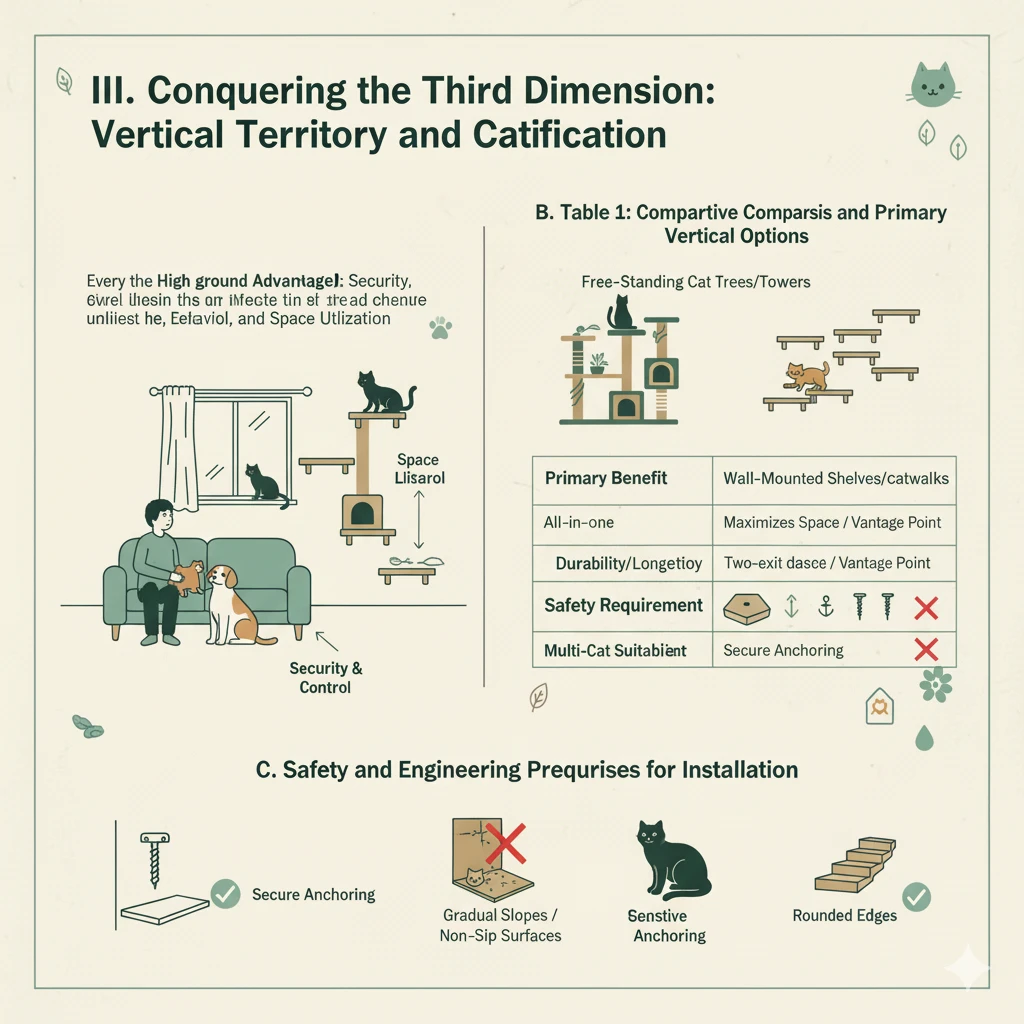
Table 1: Comparative Analysis of Primary Vertical Options
| Feature | Free-Standing Cat Trees/Towers | Wall-Mounted Shelves/Catwalks |
| Primary Benefit | All-in-one functionality (climbing, scratching, hiding). Suitable for less active cats. | Maximizes unused wall space; superior vantage point and sense of control. |
| Durability/Longevity | Typically wears faster; integrated scratching posts require frequent replacement. | Highly durable; less exposed to scratching; hardware can be reused for repositioning. |
| Safety Requirement | Wide, heavy base to prevent tipping, especially during vigorous play. | Requires secure anchoring to wall studs or heavy-duty anchors (rated 50 lbs). Must use non-slip surfaces. |
| Multi-Cat Suitability | Good if multiple perches are spaced out. | Excellent for creating segregated, linear traffic flow (“Cat Highways”). |
For multi-cat environments, vertical territory functions primarily as a sophisticated traffic management system. Creating integrated, layered systems—often referred to as “Cat Highways”—allows cats to move through socially tense areas by bypassing potential conflict zones below. This ability to separate oneself or survey rivals from a position of advantage directly reduces perceived conflict and lowers social stress.
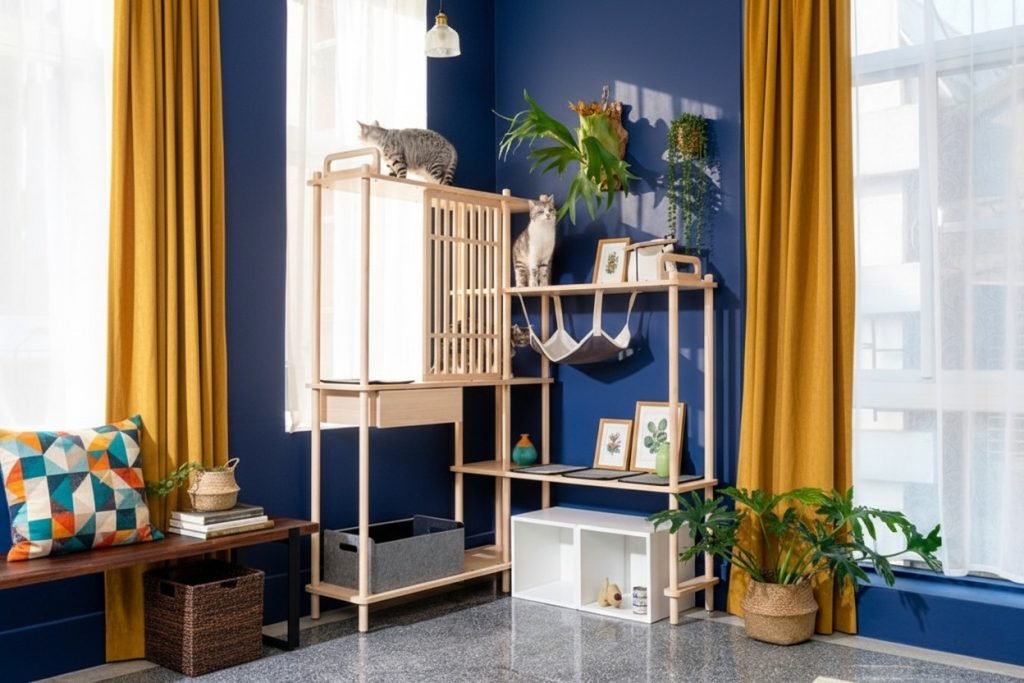
A common challenge is integrating functional pet items with human décor, as many traditional cat items are visually distracting. The reliance on vertical solutions and the selection of high-end, aesthetic materials (e.g., minimalist white, bent wood, or espresso tones) that mirror existing décor resolves this conflict. These pieces transform necessary utility into appealing architectural elements, ensuring the space remains curated while fulfilling the cat’s biological requirements.
C. Safety and Engineering Prerequisites for Installation
Safety is entirely dependent on structural integrity. All wall-mounted components must be firmly mounted to wall studs or installed using heavy-duty wall anchors rated for at least 50 pounds. Loose mounting is a significant hazard that risks injury.
In terms of design flow, cats prefer gradual slopes or staggered platforms over steep, vertical climbs. Platforms must be covered with non-slip materials, such as carpeting or sisal matting, to provide adequate grip and stability during use. Additionally, all surfaces should be rounded or sanded to eliminate splinters or sharp edges. When building extensive walkways, it is important to include steps or ramps to ensure accessibility for older or less agile cats.
IV. The Instinctual Imperative: Scratching Post Science and Placement
Scratching is an essential, multi-functional feline behavior that must be accommodated in every home environment. It is not merely a destructive habit; it serves several critical physiological and communicative purposes.
A. Functions of Feline Clawing Behavior
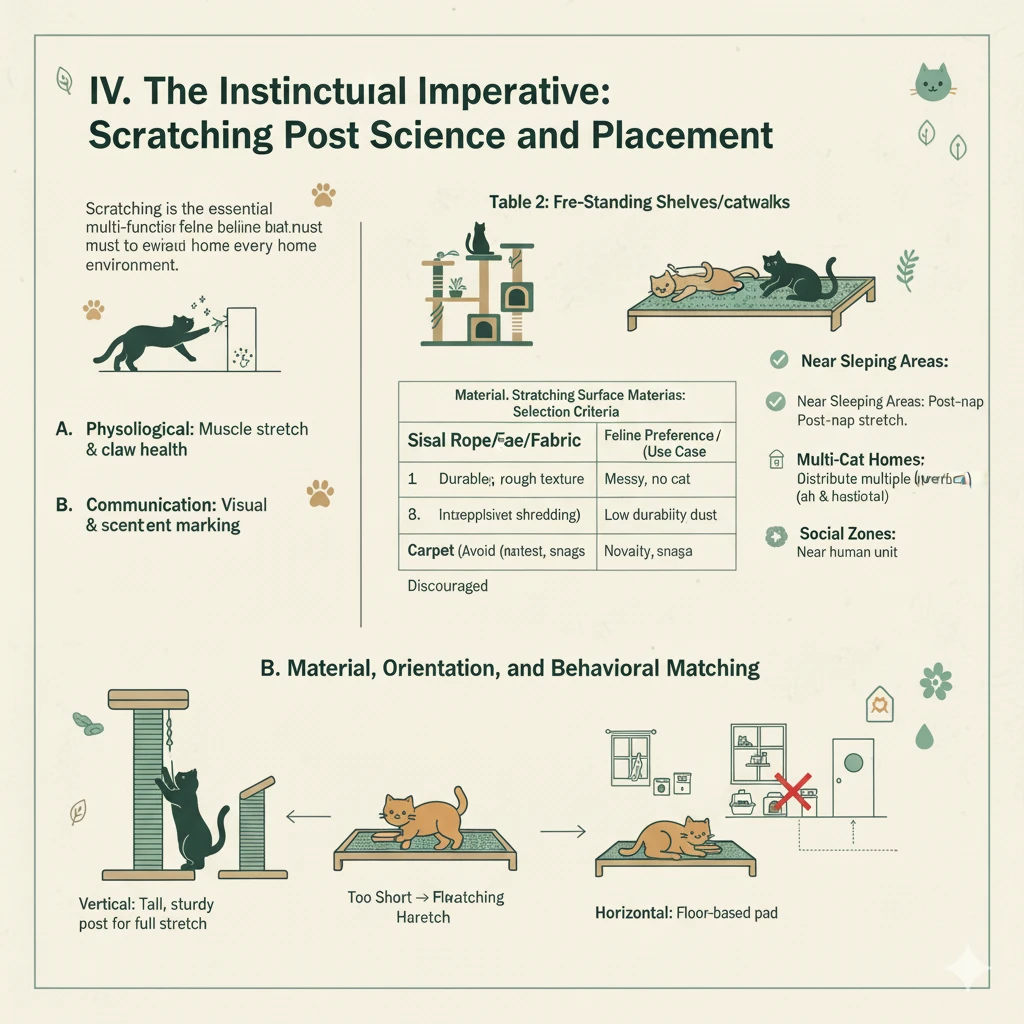
Physiologically, scratching is necessary for cats to stretch their long muscles, particularly in the back and shoulders, often performed immediately upon waking from a nap. It is also vital for maintaining claw health. Behaviorally, scratching is a significant form of communication. It serves as both a visual marker (leaving shredded material) and a scent marker (depositing pheromones from glands in the paws) to delineate territory.
B. Material, Orientation, and Behavioral Matching
The choice of scratching material dictates the level of feline satisfaction and the product’s durability.
Table 2: Scratching Surface Materials: Selection Criteria
| Material | Pros | Cons | Feline Preference/Use Case | |—|—|—| | Sisal Rope/Fabric | Highly durable; excellent for naturally polishing claws; rough texture mimics tree bark. | Requires vacuuming to maintain freshness; difficult to infuse with catnip; absorbs moisture. | Heavy scratchers; cats who prefer rough, textured surfaces. | | Corrugated Cardboard | Inexpensive and easily replaced; provides a satisfying shredding texture. | Low durability (loses integrity quickly); creates dust/mess; makes claws blunter. | Kittens; cats who crave novelty; preferred for horizontal scratching. | | Carpet (Avoid Matching Home)| Easy to work with and incorporate into furniture. | Can confuse cats if similar to home flooring; looped fabric risks snagging claws and causing aversion. | Generally discouraged unless using highly shreddable upholstery fabric. |
The orientation of the scratching surface (vertical or horizontal) must align with the cat’s preference, which can be determined by observing its current scratching habits. Cats that prefer to rear up and pull down require a sturdy, tall vertical post. Cats that stretch out along the floor and pull, often favoring rugs or carpets, require a floor-based horizontal scratch pad.
A core principle in providing vertical scratchers is ensuring they are sufficiently tall. If a post is too short, it prevents the cat from achieving the necessary full-body muscular stretch. A short post is functionally useless, and the cat will inevitably seek a taller, more stable alternative—such as the corner of a sofa—to satisfy this physical requirement. Owners cannot expect compliance if the physical parameters of the post fail to meet the biological needs of the cat. Furthermore, incorporating material that feels significantly different from home flooring is a key behavioral technique. If the approved scratching surface feels identical to the prohibited surface (e.g., a rug), the cat receives mixed messages, hindering its ability to differentiate between acceptable and unacceptable marking zones.
C. Strategic Placement: Leveraging Marking Behavior
The placement of scratching posts is just as critical as the quality of the material. Since scratching is a form of territorial marking, posts must be located in prominent, high-traffic areas of the home. Key locations include:
- Near Sleeping Areas: Essential for the post-nap stretch.
- Room Entrances: Highly visible areas are prime territorial marking spots.
- Social Zones: In shared “public” areas where the human guardian spends time, as cats want to mark near their main social unit.
In multi-cat households, distributing multiple scratching posts—both vertical and horizontal—throughout the home is necessary to provide sufficient choice and acceptable outlets for marking behavior without creating territorial conflict.
V. Mind and Movement: Comprehensive Enrichment Strategies
Environmental enrichment involves creating opportunities for the cat to express its natural instincts and behaviors in appropriate ways, thereby supporting mental and emotional health.
A. Active Enrichment: Play and Foraging
Mental stimulation is paramount for indoor cats, preventing boredom that can lead to stress. Every meal and play session is an opportunity for enrichment.
- Interactive Play Protocol: Play sessions must actively satisfy the cat’s predatory sequence. The guardian should use toys to mimic the erratic, unpredictable movements of prey, encouraging chasing and pouncing. Crucially, the play session must end with the cat successfully capturing the toy, referred to as the “kill” or the “win”. Laser pointers, while engaging, are problematic if the cat never catches the light, as constant failed captures create frustration. The capture is the biological payoff for the energy spent hunting. Without this physical reward, the neurological loop remains unresolved, generating tension that can contribute to underlying stress or lead to abnormal, repetitive behaviors derived from normal actions (like excessive stalking or grooming). Therefore, laser play must conclude by immediately redirecting the cat to capture a tangible toy or receive a treat.
- Food Enrichment (Foraging): Using puzzle feeders (or DIY options made from simple materials like cardboard rolls or shoe boxes) forces the cat to forage or “work” for its food. This satisfies innate foraging instincts, provides mental engagement, and is an effective tool for managing feline weight by limiting easy access to carbohydrates.
B. Passive and Sensory Enrichment
Enrichment extends beyond active play to include sensory stimulation.
- Visual Access: Window perches, cat hammocks, or high cat trees placed near a window provide essential visual access to the external world, allowing the cat to safely observe wildlife, a vital form of “cat TV” that stimulates natural curiosity.
- Olfactory Respect: Cats rely heavily on scent for exploring their world. Introducing safe, non-toxic plant-based scents, such as fresh cat grass, catnip, silvervine, or valerian, provides sensory novelty. Furthermore, synthetic calming pheromones (e.g., Feliway) can be diffused in areas associated with anxiety or stress to promote relaxation.
C. The Crucial Role of Novelty and Rotation
The stimulating effectiveness of toys rapidly decreases, as items lose their novelty after only a few play sessions. To maintain a cat’s curiosity and combat sensory habituation, effective enrichment necessitates having a handful of toys that are rotated regularly, ideally weekly.
This environmental renewal protocol should be applied broadly. If the environment remains static, it ceases to offer mental stimulation. Therefore, proactively rotating not only toys but also the positioning of furniture, refreshing scratching surfaces, or moving puzzle feeder locations ensures the habitat remains a continuous source of curiosity and engagement, promoting long-term well-being.
VI. Advanced Resource Management: The Multi-Cat Ecosystem
Managing a multi-cat household requires specialized resource strategies, as cats retain their core identity as solitary hunters and resource competition generates significant stress. Resource-guarding or inter-cat conflict occurs when cats are forced to interact in close proximity to access necessities or when a dominant cat blocks access to a single resource point.
A. The N+1 Resource Provision Strategy
To mitigate social tension and conflict, the recommended standard for resource provision is the N+1 rule: one resource per cat (N), plus one extra (+1). Crucially, these resources must be physically separated and placed in different locations throughout the home.
The separation of resources is achieved by placing items out of visual range of other resource locations, thereby creating multiple independent “choice points”. By distributing resources, the perceived habitat area is psychologically and physically enlarged, allowing cats to use different parts of the home as individual, functional territories. This strategy encourages “time sharing” of resources and minimizes forced interaction, which is highly stressful for cats that are not truly bonded.
| Resource Category | Minimum Quantity for N Cats | Key Separation Requirement | Rationale | |—|—|—| | Litter Boxes | N + 1 | Must be physically separated in different locations and out of sight of each other. Grouped boxes are perceived as one resource. | Essential for preventing resource guarding and inappropriate elimination. | | Food Stations | N (Individual stations) + 1 (Choice) | Must be separated from water stations and toileting areas. Should allow for privacy during feeding. | Minimizes feeding competition; necessary to prevent the stress of close-proximity eating. | | Water Stations | N + 1 | Separated from food and litter areas. | Respects the cat’s instinctual preference to drink away from food (prey). | | Safe Places/Resting | N + 1 | Distributed throughout the home, especially in elevated and high-traffic areas. | Ensures retreat options are always available regardless of social conflict or location. |
B. Specific Requirements for Separation
- Food and Water: Food and water resources must be separated from each other, which respects the cat’s biological tendency to drink away from its prey. Both must also be located separately from toileting areas.
- Litter Box Distribution: Clustered litter boxes—even if they meet the quantity requirement—are perceived as a single resource point, making them vulnerable to resource guarding and blocking by dominant cats. Litter boxes must be distributed throughout the home, out of sight of one another.
- Individualized Play: To ensure social needs are met without generating conflict, owners should schedule separate play sessions for individual cats in different locations. This guarantees that each cat receives dedicated predatory fulfillment and positive human interaction without competition or interference. Toys and scratching posts must also be made available in separate, dispersed locations for the same reason.
VII. Conclusion: The Integrated Feline Environment
Creating an ultimate cat-friendly home requires a strategic commitment to the five pillars of environmental needs: providing a safe place, offering multiple separated resources (food, water, litter), ensuring opportunity for play and predatory behavior, fostering positive and predictable human-cat social interaction, and respecting the importance of the cat’s sense of smell.
A successful feline habitat synthesizes these behavioral requirements with the guardian’s aesthetic desires. Through sophisticated design choices, such as sleek cat tree towers and floating platforms that incorporate dual-purpose items, necessary pet infrastructure can be seamlessly integrated into modern décor without visually dominating the living space. This integration leverages unused vertical space to maximize territory, an approach that is necessary for maintaining active, healthy cats in smaller residential settings.
The final and enduring requirement of a conscientious cat guardian is diligent maintenance and proactive observation. This includes regularly checking the stability of vertical structures (ensuring all anchors remain secure) and implementing a regular rotation and cleaning schedule for all enrichment items and scratching surfaces. A proactive approach to observation—monitoring for unexplained changes in hiding duration, interaction patterns, or appetite—serves as the final safety check, allowing the guardian to detect potential illness or underlying environmental stress before minor issues escalate into complex behavioral pathologies.